Verse 1: A We were not let down E G We did not receive a hope that’s fake G E and not even the greatest sting this world could give you A could ever seal your fate A Empty tombs with open wounds E G Juxtaposed with hunger in a ghost G All it took was your blood for me E To do what no god had done, but you gave it freely
strum Em
Chorus: A E So raise it high, put your banner in the sky G Let the world that you made say G G My God reigns victorious Em Em king of kings, the one and only A E mine, my one and only love G Let your spirit from above Em deliver us glorious A into yours, your image, not mine
Verse 2: A Take this cup from me you cried E G Not my will but your will, will i do G E well these hallowed words in my mind, echo out A So I give them all to you A conquer all this pain I hide E G conquer living, take my everyday G All it took was your blood for me E you gave me what I needed A I needed to say
strum Em
Chorus: A E So raise it high, put your banner in the sky G Let the world that you made say G G My God reigns victorious Em Em king of kings, the one and only A E mine, my one and only love G Let your spirit from above Em deliver us glorious A into yours, your image, not mine
Bridge:
D You are the Champion A creator God, the only son Em who walks with me inside the furnace A who conquers death and crushes serpents D You are the Word of God A The never-changing everlong D who strolls the seas and sleeps through storms Em Returning with your armor on
Strum Em to slow
Chorus: A E So raise it high, put your banner in the sky G Let the world that you made say G G My God reigns victorious Em Em king of kings, the one and only A E mine, my one and only love G Let your spirit from above Em deliver us glorious A into yours, your image, not mine
Chorus: E Open the eyes of my heart, Lord B Open the eyes of my heart A I want to see You A E I want to see You
Chorus: E Open the eyes of my heart, Lord B Open the eyes of my heart A I want to see You A E I want to see You
Verse: B C#m To see You high and lifted up A B Shinin’ in the light of Your glory B C#m Pour out Your power and love F#m B As we sing holy, holy, holy
Chorus: E Open the eyes of my heart, Lord B Open the eyes of my heart A I want to see You A E I want to see You
Chorus: E Open the eyes of my heart, Lord B Open the eyes of my heart A I want to see You A E I want to see You
Verse: B C#m To see You high and lifted up A B Shinin’ in the light of Your glory B C#m Pour out Your power and love F#m B As we sing holy, holy, holy
Verse: B C#m You are You high and lifted up and you’re A B Shinin’ in the light of Your glory B C#m Pour out Your power and love F#m B As we sing holy, holy, holy
Bridge: E Holy, holy, holy E Holy, holy, holy A Holy, holy, holy E I want to see you
Bridge: E Holy, holy, holy E Holy, holy, holy A Holy, holy, holy E I want to see you E I want to see you E I want to see you
Verse 1: D Bm The splendor of the King, clothed in majesty, G Let all the earth rejoice, all the earth rejoice. D Bm He wraps Himself in light, and darkness tries to hide, G And trembles at his voice, trembles at his voice.
Chorus: D How great is our God, sing with me, Bm How great is our God, all will see, G A D How great, how great is our God.
Verse 2: D Bm Age to age He stands, and time is in His hands, G Beginning and the end, beginning and the end. D Bm The Godhead, three in one: Father, Spirit, Son, G The Lion and the Lamb, the Lion and the Lamb.
Chorus: D How great is our God, sing with me, Bm How great is our God, all will see, G A D How great, how great is our God.
Chorus: D How great is our God, sing with me, Bm How great is our God, all will see, G A D How great, how great is our God.
Bridge: D Name above all names, Bm Worthy of all praise, G My heart will sing A D How great is our God.
Chorus: D How great is our God, sing with me, Bm How great is our God, all will see, G A D How great, how great is our God.
Bridge: D Name above all names, Bm Worthy of all praise, G My heart will sing A D How great is our God.
Chorus: D How great is our God, sing with me, Bm How great is our God, all will see, G A D How great, how great is our God.
Verse: G C D C Lord, I lift Your name on high G C D C Lord, I love to sing Your praises G C D C I’m so glad You’re in my life G C D C I’m so glad You came to save us.
Chorus: G C D You came from heaven to earth C G To show the way C D From the earth to the cross C G My debt to pay C D From the cross to the grave Em Am From the grave to the sky D G Lord, I lift Your name on high.
Verse: G C D C Lord, I lift Your name on high G C D C Lord, I love to sing Your praises G C D C I’m so glad You’re in my life G C D C I’m so glad You came to save us.
Chorus: G C D You came from heaven to earth C G To show the way C D From the earth to the cross C G My debt to pay C D From the cross to the grave Em Am From the grave to the sky D G Lord, I lift Your name on high.
Chorus: G C D You came from heaven to earth C G To show the way C D From the earth to the cross C G My debt to pay C D From the cross to the grave Em Am From the grave to the sky D G Lord, I lift Your name on high.
Chorus: G C D You came from heaven to earth C G To show the way C D From the earth to the cross C G My debt to pay C D From the cross to the grave Em Am From the grave to the sky D Lord, I lift Your name on high. D Lord, I lift Your name on high. D G Lord, I lift Your name on high.
Verse 1: F Gm F I Love You, Lord and I lift my voice Bb F Gm F C Bb to worship You Oh my soul, rejoice! C F Gm F Take joy, My King, in what You hear, F Bb F Fm may it be a sweet, sweet sound C Bb F in Your ear.
Verse 1: F Gm F I Love You, Lord and I lift my voice Bb F Gm F C Bb to worship You Oh my soul, rejoice! C F Gm F Take joy, My King, in what You hear, F Bb F Fm may it be a sweet, sweet sound C Bb F in Your ear.
F Bb F Fm let it be a sweet, sweet sound C Bb F in Your ear.
Verse 1: D Lamb of God A Holy One G My Messiah D Promised A Son D On this day A I turn my face G I’ll raise my voice to You D And offer A Praise
Bridge: G And when my soul A Seemed in a different place G A My heart was vexed by all that’s come my way G My eyes were tired A Em And my light grew dim G I found You by my side A To bring me back again
Chorus D I adore you A I adore you Em Cause I see You G My Holy A One
D I adore You A I adore You G And I love You Em A D
Verse 1: D Lamb of God A Holy One G My Messiah D Promised A Son D On this day A I turn my face G I’ll raise my voice to You D And offer A Praise
Bridge: G And when my soul A Seemed in a different place G A My heart was vexed by all that’s come my way G My eyes were tired A Em And my light grew dim G I found You by my side A To bring me back again
Chorus: D I adore you A I adore you Em Cause I see You G My Holy A One
D I adore You A I adore You G And I love You Em A
Bridge: G And when my soul A seemed in a different place G A My heart was vexed by all that’s come my way G My eyes were tired A Em And my light grew dim G I found You by my side A To bring me back again Chorus: D I adore you A I adore you Em Cause I see You G My Holy A One
D I adore You A I adore You G And I love You Em A D
Verse 1: Bb Eb Draw me close to you F Bb Never let me go F Eb I’ll lay it all down again Gm7 Eb To hear you say that I’m your friend
Verse 2: Bb Eb You are my desire F Bb No one else will do F Eb Cause no one else could take your place Gm7 Eb I feel the warmth of Your embrace
Pre-Chorus: Bb Eb Help me find the way F Eb Bb Eb F Lead me back to you
Chorus: Bb F Eb You’re all I want Bb F Eb F You’re all I’ve ever needed Bb F Eb You’re all I want Cm F Bb Help me know You are near
Verse 1: Bb Eb Draw me close to you F Bb Never let me go F Eb I’ll lay it all down again Gm7 Eb To hear you say that I’m your friend
Verse 2: Bb Eb You are my desire F Bb No one else will do F Eb Cause no one else could take your place Gm7 Eb I feel the warmth of Your embrace
Pre-Chorus: Bb Eb Help me find the way F Eb Bb Eb F Lead me back to you
Chorus: Bb F Eb You’re all I want Bb F Eb F You’re all I’ve ever needed Bb F Eb You’re all I want Cm F Bb Help me know You are near Cm F Bb Help me know You are near Cm F Bb Help me know You are here
City on a Hill: Song of Worship and Praise 2000 Various Artists Nahum 1:3
Intro: A Bm G (x4)
Verse 1: A Bm G Lord of all creation A Bm G Of water, earth, and sky A Bm G The heavens are Your tabernacle A Bm G Glory to the Lord on high
Chorus: D A God of wonders beyond our galaxy D Em D G You are holy, holy D A The universe declares Your majesty D Em D G You are holy, holy A G Lord of heaven and earth A G Lord of heaven and earth
Verse 2: A Bm G Early in the morning A Bm G I will celebrate the light A Bm G When I stumble in the darkness A Bm G I will call Your Name by night
Chorus: D A God of wonders beyond our galaxy D Em D G You are holy, holy D A The universe declares Your majesty D Em D G You are holy, holy A G Lord of heaven and earth A G Lord of heaven and earth
Bridge: Em G A Sing Hallelujah To the Lord of heaven and earth Em G A Sing Hallelujah To the Lord of heaven and earth Em G A Sing Hallelujah To the Lord of heaven and earth Em D Sing Hallelujah, Holy
Chorus: D A God of wonders beyond our galaxy D Em D G You are holy, holy D A The universe declares Your majesty D Em D G You are holy, holy
Chorus: D A God of wonders beyond our galaxy D Em D G You are holy, holy D A The universe declares Your majesty D Em D G You are holy, holy A G Lord of heaven and earth A G Lord of heaven and earth
Verse 1: D A Bm A G My Jesus, My savior, Lord there is none like You, all of D G D Bm C G A G my days I want to praise the wonders of Your mighty love…
Verse 2: D A Bm A G My comfort, my shelter, tower of refuge and strength let every D G D Bm C G A G breath, all that I am never cease to worship You…
Chorus: D Bm G A Shout to the Lord all the earth let us sing, D Bm G A Power and Majesty, and praise to the King, Bm G A Bm A Mountains bow down and the seas will roar at the sound of Your name,
D Bm G A I sing for joy at the work of Your hands, D Bm G A Forever I’ll love you forever I’ll stand, Bm G A D Nothing compares to the promise I have in You
Verse 1: D A Bm A G My Jesus, My savior, Lord there is none like You, all of D G D Bm C G A G my days I want to praise the wonders of Your mighty love…
Verse 2: D A Bm A G My comfort, my shelter, tower of refuge and strength let every D G D Bm C G A G breath, all that I am never cease to worship You…
Chorus: D Bm G A Shout to the Lord all the earth let us sing, D Bm G A Power and Majesty, and praise to the King, Bm G A Bm A Mountains bow down and the seas will roar at the sound of Your name,
E C#m A B I sing for joy at the work of Your hands, E C#m A B Forever I’ll love you forever I’ll stand, C#m A B Nothing compares to the promise I have
E C#m A B Nothing compares to the promise I have C#m A B E Nothing compares to the promise I have in you
Third Day 1996 Third Day Hebrew 12:24-29 & Psalm 69
Intro: Em G A (4x)
Verse 1: Em G A Em G A Set this place on fire, send your Spirit, Savior Em G A Em G A Rescue from the mire, show your servant favor A G Yesterday was the day that I was alone D B Now I’m in the presence of Almighty God
Chorus: Em C G D Yes our God, He is a consuming fire Em C A And the flames burn down deep in my soul Em C G D Yes our God He is a consuming fire Em C A Em He reaches inside and He melts down this cold heart of stone
Instrumental: Em G A (2x)
Verse 2: Em G A Em G A Set this place on fire, send your Spirit, Savior Em G A Em G A Rescue from the mire, show your servant favor A G Yesterday was the day that I was alone D B Now I’m in the presence of Almighty God
Chorus: Em C G D Yes our God, He is a consuming fire Em C A And the flames burn down deep in my soul Em C G D Yes our God He is a consuming fire Em C A Em He reaches inside and He melts down this cold heart of stone
Instrumental: Em G A (2x)
Bridge: Bm D A Em Did you realize that inside of you there is a flame Bm D A Em Did you ever try to let it burn, let it burn, let it burn?
Chorus: Em C G D Yes our God, He is a consuming fire Em C A And the flames burn down deep in my soul Em C G D Yes our God He is a consuming fire Em C A Em He reaches inside and He melts down this cold heart of stoneChorus: Em C G D Yes our God, He is a consuming fire Em C A And the flames burn down deep in my soul Em C G D Yes our God He is a consuming fire Em C A Em He reaches inside and He melts down this cold heart of stone
The 2023 Cohort of the Elders Academy has been tasked to maintain their progress toward their goal of ministry in an open and accountable way. As part of this process, each cadet maintains a blog that details certain aspects of their growth. Each cadet is encouraged to be creative with their websites and be creative. This has led to very diverse websites, often rich with artistic content and other fun endeavors. However, each blog must have 4 main aspects:
A Character Journal (Weekly) This blog format journal details each cadet’s experience, victory, and difficulty in striving to live a life worthy of their calling. They are to specifically compare and contrast their development against the character of an elder as defined by the Pastoral Epistles.
Scripture Reading (Daily) Every cadet is required to post a scripture and their own thoughts about that scripture and how it applies to their life, community, and God’s overall will, as well as their hermeneutic insights. They are able to follow a prescribed Bible reading from ABF or their own personal studies.
Rules for Living (Weekly) As a part of Elder’s Academy, each cadet is given a growing list of rules by which they will be expected to live as ministers. They are to write about these rules as well as to detail the challenges they may see themselves or their generation facing in implementing them.
Essays and Papers (Assigned) Every Cadet has assignments given to them as part of their training. These may include papers about various subjects, such as Church History, Counseling, Systematic Theology, and others. These papers and essays will be archived here and available for public viewing.
It is our hope that these websites will provide the necessary accountability and peer review to provide these cadets with enough feedback and positive critique that they will be able to fine-tune themselves. Additionally, it is our hope that our congregants will use this opportunity to understand the men who wish to serve them. Please use what you find here to help them grow. Read their thoughts, give them feedback, and encourage their process.
“Not in new age ideas. I have a soul. The holy spirit lives within me”
“I get tingles and miracles”
“Go to church”
“Meditate on God try to rely on God and trust him”
“Belief in other than self”
“Finding your place in the world”
“Mindfulness if anything”
“Other forces at work”
“Keeping your word about you and dealing with what’s happening and recognizing and dealing with the truth”
“I don’t know”
“Playing guitar”
“Meditation”
“I help everybody I can help”
“Angels exist, family is watching over me and kinda believe in bad spirits. There is probably something around us watching us.”
“I believe in fate and energy as well”
“Those morals are set by society social contract theory”
“Being in the world every day”
“I believe there is some spiritual entity”
“Sending messages through the universe by manifestation”
“I have visions and hear the devine. They think, say and talk to me”
“Connections to higher power”
“Mindfulness thoughtful engagement conviction”
“Imbue the universe with intelligence”
“Riding bikes, relax in grass, rain”
“A little of everything”
“I pray”
“I spend time in nature”
“I read and educate myself”
“I do yoga”
“I read the Bible”
“Can’t be put into words”
“I have morals”
“I attend AA”
“Self spiritual”
“I am not spiritual”
“Other” responses include:
“Church doesn’t understand enough to be angels”
“Needed, imperfect, I miss it”
“Church in America is garbage”
“Good concept but bad in practice”
“Respect it as a business”
“We need church”
“Can be good depending on the true motive”
“Not for me but good for others and other churches have something standing in between you and god not spiritual”
“Like it, would attend regularly if had a car”
“Money making machine and god is for people that are afraid to die”
“Don’t like it’s too political”
“Social club”
“They take peoples money blind trust doesn’t help the body”
“Bad experience and I don’t like it”
“Social structure of common beliefs”
“Powerful and important”
“We don’t need it necessarily”
What thoughts keep you awake at night?
(*121 total surveys- can choose multiple answers)
Money- 15/121
Politics- 9/121
State of the earth/world/city- 28/121
Covid- 6/121
Injustice- 12/121
Climate control- 11/121
Homelessness- 13/121
Family issues- 14/121
Nothing/I sleep fine- 28/121
Death- 6/121
My future- 28/121
Relationships- 15/121
Other- 22/121
“Other” responses included: “Things I should let go”
“Sexual thoughts”
“Past shame”
“What I can do better and what I’m failing at”
“My past”
“Trauma”
“Work”
“Anger”
“My mortality and it’s permanence”
“Where to get my next cup of coffee”
“Daily stuggles”
“Future generations”
“Why I am still here and what I can do to make my life better”\
“Not knowing God’s plan”
“Survival issues but I sleep fine”
“Am I walking in truth or am I hypocritical “
“Not doing what I should be doing or what God wants me to be doing!”
“God, tricks”
What makes a relationship healthy?
Answers included:
Meet your own needs, accepting, loving, similar views, glorify God, communication, compromise, not abusive, friend, sacrifices, trust, empathy, honest, acceptance, loving,
giving, good listener, no perfect relationships, mutual respect, negotiation and compromise, similar views, Godly foundation and submission, accepting each side unconditionally, open, fun, not changing the other person, no judgements, living your full truth, different relationships require different things, constructively communication,time spent together, meaning, direction, substance, I don’t know, being nice, no idea, kindness, being there for each other, caring, Philippians 2 verses 3 and 4, relationship with Jesus, understanding, lots of time, helping each other grow, working together, biblical truth, boundaries, one that allows space for failure and growth as well as the full spectrum of emotions, intimacy, growing together, joy, enjoying things together, trust sincerity and authenticity, mutual-both want it-work at it, forgiveness, humble, not selfish, loyalty, hanging out, peace, “to pray to god and read your Bible and show you love him and not to let the world control you”, common values, a common understanding and willingness to sacrifice for one another, sex
“Other” answers:
Essene
Bank
Vegan, nothing, used to be LDS
Shamanism
Grew up Catholic but none of these define me now
Unitarian Universalist
I don’t know
Hippie at heart I believe in love
Christianity, naturalist, humanist, agnostic (science evidence). Teachings of Christ are good.
Academic
Politics of the people
Self spiritual
Hindu and trans meditation but blend all
Christian and Agnostic
Can’t be defined by a religious structure
Do you struggle with:
(121 total surveys given-can choose mulitiple answers)
“Writing the best poetry I can. Getting through the creative process”
“Expectations set for myself. Some days are better than others”
“Government restrictions, Portland and vaccinations and what people do with them”
“How to help communities. How do I not feel guilt and shame from seeing people in need of help and injustices around me?”
“Buying a house”
“Getting older”
“Being different from everyone around me. That I have no true friends and I don’t fit in anywhere.”
“I am not accepted by the queer community or the black community. I want to make my own church that is queer not just queer friendly. I am lonely because I don’t fit in. I have lived here in Portland for years now and still don’t have friends.”
“Ignorance”
“Stress”
“No, trust fully in God”
OCTOBER 2021
What are you struggling with right now?
-Nothing -Finances and physical health -Ignorance -Being different from everyone around me. That I have no true friends and I don’t fit in anywhere. I am not accepted by the queer community or the black community -Getting old -Buying a house -How to help communities -Work -Portland -The direction in my life -Expectations set for myself -Writing the best poetry I can -Just moved here from Utah -Laziness -Homelessness, drug addiction and the whole city breaking down -Wanting to get more cats but I can’t -Speeding tickets, new school and criticizing thoughts -Fighting fleshly temptations -Self-control -Anxiety towards school, relationships my mom and having arguments -I don’t know. Find my interest and going about doing it. In a broad sense sexual assault, domestic abuse, and traffic things. I would love to help victims and legal backings to people in struggle. -Scheduling and how to do school and work -Where to go next in life -Recent health problem -Covid and depression -Drugs, homelessness and money -My own thoughts and finding who I can trust _Alcohol -Drugs in the building where she lives, how to handle it. -School & future -Health problem of husband -Family Problems -Not enough time -My own morality
How is this subject been for you?
-I just feel anxious about getting in control -I have been trying to educate myself and read a lot of books, articles, opinions. Education and knowledge gives me self-worth and value -I want to make my own church that is queer not just queer-friendly. I am lonely because I don’t fit in. I have lived here in Portland for years now and still don’t have friends. -Hurts physically -How do I not feel guilt and shame from seeing people in need of help and the injustices around me? -I struggle with my coworkers sometimes -I also struggle with vaccinations and what people do with them. -Some days are better than others -Getting through the creative process. -This place is culturally more diverse -Stressful and frustrating -Seeing a counselor -Working on it -It affects me every day -If you don’t remember the past you are doomed to repeat the future. -Stressful and frustrating. Throw hands up, don’t know what to do. -Maintain perspective -Make the best of it -Grind it through -Avoidance
Anything else you want us to know?
-I’m loose and fun -I don’t believe in organized religion because it is man-made. too much judgment and focus should be unconditional true love. -Love each other and the culture is the biggest problem. We splinter due to politics and religion. -Organized religion has its perks and it works if it is not strict. You need to start to think for yourself. -Read Mahabharata and Ramayana and let me know what you think. -Base yourself on reflection -I’m still he
Archeio is Aletheia Bible Fellowship’s archive. It chronicles what was life was like through the years and takes on various forms. This has been everything from a book to home movies to a weekly talk show.
We want to thank Truthbomb Apologetics for putting together this Free Online E-book Library. Keep in mind that the people at Truthbomb don’t necessarily endorse every book here.
The Stolen Manuscript: The Golden Bible Excerpt– 116 pages of the Book of Mormon lost? Multiple sets of plates? Excellent analysis by Rev. M. T. Lamb on Joseph Smith’s attempt to save the Book of Mormon by rewriting the beginning.
John Hay Atlantic Monthly Article – The Mormon Prophet’s Tragedy (1869). Details the circumstances surrounding the death of Joseph Smith and the subsequent trial of his killers.
Anthon Transcript– What is it? And why is it so important? Article contains images of the Anthon Transcript, broadside “Stick of Joseph,” as well as sample Egyptian hieroglyphs and Mayan writing.
The Book of Mormon Plates Source Information– Chart (concept) of all the plates used for the Book of Mormon. Also includes part of the Introduction to the current Book of Mormon explaining the different plates.
Doctrine and Covenants Section 10– Joseph Smith’s revelation in which he is conveniently told not to translate the missing 116 pages.
The Words of Mormon– “This insert connects the record engraved on the Small Plates with Mormon’s abridgment of the Large Plates,” from the Introduction to the Book of Mormon.
Memorandum, made by John H. Gilbert, Esq.,– Type-setter’s statement regarding the printing process and changes made to the Book of Mormon. Also includes Marin Harris’s comment of seeing the plates only with his “spiritual eye.”
The Kinderhook Plates– Excerpt from Answering Mormon Scholars Vol. 2 about Joseph Smith’s “translation” of another set of plates, only these are conclusively proven forgeries.
Kinderhook Plate photographs– photos of one rediscovered Kinderhook plate that Joseph Smith “translated.”
Kinderhook Facsimile– Reproduction of all six Kinderhook plates, front and back, found in History of the Church Vol. 5 pages 374-376. (The plate marked with a red box is the one in the above photographs.)
Nauvoo Expositor Excerpts– The newspaper published in 1844 which exposed Joseph Smith’s polygamy practices and later led to his death after he destroyed the press.
Gus Kenworthy took a jab at Vice President Mike Pence during the Opening Ceremony Friday. (Reuters)
More
Freestyle skier Gus Kenworthy sent Vice President Mike Pence a not-so-subtle message from the Opening Ceremony at the 2018 Winter Olympics in PyeongChang.
Pence attended the ceremony as the ceremonial head of the United States delegation. Kenworthy, who is gay, told the vice president to “eat your heart out” in the caption of a picture on Instagram with figure skater Adam Rippon.
“The Opening Ceremony is a wrap and the 2018 Winter Olympic Gaymes are officially under way!” Kenworthy wrote. “I feel incredibly honored to be here in Korea competing for the US and I’m so proud to be representing the LGBTQ community alongside this amazing guy! Eat your heart out, Pence.”
Kenworthy also tweeted pictures with Rippon, but left out the part including the vice president.
Rippon, who is also gay, made a comment against Pence at qualifying for the Olympics because of a campaign statement made by Pence’s congressional campaign in 2000 that advocated against federal funding being given to “organizations that celebrate and encourage the types of behaviors that facilitate the spreading of the HIV virus.” Instead, Pence’s campaign said “resources should be directed toward those institutions which provide assistance to those seeking to change their sexual behavior.”
Many, including Rippon, feel that Pence’s campaign was making a reference to the ridiculous practice of homosexual conversion therapy.
Following Rippon’s comments at qualifying, USA Today reported that Pence’s staff tried to set up a meeting with Rippon, which the figure skater refused. Pence’s team publicly has said they did not reach out to the skater in the hopes of a meeting. The skater told USAT that he wouldn’t rule out meeting with Pence … after the Olympics.
“If I had the chance to meet him afterwards, after I’m finished competing, there might be a possibility to have an open conversation,” Rippon said in the interview last month. “He seems more mild-mannered than Donald Trump. … But I don’t think the current administration represents the values that I was taught growing up. Mike Pence doesn’t stand for anything that I really believe in.”
Pence was the governor of Indiana when the state passed the “Religious Freedom Restoration Act.” The widely-criticized law claimed to protect religious freedom in the state, but drew immediate scorn for the ability for people to discriminate under the law. The law was so heavily protested that an amendment was passed not long after that protected LGBT people against discrimination.
The new e-skin. Photo by Jianliang Xiao / University of Colorado Boulder
In a quest to make electronic devices more environmentally friendly, researchers have created an electronic skin that can be completely recycled. The e-skin can also heal itself if it’s torn apart.
The device, described today in the journal Science Advances, is basically a thin film equipped with sensors that can measure pressure, temperature, humidity, and air flow. The film is made of three commercially available compounds mixed together in a matrix and laced with silver nanoparticles: when the e-skin is cut in two, adding the three compounds to the “wound” allows the e-skin to heal itself by recreating chemical bonds between the two sides. That way, the matrix is restored and the e-skin is as good as new. If the e-skin is broken beyond repair, it can just be soaked in a solution that “liquefies” it so that the materials can be reused to make new e-skin. One day, this electronic skin could be used in prosthetics, robots, or smart textiles.
“This particular device … won’t produce any waste,” says study co-author Jianliang Xiao, an assistant professor of mechanical engineering at University of Colorado Boulder. “We want to make electronics to be environmentally friendly.”
So if the e-skin is severely damaged, or you’re just done with it, it can be recycled using a “recycling solution.” This solution dissolves the matrix into small molecules, allowing the silver nanoparticle to sink to the bottom. All materials can then be reused to create another patch of functioning e-skin. The whole recycling takes about 30 minutes at 140 degrees Fahrenheit (60 degrees Celsius) or 10 hours at room temperature. The healing happens even faster: within a half hour at room temperature, or within a few minutes at 140 degrees Fahrenheit (60 degrees Celsius), according to Xiao.
The e-skin isn’t perfect. It’s soft, but not as stretchy as human skin. Xiao says he and his colleagues are also working to make the device more scalable, so that it’ll be easier to manufacture and embed in prosthetics or robots. But it’s the fact that the e-skin can be recycled that gets Xiao excited.
“We are facing pollution issues every day,” he says. “It’s important to preserve our environment and make sure that nature can be very safe for ourselves and for our kids.”
Jerry Nadeau, 72, (left) and his husband, John Banvard, 100, stand outside their home in Chula Vista, Calif.
Cam Buker for StoryCorps
When John Banvard, 100, met Gerard “Jerry” Nadeau, 72, in 1993, neither of them had been openly gay.
“When we met, we were sort of in the closet, and I’d never had a real relationship. Now, we’ve been together almost 25 years,” Jerry tells John during a StoryCorps interview.
“What would it have been like if you didn’t meet me?” Jerry asks John.
“I would have continued being lonely,” John says. “I’d been absolutely lost.”
Both are veterans, having served in World War II (John) and Vietnam (Jerry), and when they moved into the veterans home together in Chula Vista, Calif., in 2010, Jerry says people there wondered what their relationship was.
“Well, when we got married, they knew what our relationship was,” Jerry says, laughing.
The couple married in 2013, and John says he was surprised by the warm reception they received. “I was expecting we’d be ridiculed, and there was very little of that,” he says.
“We’d gotten married at the veterans home, and we said, ‘If you came to see the bride, you’re out of luck.’ Do you remember that?” Jerry asks John.
“Yes, of course,” John says. The two indulge in the memory of a casual wedding — a frank display, if you will, of their unabashed love — featuring hot dogs as a main course, which, John says, “is hardly wedding food.”
Later, their achievement was affirmed by a simple introduction. “I was with you in the cafeteria, and somebody came up with their family, and they said, ‘This is Gerard Nadeau, and this is his husband, John,’ ” Jerry recounts. “I’d never heard that before.”
“Yes, that was very nice,” John says.
“You’ve made my life complete,” Jerry tells John.
“I could say the same to you,” John replied. “I think we’re probably as happy together as any two people you’re likely to meet.”
Produced for Morning Edition by Liyna Anwar.
StoryCorps is a national nonprofit that gives people the chance to interview friends and loved ones about their lives. These conversations are archived at the American Folklife Center at the Library of Congress, allowing participants to leave a legacy for future generations. Learn more, including how to interview someone in your life, at StoryCorps.org.
All images courtesy of Brad Abrahams. Detail from First Time by David Huggins (left); Film still of Huggins from Love and Saucers (right)
Losing your virginity is supposed to be memorable. Most people look back on the act with affection and, probably, a little embarrassment. But David Huggins says the first time he had sex was more—er, out of this world—than most.
“When I was 17, I lost my virginity to a female extraterrestrial,” the 74-year-old says in a documentary about him called Love and Saucers. “That’s all I can say about it.”
The coitus in question allegedly went down in 1961, when Huggins was a teenager living on his parents’ farm in rural Georgia. It wasn’t the first time extraterrestrials had appeared to him; he’d been seeing strange creatures since he was eight. But on this day, as he was walking through woods near his house, an alien woman appeared and seduced him. “I thought, if anything, I’d be losing it in the backseat of a Ford—something like that. But it didn’t work out that way,” he says in the film.
Film still from Love and Saucers, picturing Huggins holding his painting First Time
According to Huggins, these visits from extraterrestrials, and his sexual relationship with them, continued into adulthood. When I interviewed him for this story, Huggins told me his last encounter with Crescent, his name for the woman in the woods, was six months ago. “I was sitting down in a chair, and the woman, Crescent, was behind me, and she put her arms around me,” he said. “And that’s about it. I don’t know anything else outside of that.”
Huggins is unnervingly matter-of-fact when he talks about his encounters. It sets him apart from what most of us expect from truthers and UFO enthusiasts. He’s not in it for the notoriety and doesn’t care if anyone believes him. When Huggins talks about fathering hundreds of alien babies—and yes, that’s another facet of his encounters—he sounds about as even-keeled as a farmer explaining crop rotations.
It’s one of the things that drew filmmaker Brad Abrahams to track Huggins down in Hoboken, New Jersey, where he lives now. Abrahams heard Huggins’s story on a podcast about UFOs and the paranormal. “In a sea of outlandish claims, there was one that rose to the surface,” he said. “And that was David’s story.”
Huggins was born in rural Georgia in 1944. In Love and Saucers, he talks about hunting for arrowheads in nearby fields for fun and not liking the evangelical Baptist church his grandparents took him to sometimes. When strange beings that no one else could see started appearing to him around the farm, he thought he was losing his mind.
“I am sitting under a tree, and I hear this voice say, ‘David, behind you.’ And I turned around and there is this little hairy guy with large glowing eyes coming straight towards me. I thought it was the bogeyman. I didn’t know what to think of it,” he says in the film. Another day, an “insect-like being” that reminded Huggins of a praying mantis appeared. “I was very terrified,” he says. “It was like, ‘What in the world am I looking at?’ And for an eight-year-old, you don’t know what to think.”
Once the shock wore off, Huggins says his encounters were weird, but not all that threatening. When he left Georgia in the mid 60s for art school in New York City, the beings followed. Nocturnal visits from Crescent, the ET who deflowered him, became routine. “My relationship with Crescent was warm and friendly. A little strange. What do I mean, a little. Very strange. She was my girlfriend, really,” Huggins says in the film. “A very unconventional relationship,” he adds.
Floating Up, David Huggins (left); Huggins in his studio with a painting of an alien woman he says he had sex with (right)
One of the first paintings Huggins ever made was of him and Crescent, having sex. “[The painting’s] not really all that good. She was on top of me, I reach my climax, then she and the insect being leave,” he says. Similar paintings fill his apartment. They’re surreal and a little childlike, dominated by deep blues and greens.
This is another thing that sets Huggins apart from most people with alien abduction stories: He paints his encounters. It started in 1987, when Huggins started remembering details from early visits. He says the deluge was triggered by Budd Hopkins’s book Intruders: The Incredible Visitations at Copley Woods.
“It was like a compulsion. I was being led to the book,” he says in the film. “There is this chapter ‘Other Women, Other Men,’ and I start reading it. And I go, Oh my God, this is the woman I never told anyone about. As I was reading it, memory upon memory came flooding back. It was image upon image. They wouldn’t stop. I think what bothered me the most is I didn’t know what to do with it. I was so scared.”
“It seemed like he was almost going crazy… from not being able to process these experiences that happened to him. What were they? Why him? It really sounded like he was losing his grip on his life and reality,” Abrahams told me. “And then, apparently, he got this message from [the beings] that he should paint the experiences, and as soon as he started doing that, it changed him.
“He said it was a release. He was able to sleep for the first time in weeks. And since then, he has painted every single detail of every encounter. A hundred-something paintings. It is art therapy. I don’t know if that’s how David would describe it, but that was a big part of what I wanted to show, too. Once he found a way to show the rest of the world, or even just himself, [what happened] visually through art, he was able to process, make sense of, and come to peace with whatever it was that happened to him,” Abrahams said.
David Huggins works on a painting (left); Caught, David Huggins, oil on canvas, 1989 (right)
What makes Love and Saucers a very good documentary about a man who paints himself having sex with aliens is that Abrahams lays out the details of Huggins’s story and lets viewers come to their own conclusions. At its core, Love and Saucers is a film about belief. The first half is Huggins telling his own story, but the second half is interviews with his friends and neighbors. Some of them weren’t aware of Huggins’s encounters beforehand. But they all believe him.
Then there is Jeffrey Kripal, a professor of philosophy and religious thought at Rice University in Texas. He spent the early part of his career studying erotic mysticism, which led him to study alien abduction literature. “The whole history of religions is essentially about weird beings coming from the sky and doing strange things to human beings, and historically, those events or encounters have been framed as angels or demons or gods or goddesses or what have you. But in the modern, sort of secular, world we live in, they get framed as science fiction,” he says in Love and Saucers.
Kripal believes Huggins. He says the mix of terror and euphoria Huggins describes lines up with age-old descriptions of humans encountering the sacred. Plus, details of Huggins’s abductions mirror those described by other people Kripal has interviewed who believe they’ve had supernatural experiences. “I’m completely convinced they’re not lying; they’re being very sincere. But again, what it is is an entirely different question, and that’s where I think we need a lot more humility,” he says.
Her Eyes, David Huggins
Whether or not you think Huggins has really been having sex with aliens for the past 50 years, what’s apparent is that Huggins himself believes it. “Consider that this man isn’t lying and that he’s communicating something that he’s experienced, but it doesn’t have to be taken literally. Someone can not be crazy but still claim to have these completely unexplainable experiences,” Abrahams said.
What I think is more fascinating than whether or not “the truth is out there” is what stories like Huggins’s say about the impulse to explain away what we do not understand, and our limited ability to interpret all the sensations, experiences, and randomly firing neurons that come with being human.
When I asked Huggins why he thinks the beings appear to him, he said, “I have a feeling that tens of millions of people, perhaps hundreds of millions, have had [similar] experiences. Mainly as children. That’s all I can really say, but I think as children we are so open to things, that these beings can appear to us. I know I never closed up on it, because it has continued through my whole life.”
Love and Saucers is available to watch on a number of platforms here.
(CNN)When politicians manipulate history for political purposes, we should worry. When they write laws, ordering prison terms for those who counter their version of history, we should challenge them.
Polish President Andrzej Duda just announced he will sign a controversial bill making it illegal to accuse Poland of complicity in the Holocaust. The developments in Poland come at the intersection of two troubling trends taking place in many countries — the upsurge in Holocaust denialism and the political manipulation of the truth for political purposes.
Poland’s bill rises from a legitimate concern. After behaving in largely heroic ways during World War II, Poles are tired of hearing others blame them for the horrors of the Holocaust, some of whose worst chapters took place on their soil. The law aims to defend the “good name of Poland,” but instead it criminalizes talk about historical truths.
The Nazis built Auschwitz-Birkenau, Treblinka and other death camps there, murdering 3 million Polish Jews. The Poles, whose country suffered horrifically under Nazi occupation, have bristled when hearing people refer to “Polish death camps.” Soon using words such as these could land you in jail for three years.
The law will inevitably turn the world’s attentions to the fact that even though Poland resisted and fought the Nazis and many Poles risked their lives to help Jews, there were, indeed, Poles who actively helped the Nazis. That is a historical fact, recounted by people who survived the massacres.
Instead of drawing attention to the heroism of the Polish nation, the law will highlight the misdeeds of these individuals. So why would the government make such a foolish, counterproductive move? Because it’s good politics at home.
Poland’s ruling Law and Justice Party, a right-wing nationalist party that has steadily eroded democracy in Poland and is turning it into a magnet for xenophobes, has found an issue that resonates across the nation, and is exploiting it to inflame “patriotic” feeling. The more the world complains, the more Poland’s ruling party can boast of defending the nation against the world.
The United States has warned Poland of “repercussions” — or costs to its international relationships — if it does not reconsider the legislation, and its alliance with Israel — until now a close friend of Poland’s — is in crisis.
Israel’s centrist opposition leader, Yair Lapid, tweeted his condemnation of the proposed law, writing that “hundreds of thousands of Jews were murdered without ever meeting a German soldier.” When the Polish Embassy in Israel responded that the law was to “protect truth against such slander,” Lapid fired back, “I am a son of a Holocaust survivor. My grandmother was murdered in Poland by Germans and Poles. I don’t need Holocaust education from you.” The Israeli parliament is considering changing the law banning Holocaust denial to include “denying or minimizing the involvement of the Nazi helpers and collaborators.”
Poland’s efforts to rewrite history are a new twist on Holocaust denial, which is a perverse maneuver that always has political and ideological objectives but usually hides under the deceptive claims of pursuing historical accuracy.
Denial goes hand in hand with other forms of ideological extremism. Not surprisingly, Holocaust deniers don’t hate only Jews; they are also prejudiced against other minorities.
In the United States, a Holocaust denier and brazen anti-Semite is on track to become the Republican nominee for Illinois’ 3rd Congressional District. Arthur Jones, a retired insurance salesman, has run for the seat seven times. This time no other Republican is on the ballot. His website describes the “Holocaust racket” as a Jewish scam, uses the Confederate flag as “a symbol of White Pride and White resistance,” and his blog blames leftists for the violence in Charlottesville, Virginia, where an admitted neo-Nazi has been charged with murder in the death of Heather Heyer, who was protesting against white supremacists.
Jones’ Holocaust denials are built, like all others, on falsehoods. The Holocaust is one of the most thoroughly documented events in history — with mountains of data, testimony, and artifacts demonstrating beyond question that the Nazis set out to annihilate Europe’s Jews, and nearly succeeded, killing 6 million of them, along with tens of thousands of homosexuals, hundreds of thousands of Roma (Gypsies), disabled people and others.
And yet deniers persist.
When Trump became President, many worried about how much he would empower the extreme right. After all, his top aide, Steve Bannon, had boasted of making his website, Breitbart, a platform for the so-called alt-right. Those fears appeared to be borne out after the inauguration, when the White House issued a statement marking Holocaust Remembrance Day that did not even mention Jews or anti-Semitism, instead referring to “innocent people.”
Since then, Trump has made something of a course correction. Bannon is out, and this year’s statement was what you would expect from a normal presidency.
And yet the disturbing memories of Trump’s reluctance to condemn neo-Nazis and white supremacists at Charlottesville cannot be erased.
His rhetoric may have even empowered true bigots to act on their worst impulses. Anti-Semitic incidents surged in the first year of the Trump presidency. In the seven weeks after Charlottesville alone, the Anti-Defamation League counted more than 200 incidents.
More than 70 years after the end of World War II, the Holocaust remains a testing strip, providing warning signs that should not be ignored, whether in an Eastern European country or a congressional district in Illinois.
A cutting-edge scientific analysis shows that a Briton from 10,000 years ago had dark brown skin and blue eyes.
Researchers from London’s Natural History Museum extracted DNA from Cheddar Man, Britain’s oldest complete skeleton, which was discovered in 1903.
University College London researchers then used the subsequent genome analysis for a facial reconstruction.
It underlines the fact that the lighter skin characteristic of modern Europeans is a relatively recent phenomenon.
No prehistoric Briton of this age had previously had their genome analysed.
As such, the analysis provides valuable new insights into the first people to resettle Britain after the last Ice Age.
The analysis of Cheddar Man’s genome – the “blueprint” for a human, contained in the nuclei of our cells – will be published in a journal, and will also feature in the upcoming Channel 4 documentary The First Brit, Secrets Of The 10,000-year-old Man.
Cheddar Man’s remains had been unearthed 115 years ago in Gough’s Cave, located in Somerset’s Cheddar Gorge. Subsequent examination has shown that the man was short by today’s standards – about 5ft 5in – and probably died in his early 20s.
Prof Chris Stringer, the museum’s research leader in human origins, said: “I’ve been studying the skeleton of Cheddar Man for about 40 years
“So to come face-to-face with what this guy could have looked like – and that striking combination of the hair, the face, the eye colour and that dark skin: something a few years ago we couldn’t have imagined and yet that’s what the scientific data show.”
A replica of Cheddar Man’s skeleton now lies in Gough’s Cave
Fractures on the surface of the skull suggest he may even have met his demise in a violent manner. It’s not known how he came to lie in the cave, but it’s possible he was placed there by others in his tribe.
The Natural History Museum researchers extracted the DNA from part of the skull near the ear known as the petrous. At first, project scientists Prof Ian Barnes and Dr Selina Brace weren’t sure if they’d get any DNA at all from the remains.
But they were in luck: not only was DNA preserved, but Cheddar Man has since yielded the highest coverage (a measure of the sequencing accuracy) for a genome from this period of European prehistory – known as the Mesolithic, or Middle Stone Age.
They teamed up with researchers at University College London (UCL) to analyse the results, including gene variants associated with hair, eye and skin colour.
Extra mature Cheddar
They found the Stone Age Briton had dark hair – with a small probability that it was curlier than average – blue eyes and skin that was probably dark brown or black in tone.
This combination might appear striking to us today, but it was a common appearance in western Europe during this period.
Steven Clarke, director of the Channel Four documentary, said: “I think we all know we live in times where we are unusually preoccupied with skin pigmentation.”
Prof Mark Thomas, a geneticist from UCL, said: “It becomes a part of our understanding, I think that would be a much, much better thing. I think it would be good if people lodge it in their heads, and it becomes a little part of their knowledge.”
Unsurprisingly, the findings have generated lots of interest on social media.
Cheddar Man’s genome reveals he was closely related to other Mesolithic individuals – so-called Western Hunter-Gatherers – who have been analysed from Spain, Luxembourg and Hungary.
Dutch artists Alfons and Adrie Kennis, specialists in palaeontological model-making, took the genetic findings and combined them with physical measurements from scans of the skull. The result was a strikingly lifelike reconstruction of a face from our distant past.
Pale skin probably arrived in Britain with a migration of people from the Middle East around 6,000 years ago. This population had pale skin and brown eyes and absorbed populations like the ones Cheddar Man belonged to.
Image captionProf Chris Stringer had studied Cheddar Man for 40 years – but was struck by the Kennis brothers’ reconstruction
No-one’s entirely sure why pale skin evolved in these farmers, but their cereal-based diet was probably deficient in Vitamin D. This would have required agriculturalists to absorb this essential nutrient from sunlight through their skin.
“There may be other factors that are causing lower skin pigmentation over time in the last 10,000 years. But that’s the big explanation that most scientists turn to,” said Prof Thomas.
Boom and bust
The genomic results also suggest Cheddar Man could not drink milk as an adult. This ability only spread much later, after the onset of the Bronze Age.
Present-day Europeans owe on average 10% of their ancestry to Mesolithic hunters like Cheddar Man.
Britain has been something of a boom-and-bust story for humans over the last million-or-so years. Modern humans were here as early as 40,000 years ago, but a period of extreme cold known as the Last Glacial Maximum drove them out some 10,000 years later.
There’s evidence from Gough’s Cave that hunter-gatherers ventured back around 15,000 years ago, establishing a temporary presence when the climate briefly improved. However, they were soon sent packing by another cold snap. Cut marks on the bones suggest these people cannibalised their dead – perhaps as part of ritual practices.
Image copyrightCHANNEL 4Image captionThe actual skull of Cheddar Man is kept in the Natural History Museum, seen being handled here by Ian Barnes
Britain was once again settled 11,000 years ago; and has been inhabited ever since. Cheddar Man was part of this wave of migrants, who walked across a landmass called Doggerland that, in those days, connected Britain to mainland Europe. This makes him the oldest known Briton with a direct connection to people living here today.
This is not the first attempt to analyse DNA from the Cheddar Man. In the late 1990s, Oxford University geneticist Brian Sykes sequenced mitochondrial DNA from one of Cheddar Man’s molars.
Mitochondrial DNA comes from the biological “batteries” within our cells and is passed down exclusively from a mother to her children.
Prof Sykes compared the ancient genetic information with DNA from 20 living residents of Cheddar village and found two matches – including history teacher Adrian Targett, who became closely connected with the discovery. The result is consistent with the approximately 10% of Europeans who share the same mitochondrial DNA type.
(CNN)More teenagers are identifying themselves with nontraditional gender labels such as transgender or gender-fluid, according to a new study.
The research, published Monday in the journal Pediatrics, found that almost 3% of Minnesota teens did not identify with traditional gender labels such as “boy” or “girl.” That number is higher than researchers expected. A UCLA study from a year ago estimated that 0.7% of teens identified as transgender.
Lead researcher Nic Rider of the University of Minnesota said the main purpose of the new study was to examine health differences between gender-nonconforming teens and teens who are cisgender, a person whose gender identity aligns with the sex assigned to them at birth.
The study found that transgender and gender-nonconforming (TGNC) youth reported “reported significantly poorer health” — including mental health — than cisgender teenagers. TGNC teens also were less likely to get preventive health checkups and more likely to visit their school nurse, the study found.
But more surprising may have been the rising percentage of teens who say they don’t fit traditional gender norms.
The study supports prior research suggesting “that previous estimates of the size of the TGNC population have been underestimated by orders of magnitude,” wrote Daniel Shumer, a specialist in transgender medicine at the University of Michigan, in an accompanying opinion article.
The study supports prior research suggesting “that previous estimates of the size of the TGNC population have been underestimated by orders of magnitude,” wrote Daniel Shumer, a specialist in transgender medicine at the University of Michigan, in an accompanying opinion article.
That’s a big jump from the UCLA study, which was published in January 2017 and estimated that 0.7% of American teens ages 13-17 identify as transgender.
That study was based on government data on adults collected by 27 US states in 2014 and 2015. The survey’s researchers used the adult data to estimate the percentage of transgender teens.
Rider’s new study only focuses on Minnesota teens, but researchers hope to expand it into a national study to get more accurate data.
‘A window into high school-aged youth’
Growing awareness and visibility surrounding transgender issues in recent years may make teenagers more comfortable with steering away from traditional gender labels, experts say.
Shumer, an assistant professor at the University of Michigan, believes that the growing percentage of gender-nonconforming youth should serve as a lesson to schools and physicians to abandon limited views of gender.
“Of particular interest is how the researchers in this study were able to provide a window into how high school-aged youth understand and redefine gender,” he wrote.
“Continued work to build understanding of how youth understand and express gender is a critical step toward reducing health disparities in this important and valued population.”
NASHVILLE, Tenn. (WZTV) — UPDATE: A Google spokesperson has responded to this story and said they are temporarily disabling certain responses of religious figures. Click here for the full response.
Audio technology like Google Home and Amazon’s Alexa are becoming a dominant source for information.
But now, it appears one of the most common names is unknown to Google Home.
And some people are sounding the alarm about what the technology tells you when you ask about Jesus.
Brentwood resident David Sams owns a Google Home and an Amazon audio speaker. He says both give two different answers when asking “Who is Jesus Christ?”
“I even asked Google who is David Sams? Google knew who I was, but Google did not know who Jesus was, Google did not know who Jesus Christ was, and Google did not know who God was,” Sams said.
Smart speakers are a technology owned by about 40 million Americans — that’s about one in six people in the nation.
And this religious conversation at home is making waves on social media.
Comments, videos and test results posted asking “Who is Jesus?”
The general response from Google Home is “I’m not sure how to help you with that.”
There’s still no response from Google as to why that is the response.
“It’s kinda scary, it’s almost like Google has taken Jesus and God out of smart audio,” Sams said. “First it started with schools.”
Google Home refers to Jesus Christ when asking about the Last Supper and even Saint Peter.
And there’s plenty of information on the prophet Muhammed, Buddha — even Satan.
Nashville resident Martin Collins says she thinks this feeds into a bigger problem.
They took prayer out of schools, they think just taking Jesus out of everything is politically correct these days and I think that’s the stem of a lot of our problems,” Collins said.
Collins has no doubt Google has purposefully programmed Jesus out of its audio speakers.
“To keep from stepping on toes, political correctness,” Collin said. “That seems to be more important these days than what’s right and what’s wrong.”
Sams is calling for answers from Google as it’s become the main source of information readily available that so many are coming to depend on.
“I don’t know if there’s some kind of wizard making these decisions or if it’s some kind of oversight,” Sams said. “But whatever it is, they need to address it immediately.”
Using a civil rights hero to sell cars in a Super Bowl commercial may seem absurd on its face, but it’s particularly ridiculous when said civil rights icon actually spoke out against car commercials.
During Sunday’s Super Bowl, Ram Trucks used parts of one of Martin Luther King Jr.’s speeches to sell pickup trucks. Ram plucked a seemingly innocuous section of King’s “Drum Major Instinct” sermon, told 50 years ago to the day of Super Bowl on Sunday, using it to reinforce the idea that its Ram trucks are “built to serve”:
If you want to be important, wonderful. If you want to be recognized, wonderful. If you want to be great, wonderful. But recognize that he who is greatest among you shall be your servant. That’s a new definition of greatness. … By giving that definition of greatness, it means that everybody can be great. … You don’t have to know about Plato and Aristotle to serve. You don’t have to know the theory of relativity to serve. You don’t have to know the second theory of thermodynamics in physics to serve. You only need a heart full of grace, a soul generated by love.
As Nathan Robinson, editor-in-chief of Current Affairs, demonstrated in a YouTube video (embedded at the top of this article), it’s easy to show the disparity between King’s message and the ad itself. Robinson overlaid the video of the commercial with other parts of the exact same speech Ram quoted — exposing a sermon that is actually anticapitalist and even criticizes car advertisements:
Now the presence of this instinct explains why we are so often taken by advertisers. You know, those gentlemen of massive verbal persuasion. And they have a way of saying things to you that kind of gets you into buying. In order to be a man of distinction, you must drink this whiskey. In order to make your neighbors envious, you must drive this type of car. In order to be lovely to love you must wear this kind of lipstick or this kind of perfume. And you know, before you know it, you’re just buying that stuff. … I got to drive this car because it’s something about this car that makes my car a little better than my neighbor’s car. … I am sad to say that the nation in which we live is the supreme culprit. And I’m going to continue to say it to America.
Over the years, people have been taught and remembered King’s words of peaceful protest, unity, and service. But they by and large have forgotten more controversial aspects of his political protest — particularly his message about economic justice and the destructiveness of poverty. The Ram commercial exploits this, using apolitical parts of a speech that, in reality, mocks car advertisements — perhaps figuring that people wouldn’t remember what King really said because they by and large haven’t been taught his full message in their middle and high school history classes.
It’s hard to imagine how King would react to this blatant twisting of his words. But it certainly seems to go against what he preached.
Correction: Ram trucks are no longer affiliated with Dodge, as this post originally suggested.
Did college students give President Trump’s State of the Union address a fair chance?
Campus Reform’s Cabot Phillips talked to students at New York City’s John Jay College, reading them quotes from Trump’s address.
What the students didn’t know was that the lines were actually taken from some of former President Barack Obama’s addresses.
The students were given quotes (from Obama) about going after ISIS and countering China on trade. But most were opposed to the ideas when they thought they were coming from Trump.
“He doesn’t think before speaking,” one responded.
“The way he approaches things is very aggressive,” another argued.
“He should mind his own business and focus on America,” a student said.
Phillips said on “Fox & Friends” it appears many students are just “committed” to being against Trump no matter what.
“They were quite shocked [when told the quotes were from Obama],” he explained, recalling one student even threatened to beat him up.
Phillips previously discussed the State of the Union address with NYU students, who came out against the speech even though it hadn’t happened yet.
He said students face consequences on liberal-leaning campuses if they support Trump, including socially, in the classroom and even through violence.
“Students should be able to have a discussion about what the issues are and not feel pressured one way or the other,” said Phillips.
She has been raped. She has been sexually assaulted. She has been mangled in hot steel. She has been betrayed and gaslighted by those she trusted.
And we’re not talking about her role as the blood-spattered bride in “Kill Bill.” We’re talking about a world that is just as cutthroat, amoral, vindictive and misogynistic as any Quentin Tarantino hellscape.
We’re talking about Hollywood, where even an avenging angel has a hard time getting respect, much less bloody satisfaction.
Playing foxy Mia Wallace in 1994’s “Pulp Fiction” and ferocious Beatrix Kiddo in “Kill Bill,” Volumes 1 (2003) and 2 (2004), Thurman was the lissome goddess in the creation myth of Harvey Weinstein and Quentin Tarantino. The Miramax troika was the ultimate in indie cool. A spellbound Tarantino often described his auteur-muse relationship with Thurman — who helped him conceive the idea of the bloody bride — as an Alfred Hitchcock-Ingrid Bergman legend. (With a foot fetish thrown in.) But beneath the glistening Oscar gold, there was a dark undercurrent that twisted the triangle.
“Pulp Fiction” made Weinstein rich and respected, and Thurman says he introduced her to President Barack Obama at a fund-raiser as the reason he had his house.
“The complicated feeling I have about Harvey is how bad I feel about all the women that were attacked after I was,” she told me one recent night, looking anguished in her elegant apartment in River House on Manhattan’s East Side, as she vaped tobacco, sipped white wine and fed empty pizza boxes into the fireplace.
“I am one of the reasons that a young girl would walk into his room alone, the way I did. Quentin used Harvey as the executive producer of ‘Kill Bill,’ a movie that symbolizes female empowerment. And all these lambs walked into slaughter because they were convinced nobody rises to such a position who would do something illegal to you, but they do.”
Thurman stresses that Creative Artists Agency, her former agency, was connected to Weinstein’s predatory behavior. It has since issued a public apology. “I stand as both a person who was subjected to it and a person who was then also part of the cloud cover, so that’s a super weird split to have,” she says.
She talks mordantly about “the power from ‘Pulp,’” and reminds me that it’s in the Library of Congress, part of the American narrative.
When asked about the scandal on the red carpet at the October premiere for her Broadway play, “The Parisian Woman,” an intrigue about a glamorous woman in President Trump’s Washington written by “House of Cards” creator Beau Willimon, she looked steely and said she was waiting to feel less angry before she talked about it.
“I used the word ‘anger’ but I was more worried about crying, to tell you the truth,” she says now. “I was not a groundbreaker on a story I knew to be true. So what you really saw was a person buying time.”
By Thanksgiving, Thurman had begun to unsheathe her Hattori Hanzo, Instagramming a screen shot of her “roaring rampage of revenge” monologue and wishing everyone a happy holiday, “(Except you Harvey, and all your wicked conspirators — I’m glad it’s going slowly — you don’t deserve a bullet) — stay tuned.”
Stretching out her lanky frame on a brown velvet couch in front of the fire, Thurman tells her story, with occasional interruptions from her 5-year-old daughter with her ex, financier Arpad Busson. Luna is in her pj’s, munching on a raw cucumber. Her two older kids with Ethan Hawke, Maya, an actress, and Levon, a high school student, also drop by.
In interviews over the years, Thurman has offered a Zen outlook — even when talking about her painful breakup from Hawke. (She had a brief first marriage to Gary Oldman.) Her hall features a large golden Buddha from her parents in Woodstock; her father, Robert Thurman, is a Buddhist professor of Indo-Tibetan studies at Columbia who thinks Uma is a reincarnated goddess.
But beneath that reserve and golden aura, she has learned to be a street fighter.
She says when she was 16, living in a studio apartment in Manhattan and starting her movie career, she went to a club one winter night and met an actor, nearly 20 years older, who coerced her afterward when they went to his Greenwich Village brownstone for a nightcap.
“I was ultimately compliant,” she remembers. “I tried to say no, I cried, I did everything I could do. He told me the door was locked but I never ran over and tried the knob. When I got home, I remember I stood in front of the mirror and I looked at my hands and I was so mad at them for not being bloody or bruised. Something like that tunes the dial one way or another, right? You become more compliant or less compliant, and I think I became less compliant.”
Thurman got to know Weinstein and his first wife, Eve, in the afterglow of “Pulp Fiction.” “I knew him pretty well before he attacked me,” she said. “He used to spend hours talking to me about material and complimenting my mind and validating me. It possibly made me overlook warning signs. This was my champion. I was never any kind of studio darling. He had a chokehold on the type of films and directors that were right for me.”
Things soon went off-kilter in a meeting in his Paris hotel room. “It went right over my head,” she says. They were arguing about a script when the bathrobe came out.
“I didn’t feel threatened,” she recalls. “I thought he was being super idiosyncratic, like this was your kooky, eccentric uncle.”
He told her to follow him down a hall — there were always, she says, “vestibules within corridors within chambers” — so they could keep talking. “Then I followed him through a door and it was a steam room. And I was standing there in my full black leather outfit — boots, pants, jacket. And it was so hot and I said, ‘This is ridiculous, what are you doing?’ And he was getting very flustered and mad and he jumped up and ran out.”
he first “attack,” she says, came not long after in Weinstein’s suite at the Savoy Hotel in London. “It was such a bat to the head. He pushed me down. He tried to shove himself on me. He tried to expose himself. He did all kinds of unpleasant things. But he didn’t actually put his back into it and force me. You’re like an animal wriggling away, like a lizard. I was doing anything I could to get the train back on the track. My track. Not his track.”
She was staying in Fulham with her friend, Ilona Herman, Robert De Niro’s longtime makeup artist, who later worked with Thurman on “Kill Bill.”
“The next day to her house arrived a 26-inch-wide vulgar bunch of roses,” Thurman says. “They were yellow. And I opened the note like it was a soiled diaper and it just said, ‘You have great instincts.’” Then, she says, Weinstein’s assistants started calling again to talk about projects.
She thought she could confront him and clear it up, but she took Herman with her and asked Weinstein to meet her in the Savoy bar. The assistants had their own special choreography to lure actresses into the spider’s web and they pressured Thurman, putting Weinstein on the phone to again say it was a misunderstanding and “we have so many projects together.” Finally she agreed to go upstairs, while Herman waited on a settee outside the elevators.
Once the assistants vanished, Thurman says, she warned Weinstein, “If you do what you did to me to other people you will lose your career, your reputation and your family, I promise you.” Her memory of the incident abruptly stops there.
Through a representative, Weinstein, who is in therapy in Arizona, agreed that “she very well could have said this.”
Downstairs, Herman was getting nervous. “It seemed to take forever,” the friend told me. Finally, the elevator doors opened and Thurman walked out. “She was very disheveled and so upset and had this blank look,” Herman recalled. “Her eyes were crazy and she was totally out of control. I shoveled her into the taxi and we went home to my house. She was really shaking.” Herman said that when the actress was able to talk again, she revealed that Weinstein had threatened to derail her career.
Through a spokesperson, Weinstein denied ever threatening her prospects and said that he thought she was “a brilliant actress.” He acknowledged her account of the episodes but said that up until the Paris steam room, they had had “a flirtatious and fun working relationship.”
“Mr. Weinstein acknowledges making a pass at Ms. Thurman in England after misreading her signals in Paris,” the statement said. “He immediately apologized.”
Thurman says that, even though she was in the middle of a run of Miramax projects, she privately regarded Weinstein as an enemy after that. One top Hollywood executive who knew them both said the work relationship continued but that basically, “She didn’t give him the time of day.”
Thurman says that she could tolerate the mogul in supervised environments and that she assumed she had “aged out of the window of his assault range.”
She attended the party he had in SoHo in September for Tarantino’s engagement to Daniella Pick, an Israeli singer. In response to queries about Thurman’s revelations, Weinstein sent along six pictures of chummy photos of the two of them at premieres and parties over the years.
And that brings us to “the Quentin of it all,” as Thurman calls it. The animosity between Weinstein and Thurman infected her creative partnership with Tarantino.
Married to Hawke and with a baby daughter and a son on the way, Thurman went to the Cannes Film Festival in 2001. She says Tarantino noticed after a dinner that she was skittish around Weinstein, which was a problem, since they were all about to make “Kill Bill.” She says she reminded Tarantino that she had already told him about the Savoy incident, but “he probably dismissed it like ‘Oh, poor Harvey, trying to get girls he can’t have,’ whatever he told himself, who knows?” But she reminded him again and “the penny dropped for him. He confronted Harvey.”
Later, by the pool under the Cypress trees at the luxurious Hotel du Cap, Thurman recalls, Weinstein said he was hurt and surprised by her accusations. She then firmly reiterated what happened in London. “At some point, his eyes changed and he went from aggressive to ashamed,” she says, and he offered her an apology with many of the sentiments he would trot out about 16 years later when the walls caved in.
“I just walked away stunned, like ‘O.K., well there’s my half-assed apology,’” Thurman says.
Weinstein confirmed Friday that he apologized, an unusual admission from him, which spurred Thurman to wryly note, “His therapy must be working.”
Since the revelations about Weinstein became public last fall, Thurman has been reliving her encounters with him — and a gruesome episode on location for “Kill Bill” in Mexico made her feel as blindsided as the bride and as determined to get her due, no matter how long it took.
With four days left, after nine months of shooting the sadistic saga, Thurman was asked to do something that made her draw the line.
In the famous scene where she’s driving the blue convertible to kill Bill — the same one she put on Instagram on Thanksgiving — she was asked to do the driving herself.
But she had been led to believe by a teamster, she says, that the car, which had been reconfigured from a stick shift to an automatic, might not be working that well.
She says she insisted that she didn’t feel comfortable operating the car and would prefer a stunt person to do it. Producers say they do not recall her objecting.
“Quentin came in my trailer and didn’t like to hear no, like any director,” she says. “He was furious because I’d cost them a lot of time. But I was scared. He said: ‘I promise you the car is fine. It’s a straight piece of road.’” He persuaded her to do it, and instructed: “ ‘Hit 40 miles per hour or your hair won’t blow the right way and I’ll make you do it again.’ But that was a deathbox that I was in. The seat wasn’t screwed down properly. It was a sand road and it was not a straight road.” (Tarantino did not respond to requests for comment.)
Thurman then shows me the footage that she says has taken her 15 years to get. “Solving my own Nancy Drew mystery,” she says.
It’s from the point of view of a camera mounted to the back of the Karmann Ghia. It’s frightening to watch Thurman wrestle with the car, as it drifts off the road and smashes into a palm tree, her contorted torso heaving helplessly until crew members appear in the frame to pull her out of the wreckage. Tarantino leans in and Thurman flashes a relieved smile when she realizes that she can briefly stand.
Video
00:00
1:48
1:48A Crash on the Set of ‘Kill Bill’
Uma Thurman said she didn’t want to drive this car. She said she had been warned that there were issues with it. She felt she had to do it anyway. It took her some 15 years to get footage of the crash. (Note: There is no audio.)Published On
“The steering wheel was at my belly and my legs were jammed under me,” she says. “I felt this searing pain and thought, ‘Oh my God, I’m never going to walk again,’” she says. “When I came back from the hospital in a neck brace with my knees damaged and a large massive egg on my head and a concussion, I wanted to see the car and I was very upset. Quentin and I had an enormous fight, and I accused him of trying to kill me. And he was very angry at that, I guess understandably, because he didn’t feel he had tried to kill me.”
Even though their marriage was spiraling apart, Hawke immediately left the Abbey of Gethsemani in Kentucky to fly to his wife’s side.
“I approached Quentin in very serious terms and told him that he had let Uma down as a director and as a friend,” he told me. He said he told Tarantino, “Hey, man, she is a great actress, not a stunt driver, and you know that.” Hawke added that the director “was very upset with himself and asked for my forgiveness.”
Two weeks after the crash, after trying to see the car and footage of the incident, she had her lawyer send a letter to Miramax, summarizing the event and reserving the right to sue.
Miramax offered to show her the footage if she signed a document “releasing them of any consequences of my future pain and suffering,” she says. She didn’t.
Thurman says her mind meld with Tarantino was rattled. “We were in a terrible fight for years,” she explains. “We had to then go through promoting the movies. It was all very thin ice. We had a fateful fight at Soho House in New York in 2004 and we were shouting at each other because he wouldn’t let me see the footage and he told me that was what they had all decided.”
Now, so many years after the accident, inspired by the reckoning on violence against women, reliving her own “dehumanization to the point of death” in Mexico, and furious that there have not been more legal repercussions against Weinstein, Thurman says she handed over the result of her own excavations to the police and ramped up the pressure to cajole the crash footage out of Tarantino.
“Quentin finally atoned by giving it to me after 15 years, right?” she says. “Not that it matters now, with my permanently damaged neck and my screwed-up knees.”
(Tarantino aficionados spy an echo of Thurman’s crash in his 2007 movie, “Death Proof,” produced by Weinstein and starring Thurman’s stunt double, Zoë Bell. Young women, including a blond Rose McGowan, die in myriad ways, including by slamming into a windshield.)
As she sits by the fire on a second night when we talk until 3 a.m., tears begin to fall down her cheeks. She brushes them away.
“When they turned on me after the accident,” she says, “I went from being a creative contributor and performer to being like a broken tool.”
Thurman says that in “Kill Bill,” Tarantino had done the honors with some of the sadistic flourishes himself, spitting in her face in the scene where Michael Madsen is seen on screen doing it and choking her with a chain in the scene where a teenager named Gogo is on screen doing it.
“Harvey assaulted me but that didn’t kill me,” she says. “What really got me about the crash was that it was a cheap shot. I had been through so many rings of fire by that point. I had really always felt a connection to the greater good in my work with Quentin and most of what I allowed to happen to me and what I participated in was kind of like a horrible mud wrestle with a very angry brother. But at least I had some say, you know?” She says she didn’t feel disempowered by any of it. Until the crash.
“Personally, it has taken me 47 years to stop calling people who are mean to you ‘in love’ with you. It took a long time because I think that as little girls we are conditioned to believe that cruelty and love somehow have a connection and that is like the sort of era that we need to evolve out of.”
The modern era of the so-called “three-parent baby” has officially kicked off, and it will begin in the UK.
According to the BBC, the country’s Human Fertilization and Embryology Authority (HFEA) has granted permission for doctors at the Newcastle Fertility Center to artificially implant two women with an embryo containing the DNA of three people. The procedure is intended to prevent the women from passing a rare, debilitating genetic condition known as MERRF (myoclonic epilepsy with ragged red fibers) syndrome down to their children. People born with MERRF suffer a wide variety of chronic symptoms, including seizures, impaired muscles, and eventually dementia.
There are two current techniques that can be used to create a three-parent baby, but the net result is the same: A child born with the nuclear DNA of their intended parents, and the swapped-in mitochondrial DNA of a donor woman.
Mitochondria are an essential part of nearly every kind of cell found in the body, acting as the cell’s source of energy. But only a tiny slice of our DNA determines how our mitochondria functions—a whooping 37 genes out of more than 20,000. And none of these genes influence things like our appearance, risk of some cancers, or propensity for Cheetos. But because we obtain the genes for making mitochondria exclusively from our mother, women whose mitochondria have damaging mutations are at high risk at passing on those same flaws to their children, including those responsible for MERRF syndrome.
Three-parent babies actually aren’t new. Similar procedures were performed throughout the 90s in various countries, including the U.S. But concerns emerged that the techniques used then were too risky, and may have resulted in children who were either born with the same mutations their mothers had or who developed other complications. Within a few years, the FDA banned these procedures from being performed in the states, while other countries informally followed suit.
The new generation of three-parent techniques are thought to be much safer. But there are still worries that we might be moving too fast. Last year, the FDA warned John Zhang, a New York fertility doctor, to steer clear of the U.S. if he wanted to perform his version of the technique, since there is still a formal ban on implanting women with genetically modified human embryos.
Zhang is credited as the first doctor to successfully perform the modern-day procedure, but ethicists have balked at the shady workarounds he used to pull it off. According to the FDA, Zhang’s initial application to have the procedure put through clinical trials was denied, and he promised to avoid performing it stateside until he could gain approval. But he’s also continued to advertise it as a way to not only prevent mitochondrial birth defects, but age-related infertility. Meanwhile, other teams from China and the Ukraine have also reported using 3-person techniques in the wake of Zhang’s success.
Unlike the U.S., the UK has long been preparing for the arrival of three-parent babies. In 2015, its Parliament passed regulations that would eventually allow the use of these techniques, pending a lengthy review process by the HFEA. Last year, the agency finally granted its first license to perform the procedure to the Newcastle Fertility Center. For the time being, each potential case will be reviewed by the HFEA before its approval.
Scientists have unveiled an extraordinary new analysis of thousands of stone tools found at a site called Attirampakkam in India, northwest of Chennai in Tamil Nadu. Thanks to new dating techniques, a team led by archaeologist Shanti Pappu determined that most of the tools are between 385,000 and 172,000 years old. What makes these dates noteworthy is that they upend the idea that tool-making was transformed in India after an influx of modern Homo sapiens came from Africa starting about 130,000 years ago.
According to these findings, hominins in India were making tools that looked an awful lot like what people were making in Africa almost 250,000 years before they encountered modern humans. This is yet another piece of evidence that the “out of Africa” process was a lot messier and more complex than previously thought.
Pappu worked out of the Sharma Centre for Heritage Education in Chennai with a team of geoscientists and physicists to date the tools. They used a technique called “post-infrared infrared-stimulated luminescence,” which measures how long ago minerals were exposed to light or heat. In essence, it allows scientists to determine how long ago a tool was buried and hidden from the Sun’s heat, and it uses that information as a proxy for the tool’s age.
Writing in Nature, the group explains that the Attirampakkam site is ideal for this kind of dating, because it was regularly flooded by a nearby stream, meaning that discarded tools were quickly covered up by sediments in the water. Those regular floods left behind a relatively tidy stack of debris layers, each of which could be dated.
To their surprise, Pappu and her colleagues found that this region—once a tree-shaded shoreline, ideal for long-term camping—had been occupied by early humans for hundreds of thousands of years. Partly that’s because the river carried great heaps of quartzite rocks and pebbles to the area. Quartz was the preferred stone for tools, and it’s obvious that this place was a tool workshop. Alongside axes, knives, projectile points, and scrapers, the team found half-finished tools and discarded flakes created by chipping away at a rock to make a blade.
The Middle Paleolithic toolbox
But here’s where the story gets weird. The hominins who made tools at Attirampakkam made a wide variety of items, some of which closely resembled the Middle Paleolithic style that emerged in Africa around 300,000 years ago. The Middle Paleolithic marks a cultural shift when humans began to make smaller, more complicated tools, often requiring toolmakers to shape their stones in a multi-stage process. Before the Middle Paleolithic, hominins created biface tools, or simple, heavy hand axes shaped like teardrops.
A traditional “out of Africa” hypothesis holds that early humans in India were essentially stuck in the biface age, making their elementary axes until modern Homo sapiens swarmed the subcontinent about 130,000 years ago and brought the wonders of Middle Paleolithic tools to everyone. Except Pappu and her team found a mix of bifaces and Middle Paleolithic tools at Attirampakkam. Somehow, African and Indian hominins were developing the same toolmaking skills at roughly the same time.
This changes our understanding of human development and ancient migration patterns. There is no doubt that a massive number of modern humans poured out of Africa about 100,000 years ago. But they weren’t necessarily as important to global cultural development as we might think.
It’s possible that hominins from Africa started traveling to India almost 400,000 years ago, bringing new ideas about tool technologies along with them. Pappu and her colleagues point out in their paper that the Attirampakkam site was active during at least two periods when the climate would have allowed easy crossing from Africa to Eurasia, through a transcontinental jungle rich with food and other resources. Of course, it’s also possible that the Middle Paleolithic tools at Attirampakkam are an example of convergent evolution, where two separate cultures hit upon the same innovations at roughly the same time.
Which humans?
We don’t have enough evidence yet to say which hypothesis is more likely, but Pappu’s research is yet another hint that modern Homo sapiens culture was evolving outside Africa as well as within it. Also, we have to use the designation “Homo sapiens” carefully here. Pappu and her team note in their paper that only one archaic human fossil, the Narmada cranium, has ever been discovered in India. That leaves plenty of gaps in the record.
Attirampakkam is strewn with the results of human productivity, but there are no fossils to tell us who these humans were. An early ancestor, like Homo erectus or the Narmada human? Possibly Neanderthals or Denisovans, who were both roaming Eurasia at the time? Some hybrid we’ve yet to discover?
Regardless of who these early humans were, it’s certain that they were already engaged in modern human toolmaking before Homo sapiens arrived from Africa. What’s fascinating about the Attirampakkam site is that the evidence suggests that the people there may have started migrating en masse at the same time Africans did. In the most recent layers of the site, tools become sparse. Humans were coming to this place less and less often. The people of Attirampakkam may have fled climate fluctuations caused by the Toba eruption 70,000 years ago, or they may have been responding to other changes.
Pappu and her colleagues write that, ultimately, the remains at Attirampakkam aren’t just testimony to human innovation. They are also a sign of “placemaking,” a cognitive shift that made humans want to return to the same location, generation after generation. We’re seeing the emergence of collective memory and historical knowledge right alongside the development of sophisticated stone tools.
California is seeking to treat homeschool families as presumptive child abusers. Lawmakers in that state have indicated plans to categorically require homeschool parents to prove — through home visits, interviews, and other government oversight — that indeed the parent is not abusive if they choose to exercise a legally protected and valid option for school choice. This measure would shift the burden to the parent to prove to the government’s satisfaction his or her parental fitness.
This is absurdly unconstitutional.
But in light of the remarkably horrifying case of Riverside County couple David and Louise Turpin, whose 13 children were reportedly chained, malnourished, and clearly abused, the media and lawmakers have chosen to focus on one coincidental detail — the Turpins were also registered as homeschoolers.
Using the Turpins’ case as one extreme example to bolster their platform, legislators are now looking to increase government regulations of homeschooling in California, which may lay the groundwork for increased regulation nationwide. Already, state legislators have suggested they will introduce legislation to cure the supposed “problem” of laxity in private school choice options, which includes homeschooling.
Suggested measures have included options for involuntary quarterly home visits and interviews from child protective services and other government agencies. This kind of government regulation and oversight would reduce the valid legal option of homeschooling from a fundamental parental right, to direct the education and school choice for children, to compelled consent to government intrusion upon the sanctity and privacy of the home and school choice.
These kinds of alarming “solutions” to an unfounded problem rises to the level of a government search of the family’s home and interviews of children, under the pretext that homeschool choice infers that parents are more likely to be child abusers. It’s a similar illogical path as inferring that because a person chooses to be an independent contractor as a legitimate employment option, they are more likely to evade tax filings, or because a person chooses to exercise any other valid legal option, they are doing so for some other unrelated nefarious purpose, and on that basis alone the government has grounds to treat them as suspect.
Moreover, the data just aren’t there to support any logical connection between homeschooling as a school choice option and child abuse. In published studies among such experts as the World Health Organization, the U.S. Commission to Eliminate Child Abuse and Neglect Fatalities, the American Psychological Association, the Mayo Clinic, and others, none of these sources list homeschooling as a risk factor for child abuse and neglect. In other words, there is no evidence or data to even suggest that homeschooled children are being harmed or at risk of harm at a rate higher than children in other nonhomeschooled and private schooling communities.
In fact, the data suggest the complete opposite in terms of the benefits to children who are enrolled in alternative school choice options, specifically homeschooling. In a recent piece in Business Insider titled “Homeschooling could be the smartest way to teach kids in the 21st century — here are 5 reasons why,” Chris Weller discusses how homeschooling is not only a mainstream choice, but also that “homeschooled kids have the same access to online learning, friendships, and extracurricular activities as the typical public school student — but without many of the drawbacks, like standardized lesson plans and bullying.” Many parents choose homeschooling to better tailor the educational and environmental needs of children.
The law also recognizes the fundamental right of the parent to make choices about their child’s education and upbringing, and homeschooling is a valid legal option in all 50 states. For lawmakers to correlate instances like the Turpins, where child abusers are also homeschoolers, is to manufacture a problem looking for a solution. The data is insufficient to make that correlation a legitimate argument that homeschooling is the causal factor precipitating abuse.
Further, these types of proposed “solutions” pose a myriad of constitutional problems. First, it treats homeschool families as suspect child abusers without any legitimate legal basis. It is similar to requiring all drivers to undergo a breath or blood test to prove they are not under the influence simply because they chose to exercise a valid legal option of driving.
The Constitution requires the government to have probable cause before any test, and the burden is always on the government to prove their case, not for an individual to waive the presumption of innocence simply because they chose to drive. Parents who choose to “drive” in the homeschool lane constitutionally must have all of the same rights and protections as parents who choose to “drive” in the traditional public school lane.
Second, this would unconstitutionally force warrantless searches within the privacy of a family dwelling and subjects compelled testimony from children that is expressly for the purposes of potential future litigation. Imagine if the government could label any category of parent as alleged child abusers and thus treat the parents as suspect. What if your choice as a parent to raise your children in California suddenly meant the government could invade your home and look for evidence you might be a child abuser simply because the Turpins also resided in California?
In Iowa, a measure was introduced last year to force all families operating under the state’s Independent Private Instruction Choice or the Private Instruction Choice to undergo an annual assessment. The bill would mandate that every homeschool family’s home is involuntarily invaded once per quarter, with government officials interviewing or observing every child in the household registered as a homeschooler and perform a “check on the health and safety” of the children.
There was no clear definition of what “health and safety” meant in the context of the checks, nor did the measure advance any constitutional basis for such a search.
Homeschool Legal Defense Association President Mike Smith said in a message last week to members and friends of the organization, “These efforts incorrectly assume that homeschooling is the problem here. Hasty legislation based on horrific and criminal behavior — behavior that has nothing to do with homeschooling — would be unfair to the thousands of law-abiding families in California who work hard to provide a safe and loving environment for their children.”
Child abuse does happen, and it is a terrible thing. But we have to be very careful not to overreact and presume all parents are child abusers. They aren’t. We must preserve the presumption of innocence and constitutional protections for every family and parent in the context of school choice and in all areas of parental rights.
Jenna Ellis (@jennaellisorg) is a contributor to the Washington Examiner’s Beltway Confidential blog. She is an attorney and professor of constitutional law at Colorado Christian University, fellow at the Centennial Institute, radio show host in Denver, Colo., and the author of the Legal Basis for a Moral Constitution.
But by attending the SOTU as Rep. Bridenstine’s guest, Nye has tacitly endorsed those very policies, and put his own personal brand over the interests of the scientific community at large. Rep. Bridenstine is a controversial nominee who refuses to state that climate change is driven by human activity, and even introduced legislation to remove Earth sciences from NASA’s scientific mission. Further, he’s worked to undermine civil rights, including pushing for crackdowns on immigrants, a ban on gay marriage, and abolishing the Department of Education.
As scientists, we cannot stand by while Nye lends our community’s credibility to a man who would undermine the United States’ most prominent science agency. And we cannot stand by while Nye uses his public persona as a science entertainer to support an administration that is expressly xenophobic, homophobic, misogynistic, racist, ableist, and anti-science.
Scientists are people, and in today’s society, it is impossible to separate science at major agencies like NASA from other pressing issues like racism, bigotry, and misogyny. Addressing these issues should be a priority, not only to strengthen our own scientific community, but to better serve the public that often funds our work. Rather than wield his public persona to bring attention to the need for science-informed policy, Bill Nye has chosen to excuse Rep. Bridenstine’s anti-science record and his stance on civil rights, and to implicitly support a stance that would diminish the agency’s work studying our own planet and its changing climate. Exploring other worlds and studying other planets, while dismissing the overwhelming scientific evidence of climate change and its damage to our own planet isn’t just dangerous, it’s foolish and self-defeating.
Further, from his position of privilege and public popularity, Bill Nye is acting on the scientific community’s behalf, but without our approval. No amount of funding for space exploration can undo the damage the Trump administration is causing to public health and welfare by censoring science. No number of shiny new satellites can undo the racist policies that make our Dreamer colleagues live in fear and prevent immigrants from pursuing scientific careers in the United States. And no new mission to the Moon can make our LGBTQ colleagues feel welcome at an agency run by someone who votes against their civil rights.
As women and scientists, we refuse to separate science from everyday life. We refuse to keep our heads down and our mouths shut. As someone with a show alleging to save the world, Bill Nye has a responsibility to acknowledge the importance of NASA’s vast mission, not just one aspect of it. He should use his celebrity to elevate the importance of science in NASA’s mission—not waste the opportunity to lobby for space exploration at a cost to everything else.
The true shame is that Bill Nye remains the popular face of science because he keeps himself in the public eye. To be sure, increasing the visibility of scientists in the popular media is important to strengthening public support for science, but Nye’s TV persona has perpetuated the harmful stereotype that scientists are nerdy, combative white men in lab coats—a stereotype that does not comport with our lived experience as women in STEM. And he continues to wield his power recklessly, even after his recent endeavors in debate and politics have backfired spectacularly.
In 2014, he attempted to debate creationist Ken Ham—against the judgment of evolution experts—which only served to allow Ham to raise the funds needed to build an evangelical theme park that spreads misinformation about human evolution. Similarly, Nye repeatedly agreed to televised debates with non-scientist climate deniers, contributing to the false perception that researchers still disagree about basic climate science. And when Bill Nye went on Tucker Carlson’s Fox News show to “debate” climate change in 2017, his appearance was used to spread misinformation to Fox viewers and fundraise for anti-climate initiatives.
Bill Nye does not speak for us or for the members of the scientific community who have to protect not only the integrity of their research, but also their basic right to do science. We stand withothers who have asked Bill Nye to not attend the State of the Union. Nye’s complicity does not align him with the researchers who have a bold and progressive vision for the future of science and its role in society.
At a time when our ability to do science and our ability to live freely are both under threat, our public champions and our institutions must do better.











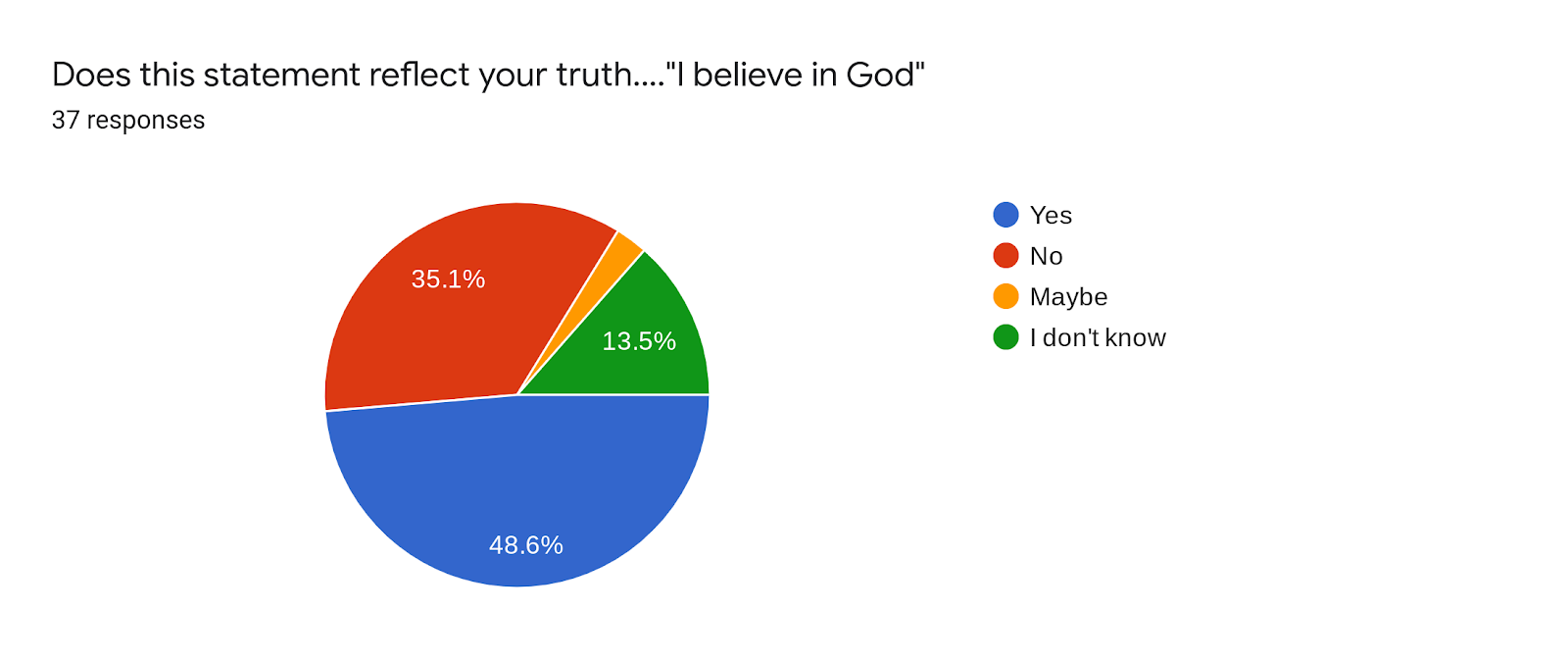
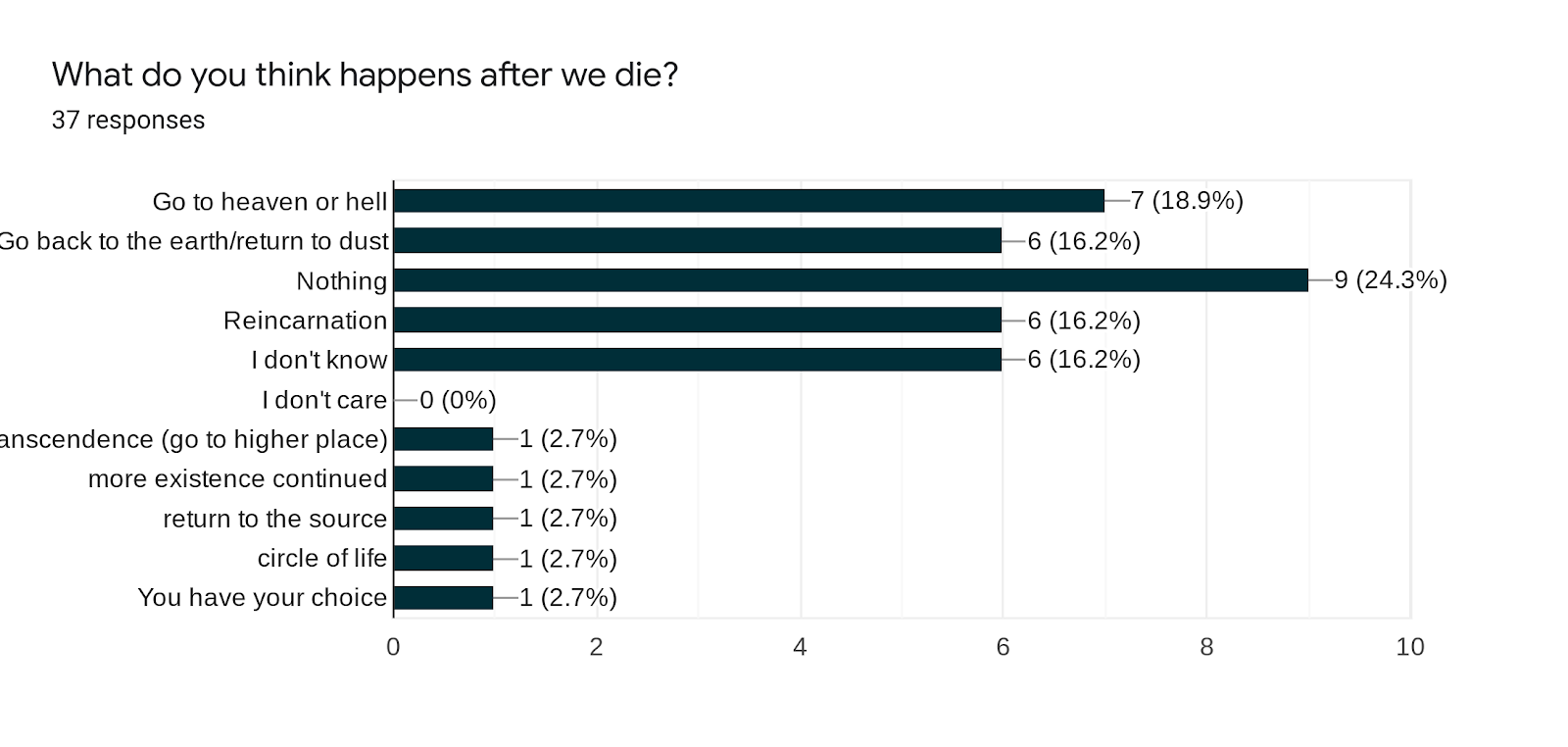
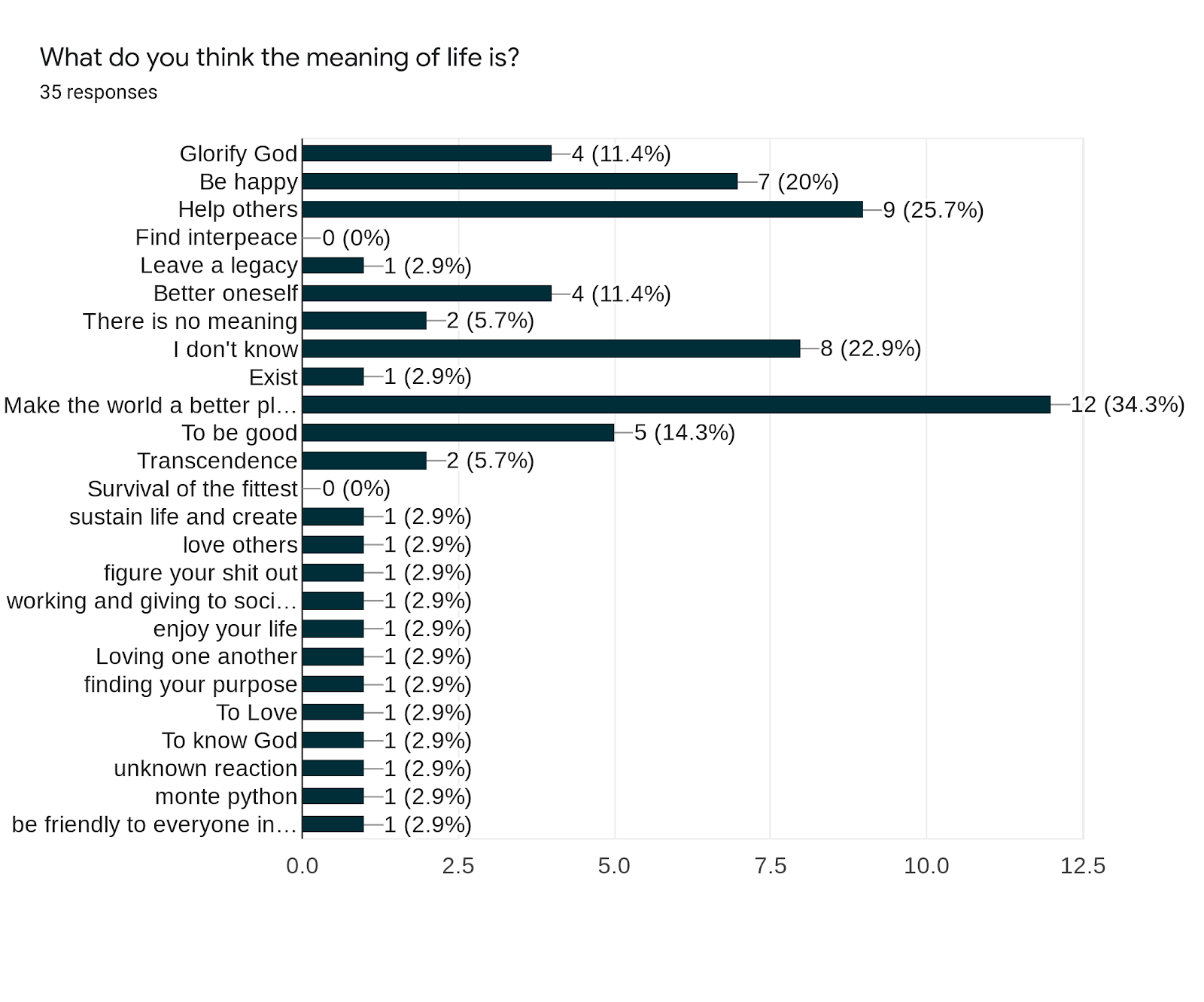
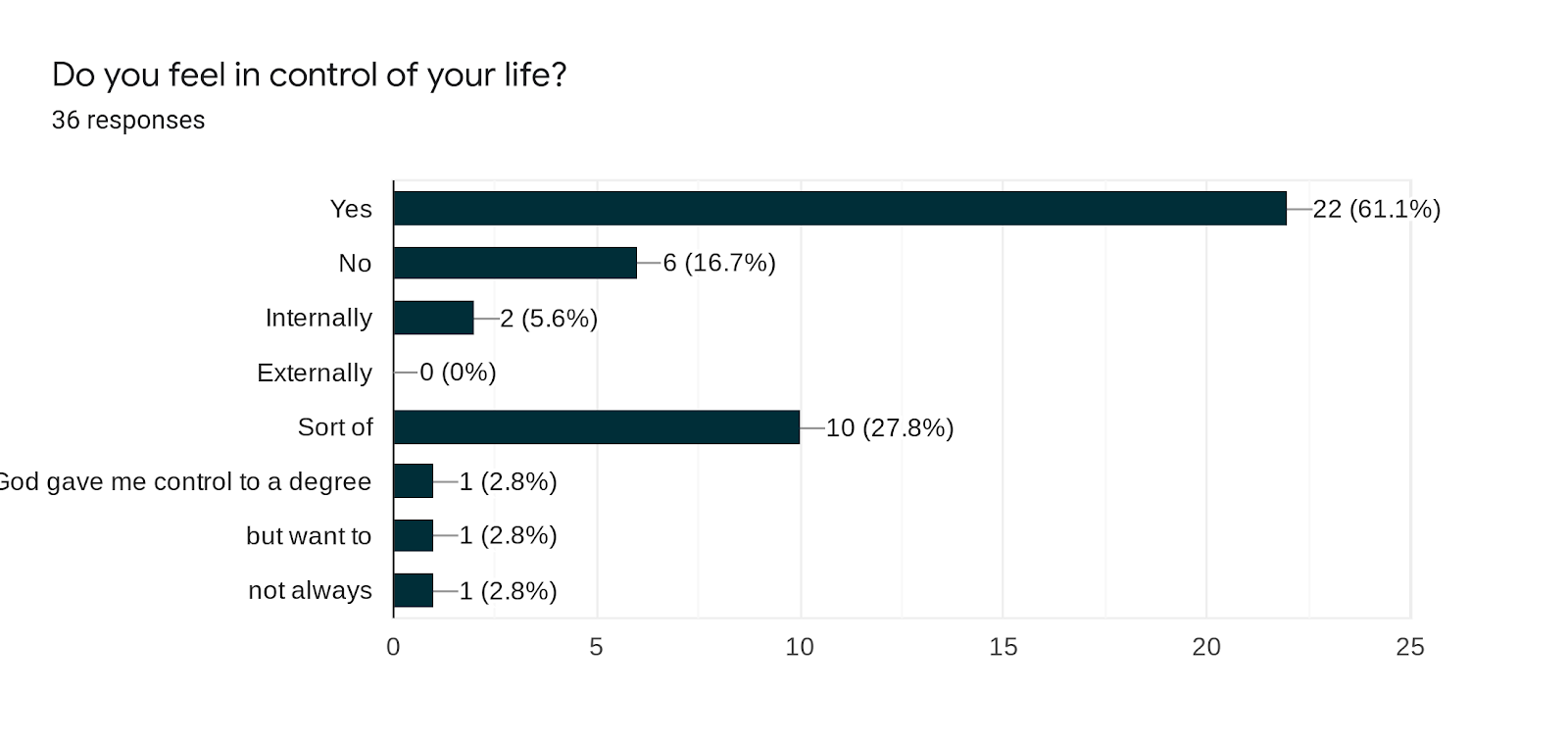

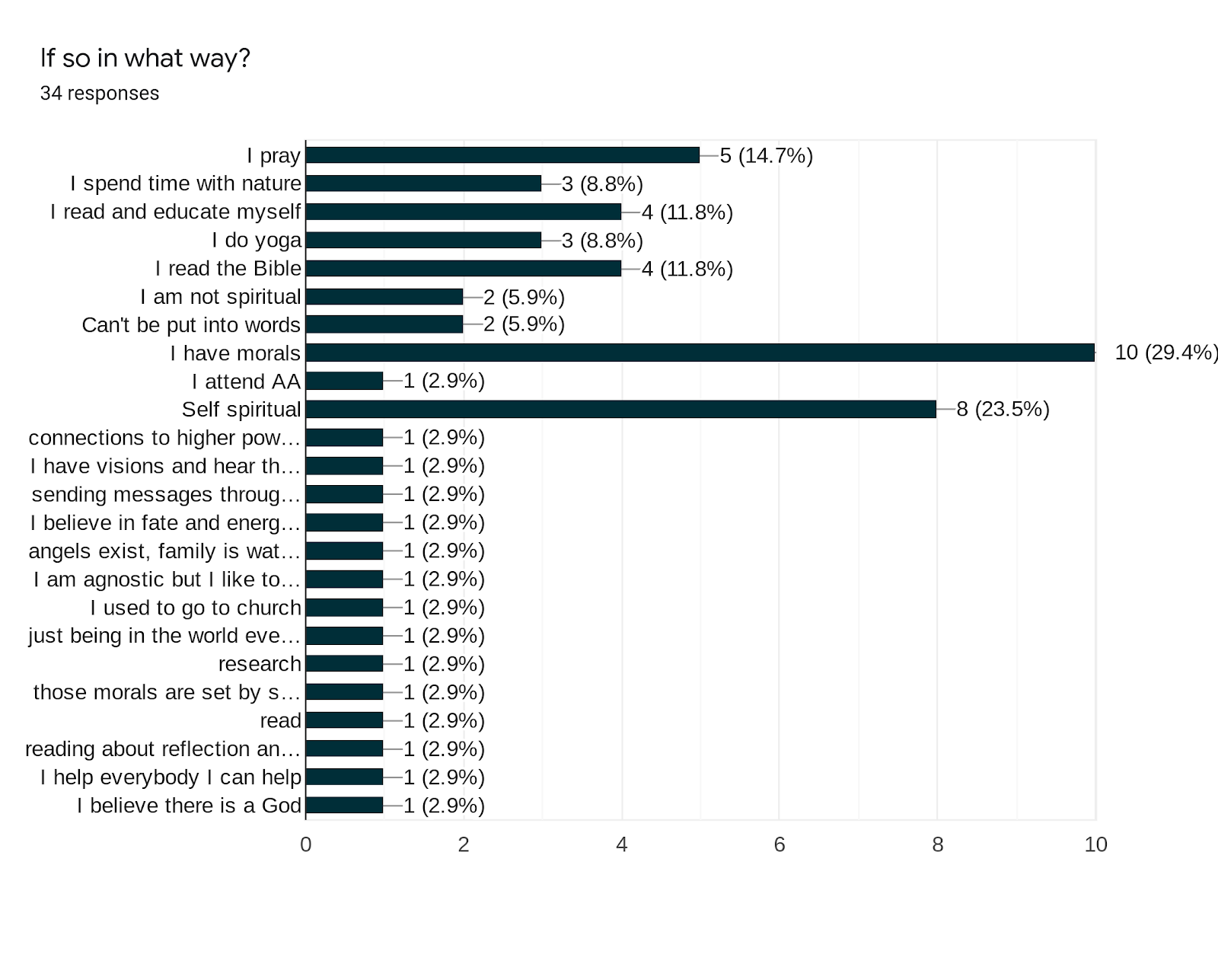
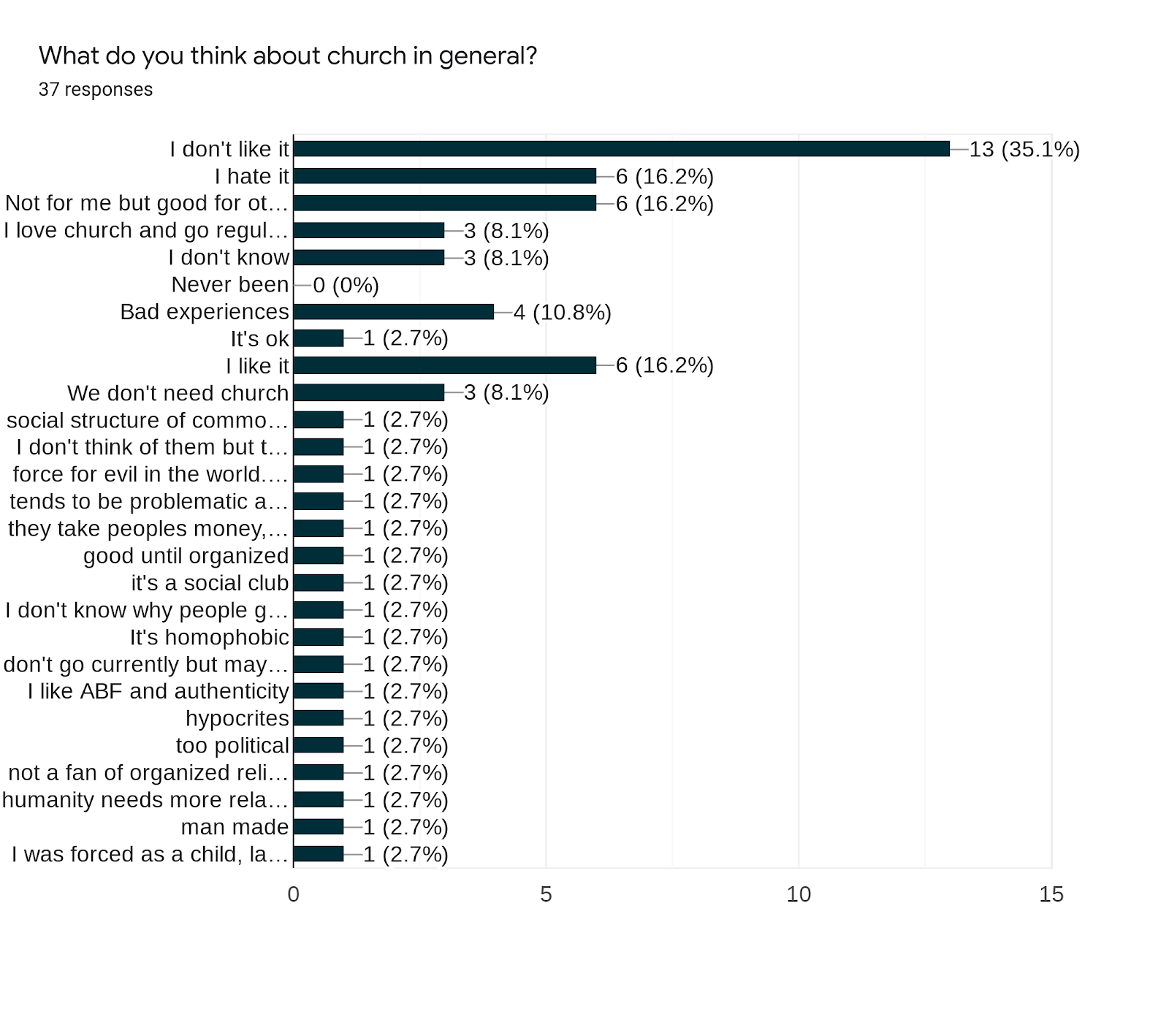
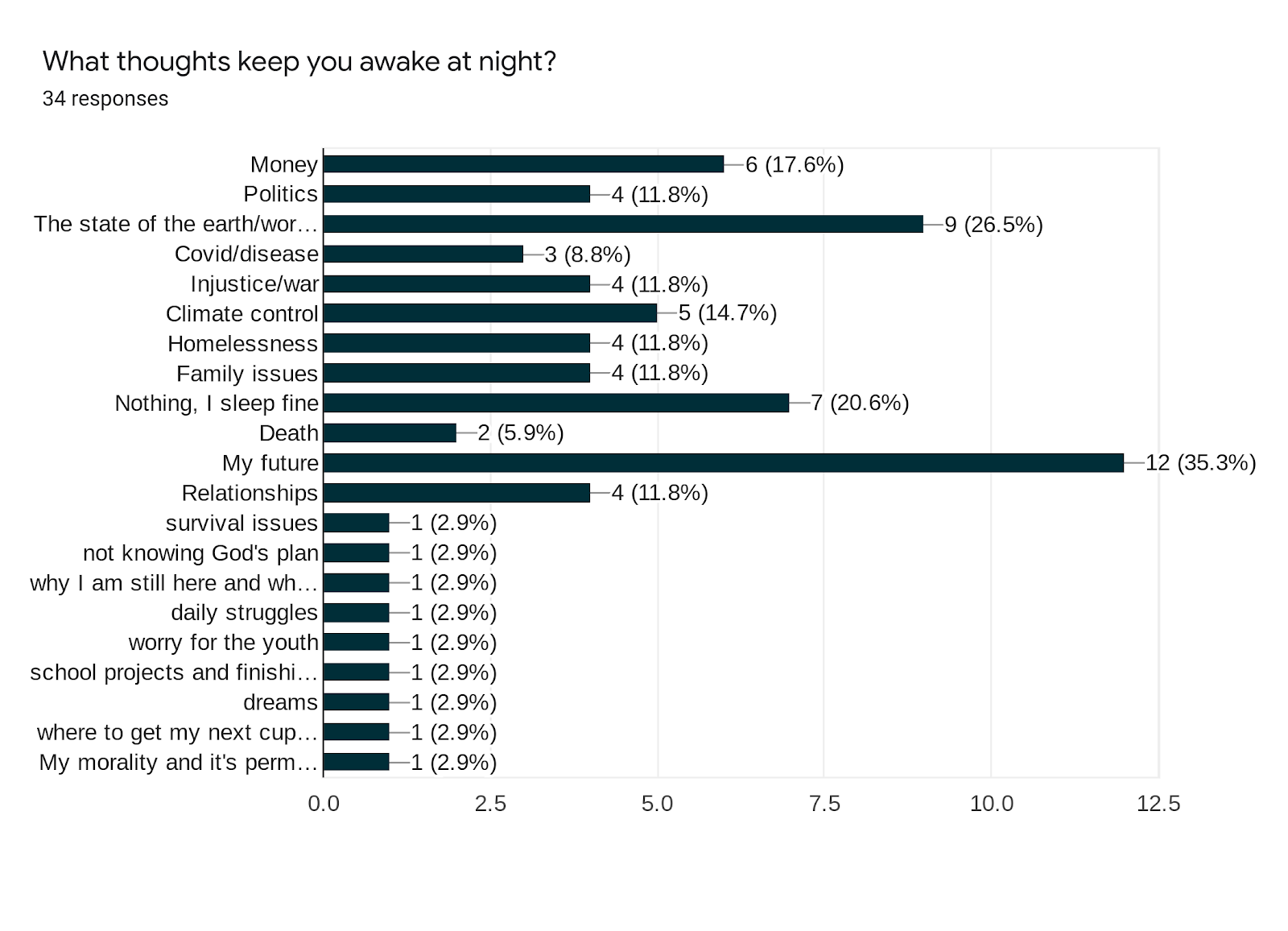
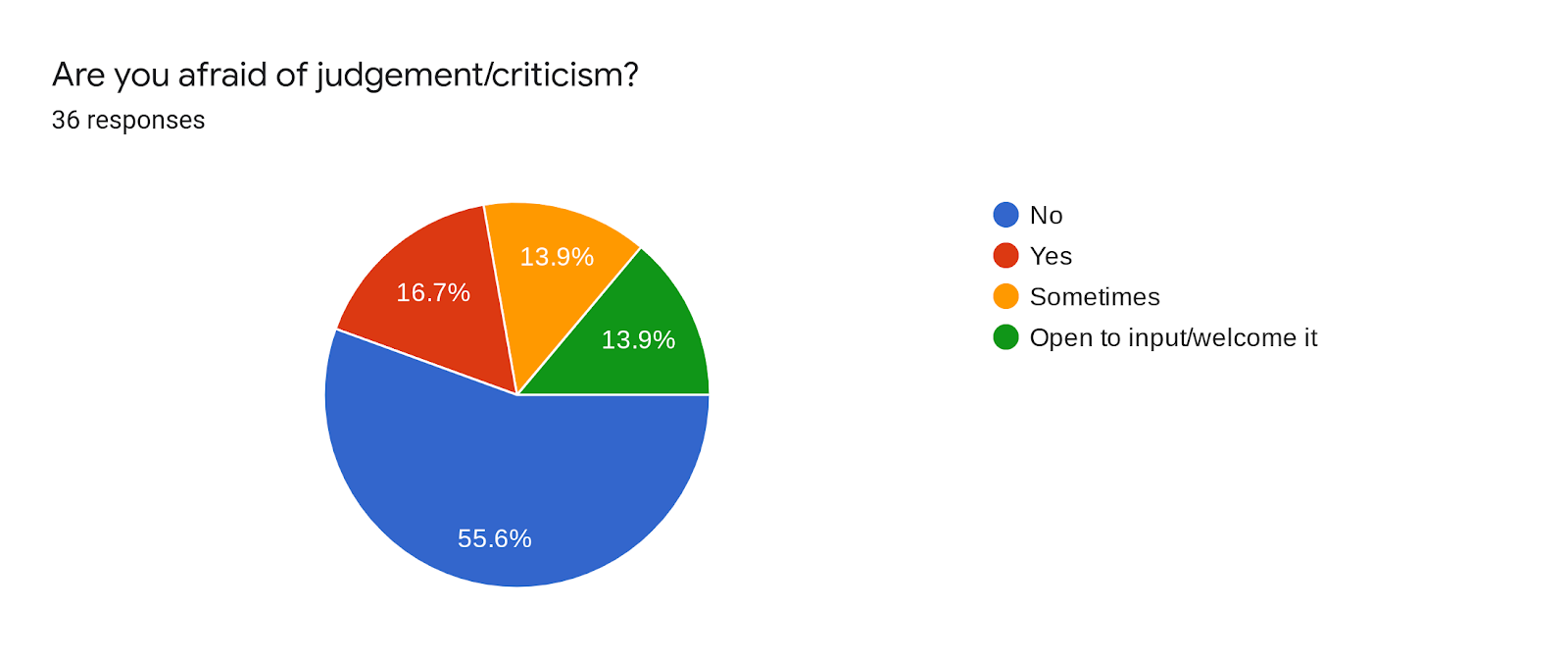
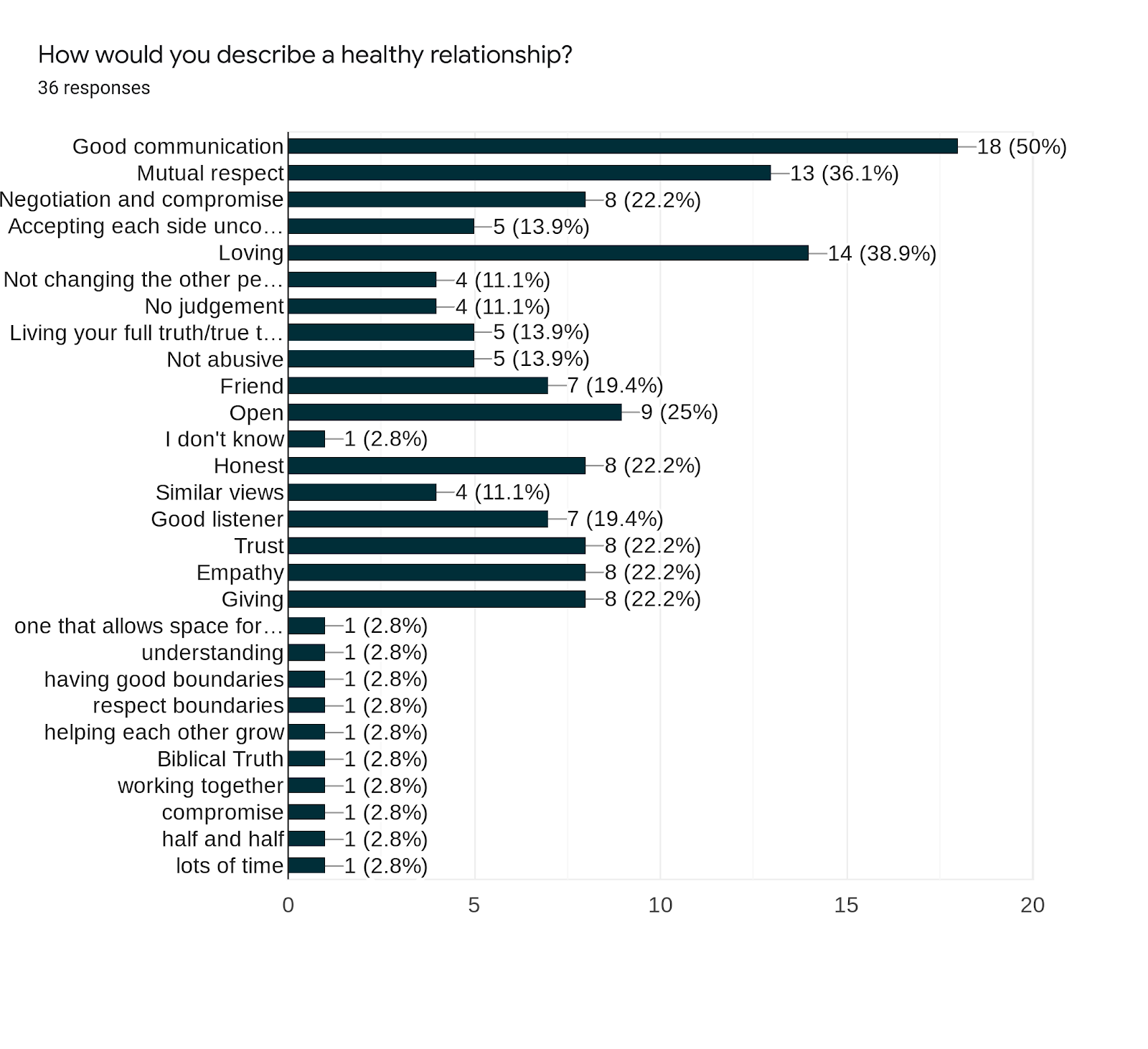

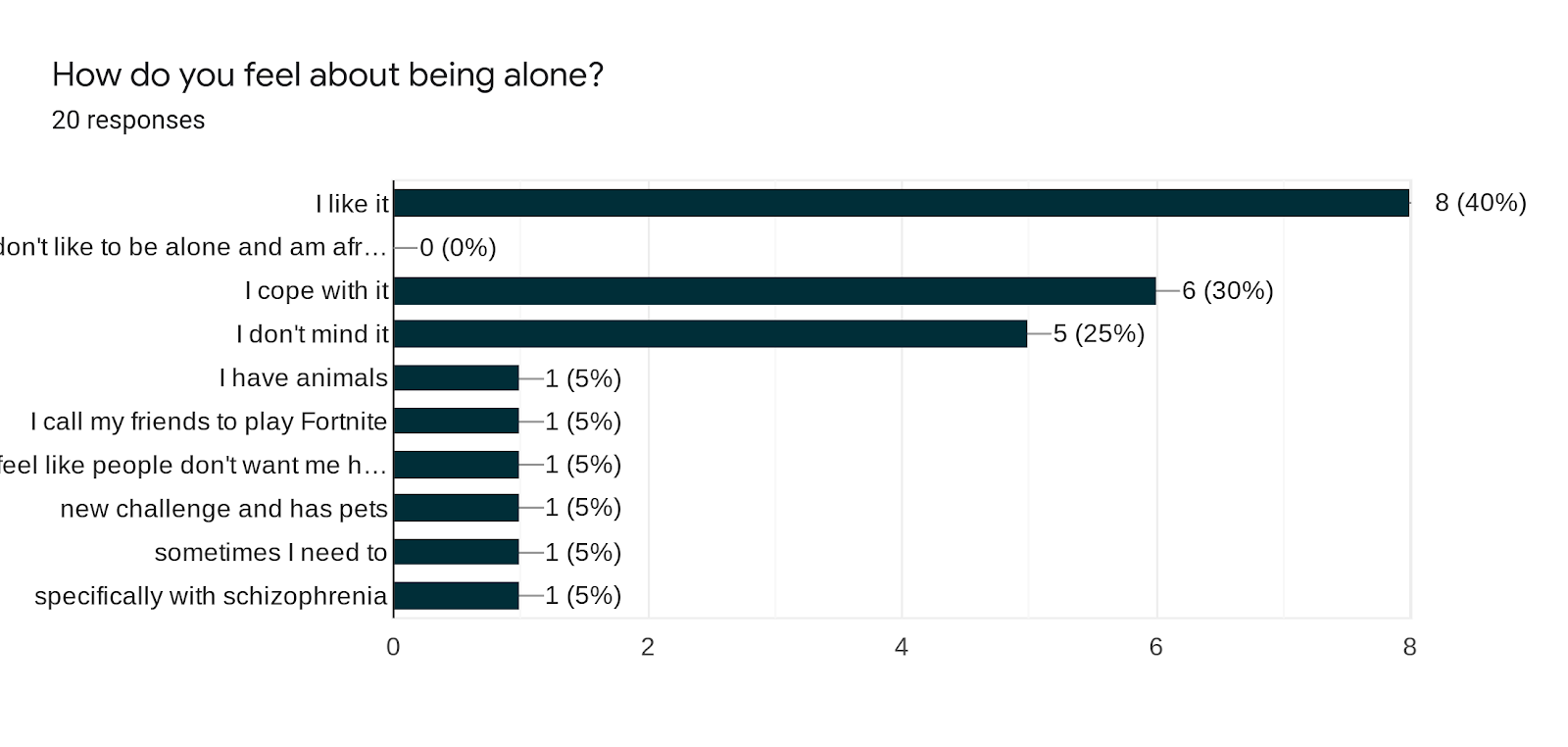

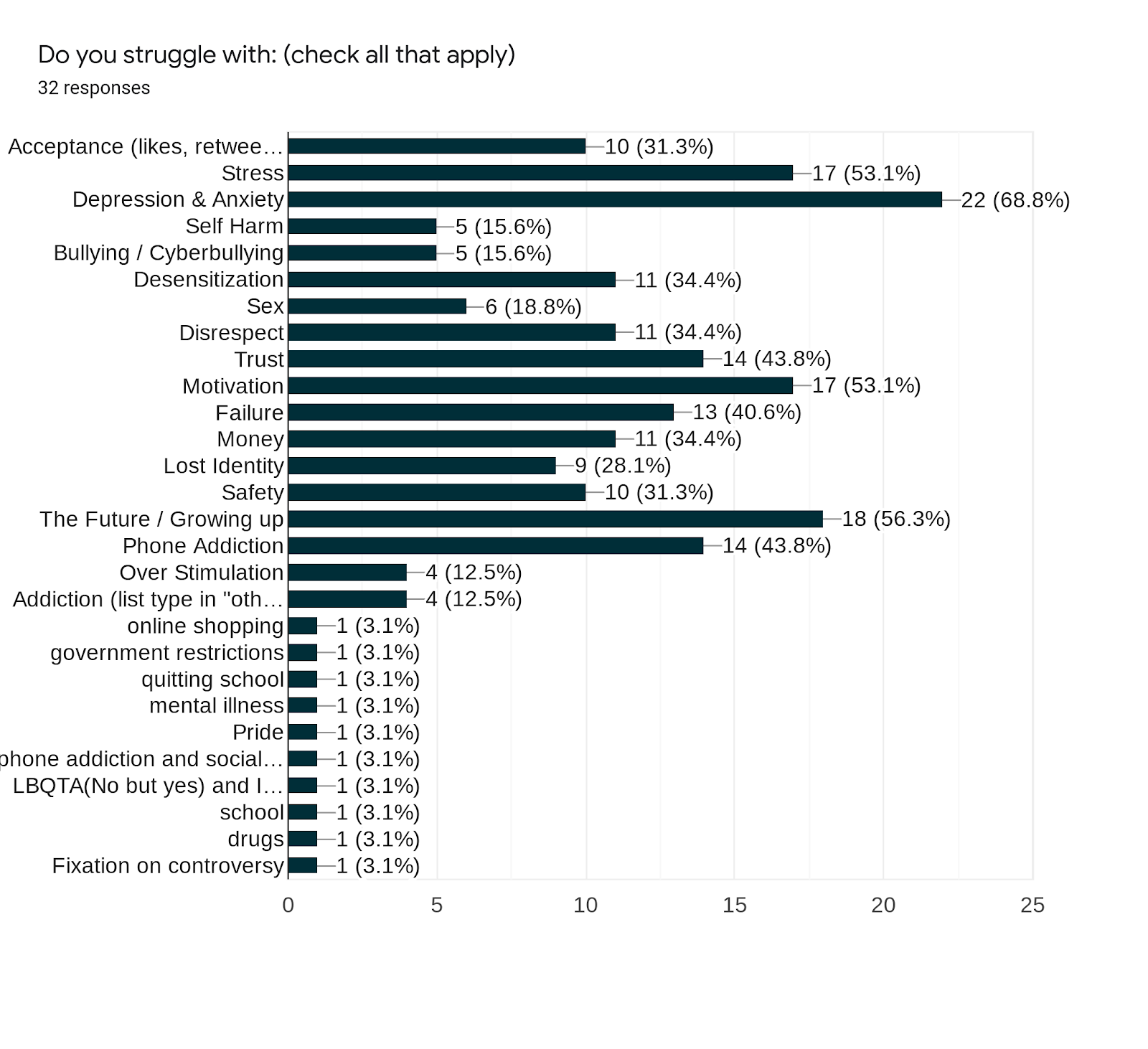
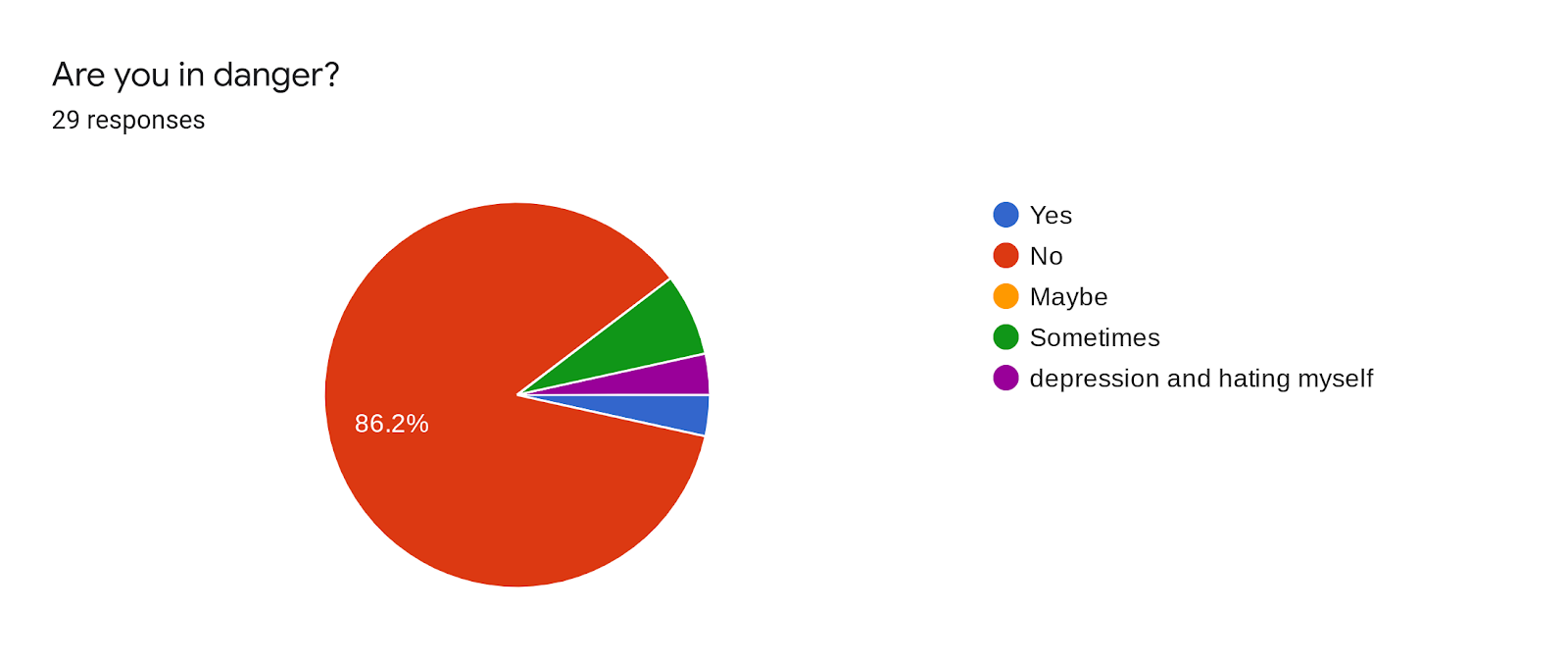
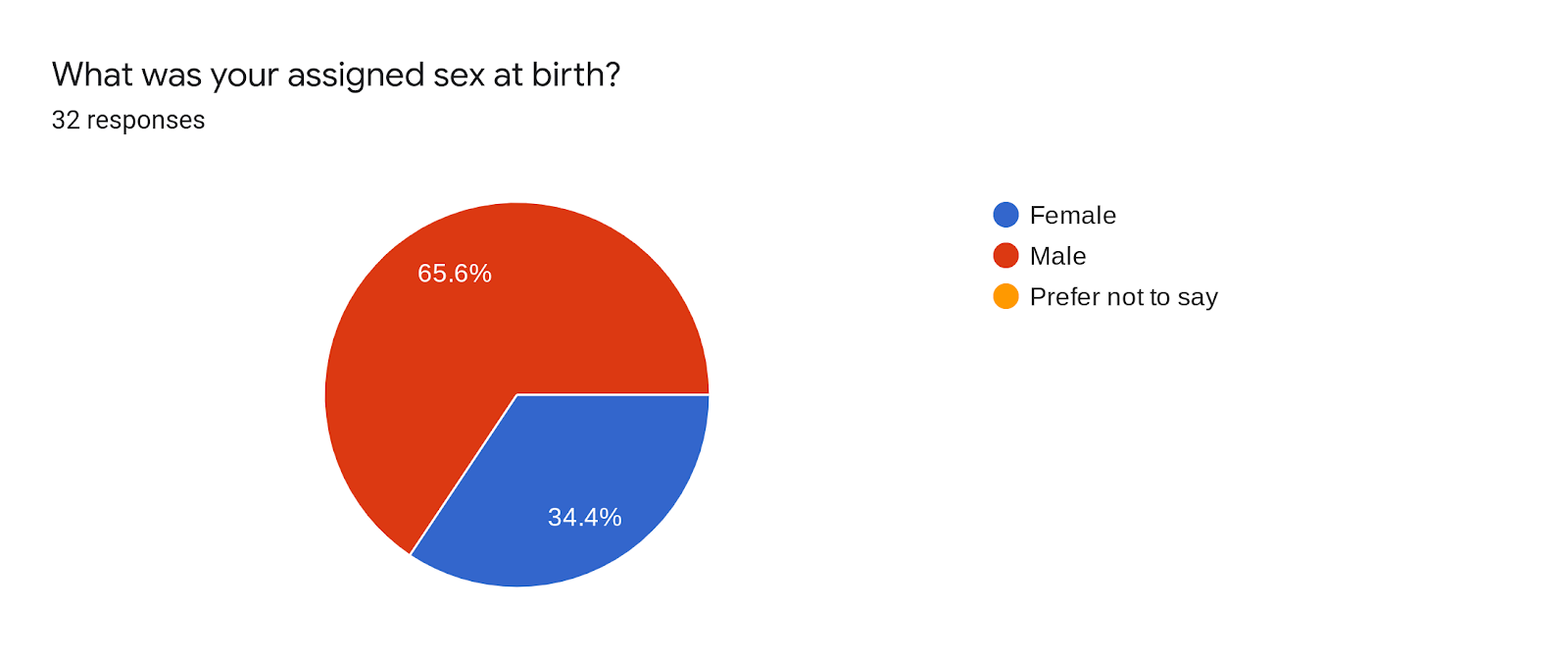
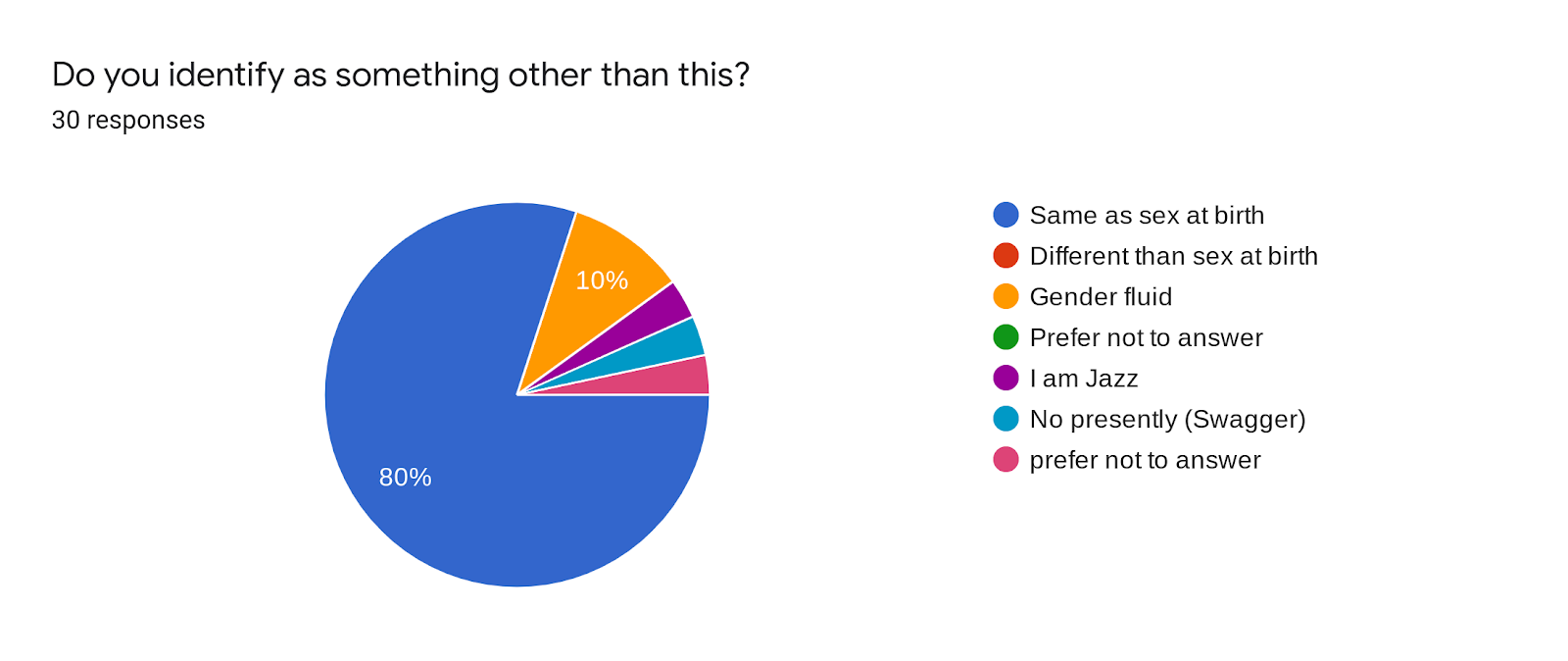









 Letters to the Editor
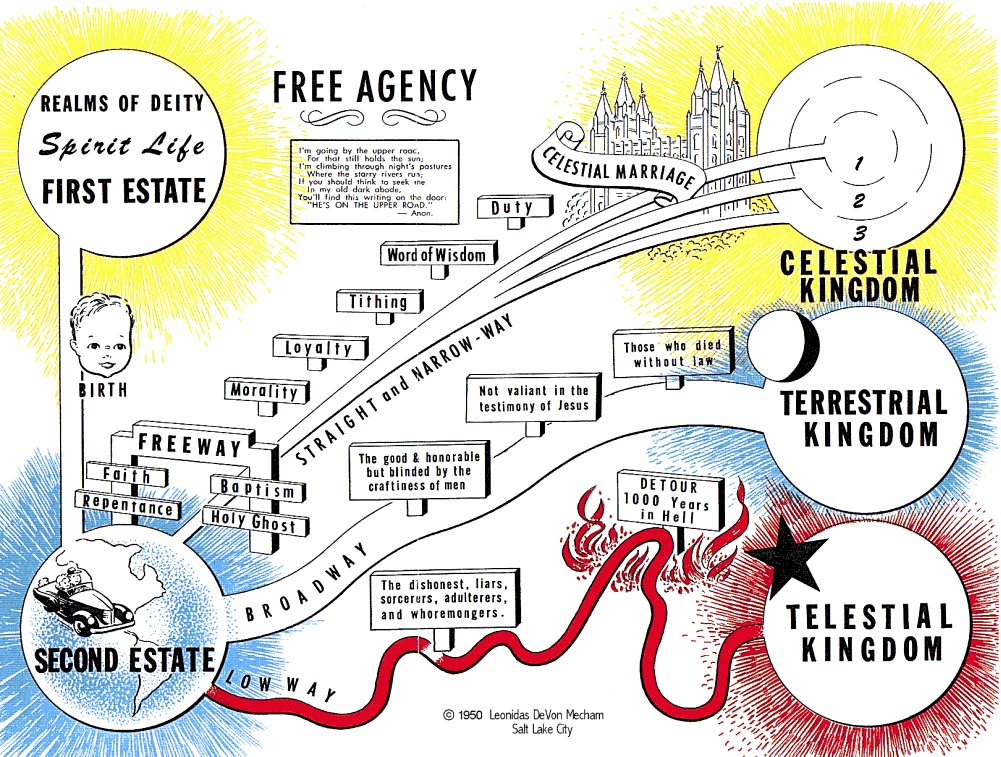 LDS Artist Rendering

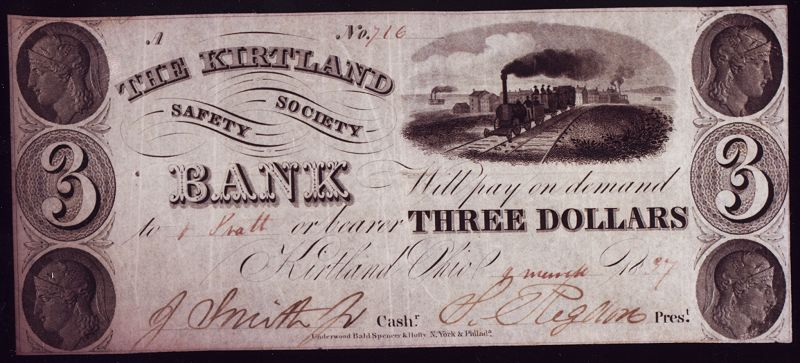


 Ancient Paths (The) Ep. 7: Sandra Tanner Interview (01/23/2008)


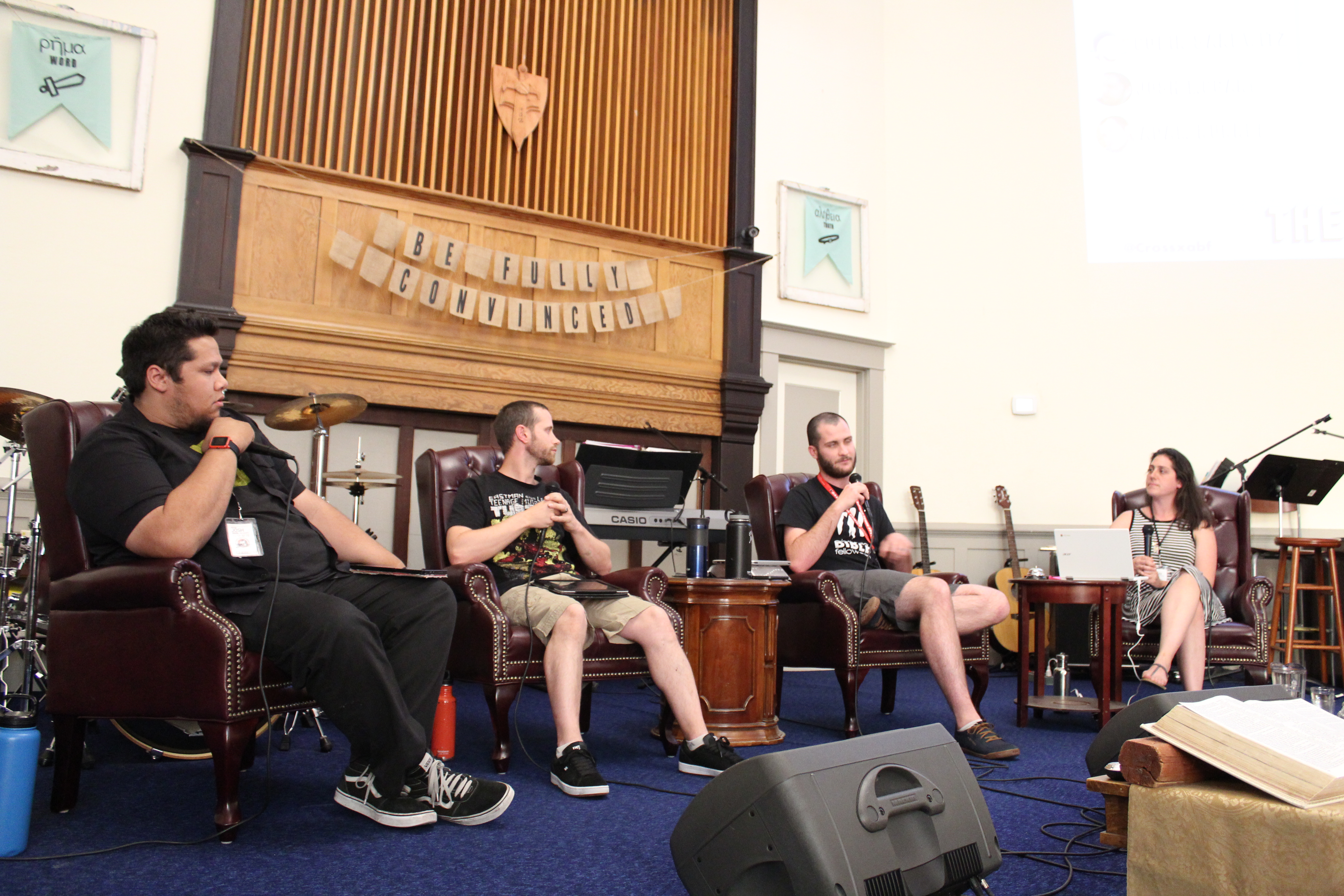

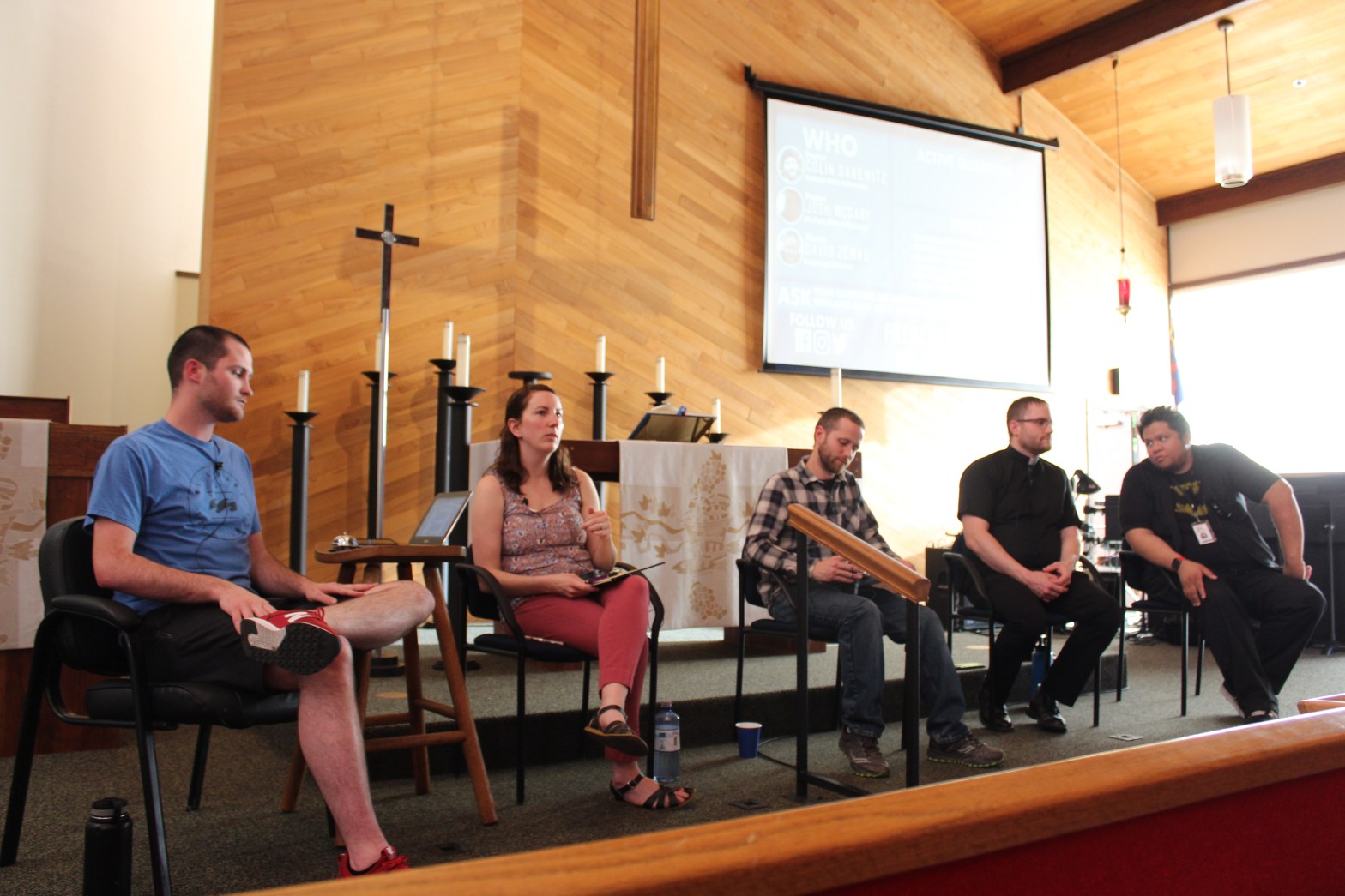

:format(webp)/cdn.vox-cdn.com/uploads/chorus_image/image/58639205/161759.0.png)



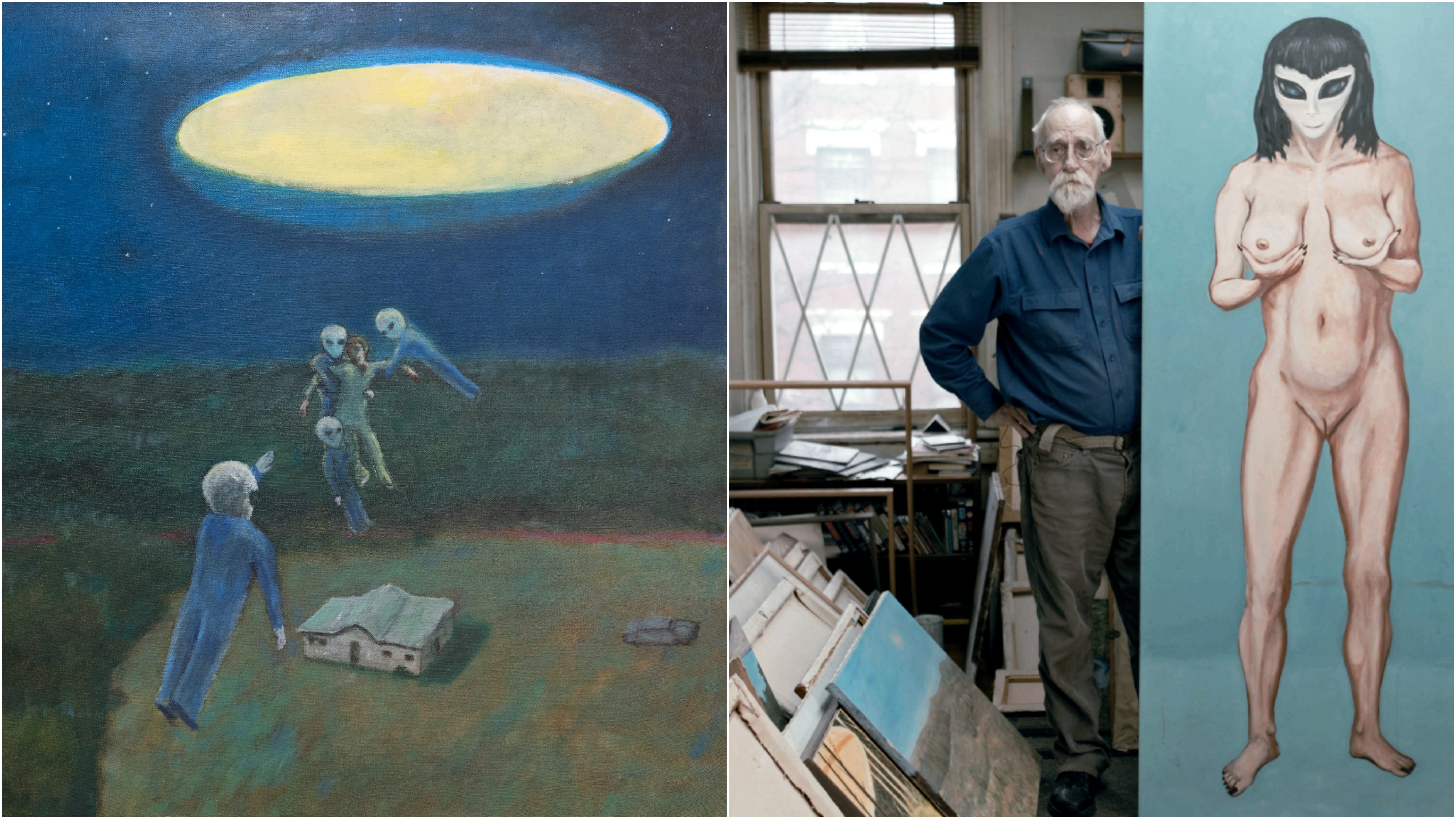
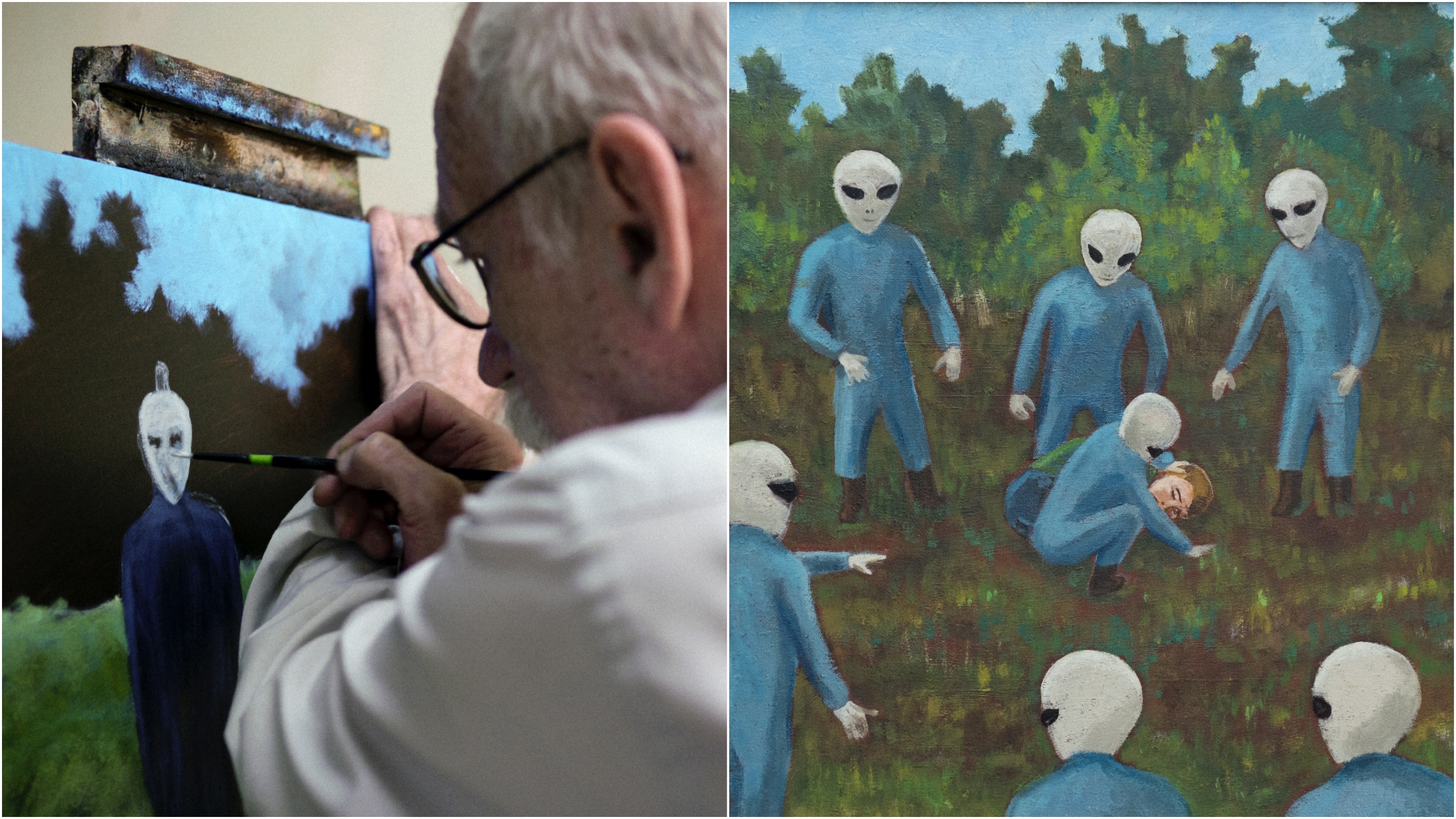

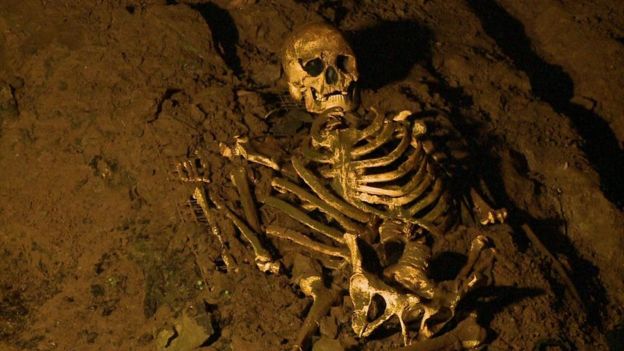
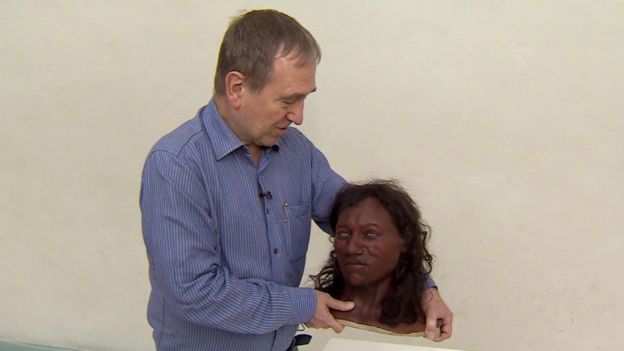
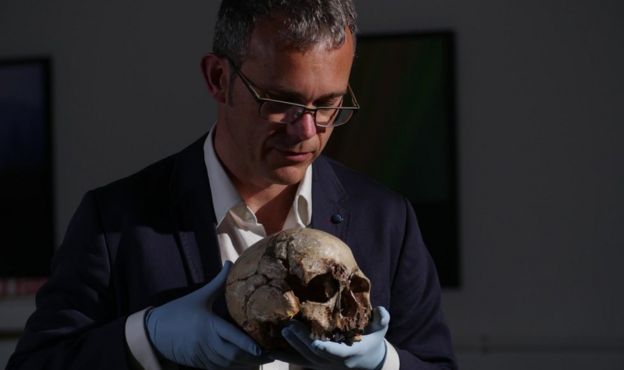


 abfpdx.org

You must be logged in to post a comment.