
September 24, 2017 / Josh McGary / Jesus and The Supernatural Part Four
British Supermarket Offers ‘Finger Vein’ Payment In Worldwide First
By Katie Morley
A UK supermarket has become the first in the world to let shoppers pay for groceries using just the veins in their fingertips.
Customers at the Costcutter store, at Brunel University in London, can now pay using their unique vein pattern to identify themselves.
The firm behind the technology, Sthaler, has said it is in “serious talks” with other major UK supermarkets to adopt hi-tech finger vein scanners at pay points across thousands of stores.
It works by using infrared to scan people’s finger veinsand then links this unique biometric map to their bank cards. Customers’ bank details are then stored with payment provider Worldpay, in the same way you can store your card details when shopping online. Shoppers can then turn up to the supermarket with nothing on them but their own hands and use it to make payments in just three seconds.
Finger vein-scanning is a proven technology in Japan #biometric #payments buff.ly/2uMewjw https://t.co/eKfsThfPPO—
Sthaler (@SthalerLtd) July 12, 2017
It comes as previous studies have found fingerprint recognition, used widely on mobile phones, is vulnerable to being hacked and can be copied even from finger smears left on phone screens.
But Sthaler, the firm behind the technology, claims vein technology is the most secure biometric identification method as it cannot be copied or stolen.
Sthaler said dozens of students were already using the system and it expected 3,000 students out of 13,000 to have signed up by November.
Finger print payments are already used widely at cash points in Poland, Turkey and Japan.
Vein scanners are also used as a way of accessing high-security UK police buildings and authorising internal trading at least one major British investment bank.
The firm is also in discussions with nightclubs, gyms about using the technology to verify membership and even Premier League football clubs to check people have the right access to VIP hospitality areas.

The technology uses an infrared light to create a detailed map of the vein pattern in your finger. It requires the person to be alive, meaning in the unlikely event a criminal hacks off someone’s finger, it would not work. Sthaler said it take just one minute to sign up to the system initially and, after that, it takes just seconds to place your finger in a scanner each time you reach the supermarket checkout.
Simon Binns, commercial director of Sthaler, told the Daily Telegraph: ‘This makes payments so much easier for customers.
“They don’t need to carry cash or cards. They don’t need to remember a pin number. You just bring yourself. This is the safest form of biometrics. There are no known incidences where this security has been breached.
“When you put your finger in the scanner it checks you are alive, it checks for a pulse, it checks for haemoglobin. ‘Your vein pattern is secure because it is kept on a database in an encrypted form, as binary numbers. No card details are stored with the retailer or ourselves, it is held with Worldpay, in the same way it is when you buy online.”
Nick Telford-Reed, director of technology innovation at Worldpay UK, said: “In our view, finger vein technology has a number of advantages over fingerprint. This deployment of Fingopay in Costcutter branches demonstrates how consumers increasingly want to see their payment methods secure and simple.”
Big Business Wins the Fight for DRM Standards for Video Streaming.
By Kate Conger

A fight over the future of video streaming has been brewing for years—and it finally came to a head today, with a major electronic privacy organization bowing out of the consortium that sets standards for the web.
The Electronic Frontier Foundation (EFF) resigned from the World Wide Web Consortium (W3C) today over the W3C’s freshly-released recommendations on protecting copyright in streaming video. W3C, which is directed by the inventor of the internet Tim Berners-Lee, should be a natural ally of the EFF—but the fight over protecting security researchers who uncover vulnerabilities in video streaming has driven a wedge between the two organizations.
“The whole problem that we have here is this is a super technical, relatively boring, unbelievably important issue. That’s such a horrific toxic cocktail,” Cory Doctorow, the EFF’s advisory committee representative to W3C, told Gizmodo. “The W3C is using its patent pool and moral authority to create a system that’s not about empowering users but controlling users.”
The dispute focuses on Digital Rights Management (DRM), which enables media companies to surveil their consumers and make sure they’re just binge-watching episodes of Game of Thrones, not binge-pirating. (Although DRM is most commonly found in video streaming platforms, it also makes appearances in everything from coffee machines to tractors.) DRM gets legal backing from the Digital Millennium Copyright Act (DMCA), which makes it a felony for security pros to find and disclose vulnerabilities in DRM.
DRM is usually managed by plugins like Adobe Flash or Microsoft Silverlight, but W3C’s recommendations make it possible for DRM to be managed by browsers. The EFF and other organizations wanted browsers that adopt the standard to agree to protect security researchers and not pursue them under the DMCA, but W3C didn’t make that part of the standard—pissing off a bunch of security professionals and open web advocates. It feels cynical and hypocritical for an organization founded on principles of openness to cave to the constraints of DRM and not stick up for researchers and users.
W3C normally makes decisions based on consensus, but switched to a majority-vote system because DRM was so divisive among its members, Doctorow said. CEO Jeff Jaffe called the dispute “one of the most divisive debates in the history of the W3C Community.”
“I know from my conversations that many people are not satisfied with the result,” Jaffe wrote of the recommendations. “And there is reason to respect those who want a better result. But my personal reflection is that we took the appropriate time to have a respectful debate about a complex set of issues and provide a result that will improve the web for its users.”
Doctorow told Gizmodo that he proposed a compromise to protect security researchers from prosecution, but that W3C rejected it. “We will stand down on our views on DRM but you have to promise that you’ll only use DRM law like the DMCA when there is some other cause of action like a copyright infringement,” he explained. That way, if researchers broke DRM only to expose a security flaw, they would be protected. But W3C members like Netflix weren’t interested in discussing a compromise, he said.
“The irony here is that Netflix only exists because they did and continue to do something that outraged the entertainment industry,” Doctorow explained. “The web should have the same standard that you guys had when you were starting. It should be legal to do things that are legal, and if that upsets you you should make a better product or convince Congress to stop it.”
Because of the changes to W3C rules, the EFF lost faith in the process. “We don’t think that there’s any use in throwing our donor’s money, our energy and our limited time at a process where we don’t think the other side carried themselves in good faith,” Doctorow said.
In an open letter explaining EFF’s decision to walk away from W3C, Doctorow wrote: “The business values of those outside the web got important enough, and the values of technologists who built it got disposable enough, that even the wise elders who make our standards voted for something they know to be a fool’s errand.”
In addition to the lack of protections for security research, EFF says the W3C recommendations harm the automation of making video accessible to people with disabilities and archiving the internet.
For their part, W3C members Netflix, Microsoft, Comcast, the Motion Picture Association of America, and the Recording Industry Association of America
all praised the decision.
“Integration of DRM into web browsers delivers improved performance, battery life, reliability, security and privacy to users watching their favorite TV shows and movies on Netflix and other video services,” wrote Netflix in a statement. “We can finally say goodbye to third-party plugins, making for a safer and more reliable web.”
New Research Suggest Climate Change Not As Threatening As Previously Thought
By Henry Bodkin
the planet than previously thought because scientists got their modelling wrong, a new study has found. New research by British scientists reveals the world is being polluted and warming up less quickly than 10-year-old forecasts predicted, giving countries more time to get a grip on their carbon output.
An unexpected “revolution” in affordable renewable energy has also contributed to the more positive outlook.
Experts now say there is a two-in-three chance of keeping global temperatures within 1.5 degrees above pre-industrial levels, the ultimate goal of the 2015 Paris Agreement.
Paris climate change deal: Moment agreement announced
They also condemned the “overreaction” to the US’s withdrawal from the Paris Climate Accord, announced by Donald Trump in June, saying it is unlikely to make a significant difference.
According to the models used to draw up the agreement, the world ought now to be 1.3 degrees above the mid-19th-Century average, whereas the most recent observations suggest it is actually between 0.9 and 1 degree above.
We’re in the midst of an energy revolution and it’s happening faster than we thoughtProfessor Michael Grubb, University College London
The discrepancy means nations could continue emitting carbon dioxide at the current rate for another 20 years before the target was breached, instead of the three to five predicted by the previous model.
“When you are talking about a budget of 1.5 degrees, then a 0.3 degree difference is a big deal”, said Professor Myles Allen, of Oxford University and one of the authors of the new study.
Published in the journal Nature Geoscience, it suggests that if polluting peaks and then declines to below current levels before 2030 and then continue to drop more sharply, there is a 66 per cent chance of global average temperatures staying below 1.5 degrees.
The goal was yesterday described as “very ambitious” but “physically possible”.
Another reason the climate outlook is less bleak than previously thought is stabilising emissions, particularly in China.
Renewable energy has also enjoyed more use than was predicted.
China has now acquired more than 100 gigawatts of solar cells, 25 per cent of which in the last six months, and in the UK, offshore wind has turned out to cost far less than expected.
Professor Michael Grubb, from University College London, had previously described the goals agreed at Paris in 2015 as “incompatible with democracy”.
Outrage at Trump’s withdrawal from Paris climate agreement
But yesterday he said: “We’re in the midst of an energy revolution and it’s happening faster than we thought, which makes it much more credible for governments to tighten the offer they put on the table at Paris.”
He added that President Trump’s withdrawal from the agreement would not be significant because “The White House’s position doesn’t have much impact on US emissions”.
“The smaller constituencies – cities, businesses, states – are just saying they’re getting on with it, partly for carbon reduction, but partly because there’s this energy revolution and they don’t want to be left behind.”
The new research was published as the Met Office announced that a “slowdown” in the rate of global temperature rises reported over roughly the first decade of this century was now over.
The organisation said the slowdown in rising air temperatures between 1999 and 2014 happened as a result of a natural cycle in the Pacific, which led to the ocean circulation speeding up, causing it to pull heat down in the deeper ocean away from the atmosphere.
However, that cycle has now ended.
Claire Perry, the climate change and industry minister, claimed Britain had already demonstrated that tackling climate change and running a strong economy could go “hand in hand”.
“How is the time to build on our strengths and cement our position as a global hub for investment in clean growth,” she said.
Studies of Pregnant Mice Highlight Link Between Immune Response and Autism
A century ago, a largely forgotten, worldwide epidemic that would kill nearly a million people was beginning to take hold. Labelled as sleepy sickness — or more properly encephalitis lethargica — the disease caused a number of bizarre mental and physical symptoms and frequently left people in a catatonic state, sometimes for decades. (Oliver Sacks described his successful treatment of some of them in 1969, in the book Awakenings.) The cause has never been officially pinned down, but the most common suggestion is that some kind of infectious agent triggered an autoimmune response, which targeted and inflamed part of the brain.
The role of the immune system in mental disorders is subject to much important research at the moment. The onset of conditions from depression and psychosis to obsessive–compulsive disorder has been linked to the abrupt changes in biology and physiology that occur when the body responds to infection, especially in childhood. And some researchers have traced the possible chain of events back a generation. Studies have highlighted that pregnant women could react to infection in a way that influences their baby’s developing brain, which could lead to cognitive and neurodevelopmental problems in the child.
One consequence of this ‘maternal immune activation’ (MIA) in some women could be to increase the risk of autism in their children. And two papers published online this week in Nature (S. Kim et al. Naturehttp://dx.doi.org/10.1038/nature23910; 2017 and Y. S. Yim et al. Naturehttp://dx.doi.org/10.1038/nature23909; 2017) use animal models to examine how this might happen, as well as suggest some possible strategies to reduce the risk.
Kim et al. looked at the impact of MIA on the brains and behaviour of mice. They found that pregnant female animals exposed to circumstances similar to a viral infection have offspring that are more likely to show atypical behaviour, and they unpick some of the cellular and molecular mechanisms responsible. Some of their results confirm what scientists already suspected: pregnancy changes the female mouse’s immune response, specifically, by turning on the production of a protein called interleukin-17a. But the authors also conducted further experiments that give clues about the mechanisms at work.
“It’s tempting to draw parallels with mechanisms that might increase the risk of autism in some people.”
The types of bacteria in the mouse’s gut seem to be important. When the scientists used antibiotics to wipe out common gut microorganisms called segmented filamentous bacteria in female mice, this seemed to protect the animals’ babies from the impact of the simulated infection. The offspring of mice given the antibiotic treatment did not show the unusual behaviours, such as reduced sociability and repetitive actions. Segmented filamentous bacteria are known to encourage cells to produce more interleukin-17a, and an accompanying News & Views article (C. M. Powell Nature http://dx.doi.org/10.1038/nature24139; 2017) discusses one obvious implication: some pregnant women could use diet or drugs to manipulate their gut microbiome to reduce the risk of harm to their baby if an infection triggers their immune response. Much science still needs to be done before such a course could be recommended — not least further research to confirm and build on these results.
Yim et al. analysed the developing brain of mice born to mothers who showed MIA. They traced the abnormalities to a region called the dysgranular zone of the primary somato-sensory cortex (S1DZ). The authors genetically engineered the mice so that neurons in this region could be activated by light, and they showed that activation of S1DZ induced the same telltale atypical behaviours, even in mice that were born to mothers with no MIA.
It’s unusual to be able to demonstrate such a direct link between the activities of brain regions and specific behaviours — although plenty of work on mental disorders makes a strong theoretical case for linking particular conditions to over- and under-active brain zones and circuitry.
Encephalitis lethargica, for example, has been linked to changes in the deep regions of the basal ganglia, and the disease produces symptoms that are similar to those often seen in autism, including stereotyped and repetitive behaviours. Yim et al.’s study shows that the S1DZ region projects to one of those deep brain regions — the striatum — and that this connection helps to trigger repetitive actions in the animals. But S1DZ also connects to a separate, distinct, region in the cortex, and this is what seems to drive the changes in sociability.
Taking the two studies together, it’s tempting to draw parallels with mechanisms that might increase the risk of autism in some people and explain some of its symptoms. Scientists and others should be cautious about doing so — much can change when results from animal models are applied to human biology. But the studies do offer some intriguing leads.
Light Has Been Stored as Sound For the First Time
By Fiona Macdonald
For the first time ever, scientists have stored light-based information as sound waves on a computer chip – something the researchers compare to capturing lightning as thunder.
While that might sound a little strange, this conversion is critical if we ever want to shift from our current, inefficient electronic computers, to light-based computers that move data at the speed of light.
Light-based or photonic computers have the potential to run at least 20 times faster than your laptop, not to mention the fact that they won’t produce heat or suck up energy like existing devices.
This is because they, in theory, would process data in the form of photons instead of electrons.
We say in theory, because, despite companies such as IBM and Intel pursuing light-based computing, the transition is easier said than done.
Coding information into photons is easy enough – we already do that when we send information via optical fibre.
But finding a way for a computer chip to be able to retrieve and process information stored in photons is tough for the one thing that makes light so appealing: it’s too damn fast for existing microchips to read.
This is why light-based information that flies across internet cables is currently converted into slow electrons. But a better alternative would be to slow down the light and convert it into sound.
And that’s exactly what researchers from the University of Sydney in Australia have now done.
“The information in our chip in acoustic form travels at a velocity five orders of magnitude slower than in the optical domain,” said project supervisor Birgit Stiller.
“It is like the difference between thunder and lightning.”
 University of Sydney
This means that computers could have the benefits of data delivered by light – high speeds, no heat caused by electronic resistance, and no interference from electromagnetic radiation – but would also be able to slow that data down enough so that computers chips could do something useful with it.
“For [light-based computers] to become a commercial reality, photonic data on the chip needs to be slowed down so that they can be processed, routed, stored and accessed,” said one of the research team, Moritz Merklein.
“This is an important step forward in the field of optical information processing as this concept fulfils all requirements for current and future generation optical communication systems,” added team member Benjamin Eggleton.
The team did this by developing a memory system that accurately transfers between light and sound waves on a photonic microchip – the kind of chip that will be used in light-based computers.
You can see how it works in the animation below:
First, photonic information enters the chip as a pulse of light (yellow), where it interacts with a ‘write’ pulse (blue), producing an acoustic wave that stores the data.
Another pulse of light, called the ‘read’ pulse (blue), then accesses this sound data and transmits as light once more (yellow).
While unimpeded light will pass through the chip in 2 to 3 nanoseconds, once stored as a sound wave, information can remain on the chip for up to 10 nanoseconds, long enough for it to be retrieved and processed.
The fact that the team were able to convert the light into sound waves not only slowed it down, but also made data retrieval more accurate.
And, unlike previous attempts, the system worked across a broad bandwidth.
“Building an acoustic buffer inside a chip improves our ability to control information by several orders of magnitude,” said Merklein.
“Our system is not limited to a narrow bandwidth. So unlike previous systems this allows us to store and retrieve information at multiple wavelengths simultaneously, vastly increasing the efficiency of the device,” added Stiller.
The research has been published in Nature Communications.
War With North Korea Starts to Look Inevitable
By Gordon G. Chang
“We have pretty much exhausted all the things that we could do at the Security Council at this point,” said Nikki Haley on CNN’s State of the Union on Sunday, referring to North Korea. “We wanted to be responsible and go through all diplomatic means to get their attention first,” the U.S. ambassador to the United Nations said. “If that doesn’t work, General Mattis [Defense Secretary James Mattis] will take care of it.”
The comments, no off-the-cuff remarks, mirrored her words at a White House press briefing Friday, and National Security Adviser H.R. McMaster, standing next to Haley at that briefing, was even more explicit. “I think we ought to make clear what’s different about this approach is, is that we’re out of time,” he noted, referring to sanctions. “As Ambassador Haley said before, we’ve been kicking the can down the road, and we’re out of road.”
When senior Trump administration officials talk about the end of diplomacy they raise the prospect of war. But have all measures short of war been exhausted?
CNN’s Barbara Starr reported Saturday, “North Korea’s latest ballistic missile test has renewed discussion at the highest levels of the Trump administration about how military force could be used to stop [North Korean Leader] Kim Jong Un’s development of nuclear warheads and ballistic missiles.”
The war talk is the result of exasperation by American officials who see that their actions so far have not convinced Kim, the North Korean supremo, to slow down the testing of ballistic missiles and nuclear weapons.
Take Haley’s CNN comment. Even as President Donald Trump, a U.N. skeptic, prepares to address the United Nations General Assembly, many Americans, viewing the nine ineffective sets of sanctions on North Korea since 2006, say the Security Council itself is broken.
But the Security Council is not “broken.” It was never designed to work in an era of disagreement among the five veto-wielding permanent members.
What is not working is the United States. Unfortunately, from administration to administration, American leaders have failed to use all the elements of American power. If China and Russia use their vetoes to frustrate efforts to disarm North Korea—and they do—it is because the United States has not been willing to coerce them into acting responsibly.
With regard to Moscow, recent American policymakers have been more worried about a weak Russia than a strong one. Therefore, they have opted for mild sanctions on Vladimir Putin’s dangerous behavior. Ronald Reagan, at a time when the U.S. was far weaker than it is today and the Soviet Union was far stronger than Russia is now, used American economic might to end the Cold War. Putin today is able to bedevil the U.S. at the Security Council only because Americans are afraid of what happens if they move to take him down.
At the same time, the U.S. has not stopped the People’s Republic of China. Washington has allowed Chinese banks, large and small, to launder money for the North Koreans for decades. Americans reportedly have permitted Chinese leaders to help Pyongyang transfer missiles to the Iranians. The White House did nothing when enterprises connected to the Chinese People’s Liberation Army sold mobile launchers for the North’s intercontinental ballistic missiles. The U.S. has not asked the Chinese, at least in public, how North Korea’s most advanced missiles appear to be derived from China’s Jl-1. And Washington acted as if it did not matter when Chinese businesses allegedly sold uranium hexafluoride, components, and equipment for the Kim regime’s nuclear-weapons program.
No wonder the Chinese feel free to support their North Korean allies. U.S. policymakers, they can see, have been feckless. It is one thing for, say, Liechtenstein to fail to convince Beijing to do the right thing. It is quite another for the United States of America to fail to do so. American policymakers have simply failed to coerce Beijing, failed to leave it no choice but to join in the effort to disarm the Kims.
What can the United States do to China? It can declare its largest banks “primary money-laundering concerns” under Section 311 of the Patriot Act, thereby denying them the ability to transact business in the world’s dominant currency. That would be essentially imposing a death sentence on the Chinese banking system and possibly China’s economy, perhaps the Communist Party itself.
Trump can also remind China’s leaders that U.S. Trade Representative Robert Lighthizer in the middle of last month formally initiated, pursuant to Section 301 of the Trade Act of 1974, an investigation into Chinese intellectual-property theft. A finding of such theft—virtually assured—can lead to the imposition of high across-the-board tariffs on Chinese goods.
And this month, the People’s Bank of China, the central bank, appears to have driven the renminbi lower, an indication central technocrats are once again “manipulating” their currency as that is defined by U.S. law. That gives Trump another point of leverage.
The Chinese economy, debt-fueled for years, is particularly vulnerable, especially in the run-up to the historic 19th Communist Party Congress, which begins Oct. 18. General Secretary Xi Jinping, who seeks to grab unprecedented power, cannot afford to see a major disruption of relations with the United States at this sensitive time.
The Trump administration, with the series of actions it took in the last week of June, signaled it would move against China for its support for North Korea. For instance, the Treasury Department sawed off Bank of Dandong, a small Chinese financial institution, from the global economy due to its persistent money-laundering. The Chinese, unfortunately, have continued their support for the Norks at the Security Council.
So what should the United States do? It could just give up efforts to disarm Pyongyang, as James Clapper, the former director of national intelligence, suggested in widely reported comments to CNN last month. There is an air of defeatism in American policy circles these days.
The assumption among Clapper and others is that the U.S. can deter the North Koreans indefinitely. Perhaps Washington can do that and, at the same time, stop their sale of nuclear-weapons technology to Iran and make sure they do not begin merchandising thermonuclear devices to established weapons customers, some of them terrorist groups.
But perhaps deterrence is not possible. Kim Jong Un, who surely knows what Clapper and others are saying, is obviously defiant these days. And the core goal of the Kim regime—the basis of its legitimacy—is taking over the other Korea, the one governed from Seoul.
Kim, once confident about his nukes and the means to deliver them, will almost surely attempt to use the threat of war to break America’s 64-year-old mutual-defense treaty with South Korea and get America’s 28,500 service personnel off the peninsula. Once he accomplishes that, he surely thinks he can intimidate the South into submission.
Kim has recently been talking about “final victory,” a reference to taking over the South. An overconfident despot could miscalculate and begin a chain of events spiraling into war.
Although Americans are confident in their “overwhelming” capabilities, as Trump’s comments at Joint Base Andrews on Friday indicate, the North Koreans probably do not view it that way. They have long memories and they know they grabbed the Pueblo, an unarmed U.S. Navy reconnaissance vessel, from international waters in 1968 and held the crew for almost a year, killing one sailor and even getting an apology from the Johnson administration. They no doubt recall they killed 31 Americans when, a year later, they shot down a Navy EC-121. In 1976, they hacked to death two U.S. Army officers in the Demilitarized Zone. In no case, did North Korea pay a price. So Americans do not look especially intimidating to the Kim family.
And although many Americans call Kim “irrational,” would it be crazy for him to think, now, that Washington will not stop him?
War, through miscalculation and misconception, is beginning to look probable, if not inevitable.
LA School District To Try Out Sex-Ed Classes for Fourth Graders.
By Antonie Boessenkool
The Los Angeles Unified School District will test new sex education lessons this year for children as young as 9 years old.

“Puberty: The Wonder Years,” a course authored by renowned health educator and nurse Wendy Sellers, is among the lessons that will be offered to fourth-grade students, as well as those in fifth and sixth grades at a handful of schools.
Why is sex ed necessary for students who are so young? Because ignorance doesn’t help anyone, Sellers said.
“(Students) should be able to learn about the very normal natural changes that happen for everyone as they grow,” she said. When they reach puberty — sooner now than in decades past — students need to be armed with information.
Sellers, who lives in Michigan, says her curriculum of about six to 11 lessons has been used at schools in 27 states. If it’s adopted here on a permanent basis, LAUSD would be the largest school district to use it.
TIME FOR A CHANGE
“Sex education has not changed much over the decades,” Sellers said.
Among the hundreds of teachers she has trained on her curriculum, most told her their own sex education consisted of a video on menstruation for girls in the sixth grade and something separate for the boys in another classroom. It was highly secretive, and not a positive memory.
Sellers said her course aims to change that. It’s also inclusive of LGTBQ identities and doesn’t assume traditional gender roles in describing relationships. There’s no specific lesson to define same-sex relationships, but rather examples of same-sex couples are integrated into lessons, she said.
“Kids are just unflapped by this,” she said. “It’s old people that are having a hard time getting used to it.”
CONTRACEPTION LESSON OPTIONAL
Sellers’ “Puberty” course also promotes delaying sex. But schools can include — in sixth grade — an optional lesson on condoms and contraception.
In LAUSD, teachers will decide whether to use that lesson, said Timothy Kordic, in charge of sexual health and HIV/AIDS prevention education for the district.
“We’re not talking about overload. We’re talking about the basics, what kids need to know so they don’t freak out when something happens,” Kordic said of Sellers’ course and others the district is testing out. “We’re sensitive to the idea that this is a sensitive topic.”
Public schools in California can’t teach “abstinence-only” sex ed, according to California’s Education Code. And most kids in middle school are not having sex, he said. So an “abstinence-based” focus is still important.
However, past LAUSD surveys show some middle school students are already having sex. A 2015 report said that among eighth-grade students, 10 percent had had intercourse and 11 percent had had oral sex.
Kordic said LAUSD is testing Sellers’ course, plus a few others for this age group, in anticipation that the district will have a new health textbook in two to three years. The state Board of Education is working on that textbook now, and the district might adopt one of these sex ed courses to augment the textbook, he said.
MODERN RESOURCES ‘DIFFICULT TO FIND’
But the other reason LAUSD is testing out new sex ed courses is to standardize those lessons across the district. Starting in the fourth grade, students get some information on sexuality, and then more is offered in fifth grade, Kordic said.
“It’s also been very difficult to find updated, modern resources for middle school” on sexual education, he said. “Our goal is to have something that’s medically accurate, current and nonbiased.”
Sellers is set to visit Los Angeles at the end of this month to train LAUSD teachers on the curriculum. The district has bought enough teaching sets, with a $24,000 federal grant, to use the curriculum in up to about 50 schools, though 10 or 15 schools are more likely.
It will be up to teachers to go to the training and bring Sellers’ course to their classrooms, Kordic said. Then “Puberty” could be taught in LAUSD schools as soon as October.
Turkey Scraos The Theory of Evolution From Schools Curriculum
The theory of evolution and Charles Darwin is being scrapped from school textbooks in Turkey, after the country’s education minister said the topic was “too controversial”.
Students in Turkey are returning to school where they will be taught evolution for the last time in their biology classes.
Next autumn, evolution and Charles Darwin will be scrapped from their textbooks.Turkey has announced an overhaul of more than 170 topics in the country’s school curriculum, including removing all direct references to evolution from biology classes.
Education Minister Ismet Yilmaz said the new “value-based” curriculum would teach evolutionary mechanisms such as natural selection but evolution itself was too advanced for high school and would not be taught until college.
“We have excluded controversial subjects for students at an age unable yet to understand the issues’ scientific background,” he told a seminar in Ankara in June, according to Hurriyet Daily News.
“As the students at ninth grade are not endowed with antecedents to discuss the ‘Origin of Life and Evolution’ section in biology classes, this section will be delayed until undergraduate study.”
The upcoming changes have caused an uproar, with critics calling them a reshaping of education along the conservative, Islam-oriented government’s line.
Some biologists say the move will leave Turkish students unable to understand even basic science, while other academics pointed out the only other country to exclude evolutionary theory from schools was Saudi Arabia.
Some Muslims, like some Christians, believe in creation, not natural selection. Turkey is majority Muslim, with a constitution that emphasises its secular character.
But a battle has been underway between secular and religious Turks ever since President Recep Tayyip Erdogan came to power. He was elected prime minister in 2003, and president in 2014.
Erdogan’s critics have long accused the president of eating away at the secular pillars of modern Turkey as set up by its founder Mustafa Kemal Ataturk when he established the Turkish republic in 1923.
Christian Researcher Warns Rapture Will Begin Saturday
David Meade, a Christian researcher, told The Washington Post the rapture will happen Saturday–33 days after last month’s eclipse.
The rapture is an event where Christians claim Jesus Christ will return to Earth and carry the “saved” to heaven while the Earth descends into a chaotic “tribulation” period for those who are left. Meade believes the rapture won’t be the end of the Earth per say, just the end as we know it.
“Jesus lived for 33 years. The name Elohim, which is the name of God to the Jews, was mentioned 33 times [in the bible]. It’s a very biblically significant, numerologicaly significant number,” Meade said.
Meade thinks the catastrophe will be caused by a secret planet called Nibiru passing the Earth on Saturday. Nearly every astronomer denies the existence of Nibiru.
Fellow Christians are also rejecting Meade’s doomsday predictions.
“Meade is a made-up leader in a made-up field, and should not be on the front page of anything,” Ed Stetzer of Christianity today said.
In anticipation for the event, several related videos have gone viral.
“Destiny 2”: Bungie Explains Why White Supremacist Symbol Was In The Game
By Kyle Orland
Earlier this week, when it became clear that a gauntlet in Destiny 2 resembled a “Kekistan” flag design that has been repurposed by neo-Nazis, developer Bungie was quick to apologize and work to remove the item from the game. Now, the developer is using a public blog post to try to explain how the symbol ended up in the game in the first place.
Community Manager David “DeeJ” Dague writes that the gauntlet in question, which features a “kek” symbol that resembles the “Kekistan flag” popularized by 4chan, was originally created by the game’s developers back in June of 2015. Dague says the gauntlet was one of many items in the game that “reference real world art, iconography, typeface, and other design elements” and that “some of the reference imagery featured the simple mirrored chevron shapes found in the finished piece.”
That gauntlet was eventually flagged by an internal Bungie team that reviews content for “cultural, geographical, and other sensitive issues,” Dague writes. “Unfortunately, that review was conducted to explore whether or not we were comfortable with the connection to the original, innocuous ‘kek’ internet meme. The more contemporary, vile derivation that has been repurposed by hate groups was not surfaced through this process, and therefore, the armor was approved for ship.”
As Know Your Meme explains, the “kek” meme did start out as a pretty innocuous replacement for “lol” that started to become popular in games like Starcraft and World of Warcraft more than a decade ago. In recent months, though, the Southern Poverty Law Center has identified the meme, and the similarly repurposed Pepe the Frog meme, as “a favorite new way for white nationalists to troll liberals, while spreading their meme-driven strategy.”
Dague is clear in calling the kek imagery in Destiny 2 an oversight and says directly that “we know there was no degree of malicious intent from anyone on our team.” That said, Dague says Bungie isn’t “asking you for the benefit of the doubt. We know we are judged by our actions.” The team is working “to determine how we can more deeply vet our game content to shield us, and our community, from inappropriate imagery,” he added.
“We want everyone to know their identity is welcome in our studio and in the worlds we create. This isn’t merely a platitude, but an official pillar we hold ourselves, and our work to. It is also a clarion call for the type of people we want to bring into our studio to help us make better games.”
This post originated on Ars Technica
‘The Orion Bionic Eye’ To Begin Huma Trails. Hopes To Restore Sight of Blind Patients
American medical company, ‘Second Sight’ manufacture implantable visual prosthetics to provide vision to people that suffer from a variety of different visual impairments. Their most advanced piece of technology so far is ‘The Argus® II Retinal Prosthesis System’ that can restore some functional vision for people suffering from blindness. Although a very successful product, it only provides a limited about of restored vision to the patient, so the company have been working on it’s successor, ‘The Orion’.
The Argus® II Retinal Prosthesis System
The Orion™ Cortical Visual Prosthesis System
The idea behind The Orion is to convert images captured by a small video camera mounted on a pair of glasses that the patient wears daily, these images are then converted into a series of small electrical impulses.

The Orion would then wirelessly transmit these pulses to an array of electrodes that have been implanted into the patient. The electrodes bypass the retina and optic nerve to directly stimulate the visual cortex. This is the area of the brain that processes visual data, effectively allowing a person to see.
This technology has the potential to essential “cure” all forms of blindness including glaucoma, diabetic retinopathy, and forms of cancer and trauma. The Argus II had been approved for use in Canada, France, Germany, Italy, Russia, Saudi Arabia, South Korea, Spain, Taiwan, Turkey, United Kingdom, and the U.S., so you can expect to see The Orion in the same, if not more countries.
Second Sight’s Argus II Restores Vision to Blind Patient
Neil DeGrasse Tyson Says It Is ‘Too Late’ To Recover From Climate Change
By Alexandra King
Scientist and astrophysicist Neil deGrasse Tyson said Sunday that, in the wake of devastating floods and damage caused by Hurricanes Harvey and Irma, climate change had become so severe that the country “might not be able to recover.”
In an interview on CNN’s “GPS,” Tyson got emotional when Fareed Zakaria asked what he made of Homeland Security Adviser Tom Bossert’s refusal to say whether climate change had been a factor in Hurricanes Harvey or Irma’s strength — despite scientific evidence pointing to the fact that it had made the storms more destructive.
“Fifty inches of rain in Houston!” Tyson exclaimed, adding, “This is a shot across our bow, a hurricane the width of Florida going up the center of Florida!”
“What will it take for people to recognize that a community of scientists are learning objective truths about the natural world and that you can benefit from knowing about it?” he said.
Tyson told Zakaria that he had no patience for those who, as he put it, “cherry pick” scientific studies according to their belief system.
“The press will sometimes find a single paper, and say, ‘Oh here’s a new truth, if this study holds it.’ But an emergent scientific truth, for it to become an objective truth, a truth that is true whether or not you believe in it, it requires more than one scientific paper,” he said.
“It requires a whole system of people’s research all leaning in the same direction, all pointing to the same consequences,” he added. “That’s what we have with climate change, as induced by human conduct.”
Tyson said he was gravely concerned that by engaging in debates over the existence of climate change, as opposed to discussions on how best to tackle it, the country was wasting valuable time and resources.
“The day two politicians are arguing about whether science is true, it means nothing gets done. Nothing,” he said. “It’s the beginning of the end of an informed democracy, as I’ve said many times. What I’d rather happen is you recognize what is scientifically truth, then you have your political debate.”
Tyson told Zakaria that he believed that the longer the delay when it comes to responding to the ongoing threat of climate change, the bleaker the outcome. And perhaps, he hazarded, it was already even too late.
“I worry that we might not be able to recover from this because all our greatest cities are on the oceans and water’s edges, historically for commerce and transportation,” he said.
“And as storms kick in, as water levels rise, they are the first to go,” he said. “And we don’t have a system — we don’t have a civilization with the capacity to pick up a city and move it inland 20 miles. That’s — this is happening faster than our ability to respond. That could have huge economic consequences.”
Tribal Leaders Urge Yellowstone Park To Change Name
By The Associated Press
GARDINER, Mont. – Leaders of Native American tribes gathered this weekend to urge the U.S. government to rename a valley and a mountain in Yellowstone National Park.
They say the names are associated with a man who advocated killing Native Americans and another who did just that.
The tribal leaders delivered a petition Saturday to park officials noting their opposition to the names of Hayden Valley and Mount Doane.
Doane was attached to a U.S. Army cavalry company that participated in a massacre of non-combatant Indians.
Hayden, whose explorations were a key element in the eventual creation of the park, called for exterminating American Indians who wouldn’t become farmers and ranchers.
Israel to Legalize Children Adoption By Same-Sex Families
Israel’s government announced on Sunday that it will legalize children adoption by same-sex families by 2018.
Responding to a petition filed to the Supreme Court by same-sex couples, a representative of the State promised to the court that the government will start the legislation of a law to regulate equal adoption rights to same-sex couples.
The petition was filed by the Israel Religious Action Center of the Reform Movement, a progressive Jewish center.
“We will continue to monitor the legislative process,” Riki Shapira, a lawyer who represented the petitioners, told the Hebrew-language Ynet news site.
“We will insist on the full implementation of the law in an egalitarian manner,” she said.
The recent statement came after in its first response to the court, the State said it will not recognize gay family rights to adopt a child, stating such parenthood might harm the child.
Currently, in Israel, gay people can adopt a child if he or she are over five years old at the time of the adoption or the child was born and legally adopted outside Israel.
North Korea Fired Missile That Flew Over Japan And Landed In Ocean
By Jacob Pramuk
U.S. Secretary of State Rex Tillerson called on “all nations to take new measures” against North Korea after the pariah state launched another missile over Japan on Friday local time.
Tillerson added that “China and Russia must indicate their intolerance for these reckless missile launches by taking direct actions of their own.”
“These continued provocations only deepen North Korea’s diplomatic and economic isolation,” the secretary of state added.
North Korea launched an unidentified missile Thursday that landed in the sea after passing over Japan, the latest escalation as the isolated regime flaunts its nuclear weapon ambitions, according to multiple reports.
The missile was launched from the communist dictatorship’s capital of Pyongyang at about 6:57 a.m. local time Friday headed east, reports said. The projectile passed over Japan before landing in the sea at roughly 7:16 a.m., roughly 2,000 kilometers (about 1,240 miles) east of Japan’s Cape Erimo, according to reports.
South Korea conducted its own missile exercise as Pyongyang fired its missile, taking into account the distance to North Korea’s firing site, according to NBC News.
The United Nations Security Council will meet at 3 p.m. ET on Friday to discuss missile test, diplomats said, at the request of the United States and Japan.
This story is developing. Please check back for further updates.
—Reuters and CNBC’s Jacob Pramuk contributed to this report.
Liberals Tired of The Alt-Right Taking “The Red Pill”
By Elizabeth Ames
The mainstream media failed to see the rise of Donald Trump in 2016. Now it’s overlooking another grassroots movement that may soon be of equal significance— the growing number of liberals “taking the red pill.” People of all ages and ethnicities are posting YouTube videos describing “red pill moments”—personal awakenings that have caused them to reject leftist narratives imbibed since childhood from friends, teachers, and the news and entertainment media.
You might say that those who take the red pill have been “triggered.” But instead of seeking out “safe spaces,” they’re doing the opposite, posting monologues throwing off the shackles of political correctness.
Their videos can feature the kind of subversiveness that was once a hallmark of the left—before the movement lost its sense of humor.
Candace Owens, a charismatic young African American, posts commentaries on her YouTube channel whose titles seem expressly designed to make PC heads explode.
A sample: “I Don’t Care About Charlottesville, the KKK, or White Supremacy.” The commentary calls out liberal fearmongering over white supremacists. “I mean there are, what, 6,000 Klansmen left in our nation. You want me to actually process that as a legitimate fear every day when I wake up?”
Not insignificantly, her video got nearly 500,000 views and overwhelmingly enthusiastic comments. (“you rock, girl!” “this woman is awesome.”)
A later episode about Black Lives Matter got nearly 700,000 views and had the distinction of being briefly taken down by YouTube. Unapologetic, Owens responded with a follow-up commentary — “What YouTube and Facebook REALLY Think of Black People.”
She declared, “There was only one version of a black person that these platforms are willing to help propel towards fame and notoriety—and that is an angry black victim.” Owens calls her channel “Red Pill Black.” It invites viewers: “Sick of the alt-left. Welcome, I prescribe red pills.”

People stand in front of a movie poster of Keanu Reeves in the movie Matrix. (REUTERS/Claro Cortes)
The term “taking the red pill” derives from the movie “The Matrix,” the trippy sci-fi classic. Morpheus, the resistance leader played by Laurence Fishburne offers Neo, the movie’s hero played by Keanu Reeves, a choice: He can take the blue pill and remain in the repressive artificial world known as the Matrix where “you wake up in your bed and believe whatever you want to believe.” Or he can take the red pill and tumble down the “rabbit hole” where he will come to realize that everything about his life was a lie.
The left’s intensifying war on free speech has produced a surge of red pill videos. Some take Owens’ in-your-face approach. Others are meandering, hipster confessionals delivered with the wordy earnestness of characters in a Duplass brothers movie.
In his YouTube Channel, Dissent Report, a young, one-time “Bernie Sanders supporting progressive Democrat” admits from behind large sunglasses that he’s made “a pretty hard turn to the right.”
He took the red pill after seeing friends “moving …towards an authoritarian sort of Progressivism.” He explains, “They were just standing up for a divisive brand of politics that would tolerate no dissent whatsoever.”
Not surprisingly, the mainstream media has largely dismissed the red pill phenomenon. Coverage has mainly stressed the connection to men’s rights activists —the Red Pill forum on Reddit and the documentary, “The Red Pill,” are both about men’s rights. This narrow focus, however, misses the larger story.
Those who have been “red pilled” may start out questioning feminism. But that’s often just the beginning.
A red pill blogger who calls himself “Pat Riarchy” (“also known as the patriarchy”) recalls that his journey down the rabbit hole began when a Facebook friend derisively called him a “cis male.” He came to recognize that, “it’s been one narrative pretty much.” He concluded, “I have my own objective view…I didn’t want a bigger government. I realized I didn’t like the universal healthcare plan…I realized I didn’t really have an issue with guns.” Several books and discussions later, he emerged as a libertarian.
Red pill bloggers are increasingly characterizing PC culture as a first step on a slippery slope towards authoritarian socialism.
One who articulates this best is Dave Rubin, a married gay man and former left liberal whose show, The Rubin Report, has explored the red pill phenomenon.
In his commentary, “The left is no longer liberal”, he explained his own disillusionment with the “regressive left,” whose “backward ideology” of identity politics “puts the collective ahead of the individual. It loves all of its minority groups to behave as a monolith.
“So if you’re a true individual—meaning you don’t subscribe to the ideas that the groupthink has attributed to you based on those immutable characteristics—you must be cast out.” Rubin calls this mindset “the biggest threat to freedom and Western civilization that exists today.”
One of his recent guests was Cassie Jaye, producer of the The Red Pill” documentary, which chronicled her personal journey away from feminism.
Jaye had intended to make a feminist film about the men’s rights movement. But her perspective began to change upon interviewing activists, who were anything but the angry women-bashers so often portrayed by the mainstream media. Instead they were men—and also women—concerned about issues such as unfair child custody laws, pregnancy fraud, and even domestic violence. It turned out that men are also victims of domestic abuse perpetrated by women with surprising frequency.
Jaye’s film met with immediate resistance from radical feminists, who trolled her online while she was fundraising for the film. Her documentary has been largely ignored by most of the mainstream media. But it has had widespread impact on the Internet.
Laci Green, one of YouTube’s best known personalities whose left-leaning videos about sex and gender have an immense following, posted “Taking The Red Pill?”
Green’s relatively tame confession of discomfort with feminists who shut down opposing views, as well as the revelation that she was dating an anti-SJW YouTuber, enraged her fans. They waged an online campaign against her and reportedly “doxxed” her — published her personal information on the internet.
Many who proclaim themselves “red pilled” express a yearning for traditional values. “Pat Riarchy” wants to see a return to an era where comedians can “attack everyone,” not just Trump. “PC culture is going down,” he says. “A lot of people want this to stop.” Kirsten Lauryn, a 20-something hipster sitting amidst empty church pews, worries that, “A lot of our society has drawn away from religion as an important way of instilling values.” She observes, “The pendulum is swinging back to a more traditional lifestyle. I see this with my generation Generation Z.”
The media has very likely ignored red pilling for the same reason it underestimated support for Donald Trump: An entrenched establishment always resists disrupters, especially those who reject its worldview.
That said, red pill bloggers are not necessarily Trump supporters—in many cases, quite the reverse. What they do share, however, is their questioning of mainstream media tropes.
Not all their videos would pass muster with Reagan conservatives or even libertarians. But, taken together, they give hope to those worried about the future of capitalism and free speech in America.
Eric Julien’s “Alien Message” To Mankind
By Joe Martino
We’re about to dive into a ‘transmission’ or ‘channeled’ message that allegedly came into a man by the name of Jean Ederman aka Eric Julien. Jean had been practicing projecting his mind when he came in contact with what he called benevolent ET beings, this is when he received the message. Note: we will refer to him as Eric from here on out.
Before we get into the message, it’s important to dive into a background about Eric, attempt to determine who he really is and whether or not his background can be considered credible. Either way even as we move through this information, we strongly suggest you use your own intuition on this to explore. Blind denial doesn’t do us good in the same way blind acceptance doesn’t.
A few quick things to get out of the way right away: the reality of remote viewing, astral projection, channeling, and the existence of ET’s. There is a ton of credible evidence exploring these topics at a black budget and military level. These abilities are used and millions have been spent exploring them within the US military. You can learn more about CIA remote viewing programs here, the military use and study of psychic abilities here, and more about ET’s and the documents to prove the reality of them in a groundbreaking film here.
With those resources laid out to help open up to the reality of how all of this is possible, we can continue with an open mind. I find it important to lay out those resources before hand because quite simply, most people do not realize that all of these “abilities” or “pseudoscientific frauds” are actually very well studied, documented and real. In fact, it’s likely your tax dollar paid for the extensive study and training of these very abilities.
Eric’s Story
Eric claims to have been a military jet pilot, air traffic controller and airport manager, and holds a masters in economics. He states that since the age of 6, he has been having experiences with ET’s and UFO’s.
Eric has published a book called The Science of Extraterrestrials in 2006. That work was reviewed by a number of ET and UFO researchers and it obtained high regard. As a pilot in the military, he claimed to have had contact with extraterrestrial technology, including piloting an ET craft.
A prominent UFO researcher named Michael Salla had this to say about Eric’s book and work, “A number of prominent French researchers/scientists have reviewed his book and thought very highly of it, and concluded that it is not a plagiarized work which was one of the initial criticisms leveled against him. I have read one of these critiques and it is clear that the author who was initially very skeptical was impressed by Eric’s work.”
Over time, Eric has gone on to speak at a number of ET and UFO conferences and has shared interesting accounts he claims to have been involved in regarding ET’s and ET technology.

The Style of The Message
There are a few key notes to look at when exploring the channeled message below. The style of the message is deliberate and with purpose. It is not ‘dictative’ or condescending . This is typically seen when people are attempting to inform as opposed to pushing beliefs onto others. The choices for how humanity deals with the challenges it currently faces is left as a choice for humanity, as opposed to a dictation of precisely what to do. This is in alignment with many other messages that allow for the spiritual growth and evolution of a species to take responsibility for where they are and empower themselves to make a change, as opposed to waiting for someone to save them. This is an important note.
The overall text is coherent and intelligent, drawing on a number of difficult challenges humanity faces and does not seem to contain any self bolstering or ego gratification tactics that other messages often contain.
The Message
On a final summation of the above, regardless of whether Eric’s story is a fact or not, the message below still provides great value to us. I say this because we cannot know for certain whether or not he did channel this message, but we have the control and power to take value from the message.
I wanted to pull out some key pieces to this that I thought were meaningful to provide value and things to reflect on when we read this. A channeled message is only valuable when we decide what to do with the information and act upon it from within.
“We are not mere observations; we are consciousnesses just like you. Our existence is a reality, but the majority of you do not perceive it yet because we remain invisible to your senses and instruments most of the time.”
“We wish to fill this void at this moment in your history. We made this collective decision on our side, but this is not enough — we need yours as well.” (They are saying here that humanity must be open and asking for ET communication if we want it.)
“A great roller wave is on the horizon. It entails very positive but also very negative potentials. At this time wonderful opportunities of progress stand side by side with threats of destruction.”(referring to the shift in consciousness taking place that we touch on A LOT. Watch our documentary about it here.)
“We are sad to see men, women and children suffering to such a degree in their flesh and in their hearts when they bear such an inner light. This light can be your future.”
“Our relationships could develop in stages. Several stages of several years or decades would occur: demonstrative appearance of our ships, physical appearance beside human beings, collaboration in your technical and spiritual evolution, discovery of parts of the galaxy.”
There are plenty of memorable moments in the text below, but those are a start. Read on and enjoy!
Eric writes: “… after having learned how to mentally project myself to a place in the presence of benevolent extraterrestrials, I received the following message…”
[This channeling was translated from French into English by Dan Drasin, a Marin-based film-maker and researcher].

Begin Message:
Each one of you wishes to exercise your free will and experience happiness. Your free will depends upon the knowledge you have of your own power. Your happiness depends upon the love that you give and receive.
Like all conscious races at this stage of progress, you may feel isolated on your planet. This impression gives you a certain view of your destiny. Yet you are at the brink of big upheavals that only a minority is aware of.
It is not our responsibility to modify your future without your choosing it. So consider this message as a worldwide referendum, and your answer as a ballot.
Neither your scientists nor your religious representatives speak knowledgeably about certain unexplained aerial and celestial events that mankind has witnessed for thousands of years.
To know the truth, one must face it without the filter of one’s beliefs or dogmas, however respectable
they may be.
A growing number of anonymous researchers of yours are exploring new paths of knowledge and are getting very close to reality. Today, your civilization is flooded with an ocean of information of which only a tiny part, the less upsetting one, is notably distributed.
Bear in mind that what in your history seemed ridiculous or improbable has often become possible, then realized — in particular in the last fifty years.
Be aware that the future will be even more surprising. You will discover the worst as well as the best.
Many of those who study our appearances point to lights in the night, but without lighting the way. Often they think in terms of objects when it is all about conscious beings.
Who are we?
Like billions of others in this galaxy, we are conscious creatures that some call “extraterrestrials,” even though the reality is subtler. There is no fundamental difference between you and us, save for having experienced certain stages of evolution.
As with any other organized society, a hierarchy exists in our internal relationships. Ours, however, is based upon the wisdom of several races. It is with the approval of this hierarchy that we turn to you.
Like most of you, we are in quest of the Supreme “Being” or “State of Being.”
Therefore we are not gods or lesser gods but virtually your equals in the Cosmic Brotherhood. Physically we are somewhat different from you but most of us are humanoid-shaped.
We are not mere observations; we are consciousnesses just like you. Our existence is a reality, but the majority of you do not perceive it yet because we remain invisible to your senses and instruments most of the time.
We wish to fill this void at this moment in your history. We made this collective decision on our side, but this is not enough — we need yours as well.
Through this message you can become the decision-makers. You, personally. We have no human representative on Earth who could guide your decision.
Why aren’t we visible?
At certain stages of evolution, cosmic “humanities” discover certain scientific principles regarding matter. Structured dematerialization and materialization are among them.
Your humanity has achieved this in a few laboratories, in close collaboration with other extraterrestrial creatures — at the cost of hazardous compromises that remain purposely hidden from you by some of your representatives.
In addition to the aerial or space-based objects or phenomena known to your scientific community as physical “UFOs,” there are essentially multidimensional manufactured spaceships that possess these expanded capacities.

Many human beings have been in visual, auditory, tactile or psychic contact with such ships — some of which, it should be noted with caution, are under the influence of hidden powers that govern you, which we often term “the third party.”
The relative scarcity of your observations is due to the dematerialized state of these ships. Being unable to perceive them yourselves, you cannot acknowledge their existence. We fully understand this.
When most observations do occur, they are arranged on an individual basis so as to touch the individual soul and not to influence or intrude on any organized social system.
This is deliberate on the part of the various races that surround you, but for a variety of reasons and results. For negative multidimensional beings that play a part in the exercise of power in the shadow of human oligarchy, discretion is motivated by their desire to keep their existence unknown.
For us, discretion has been motivated by the respect of the human free will that people can exercise to manage their own affairs so that they can reach technical and spiritual maturity on their own.
However, humankind’s entrance into the family of galactic civilizations is greatly expected.
We can appear in broad daylight to help you attain this union, but we have not done it so far, as too few of you have genuinely desired it because of ignorance, indifference or fear, and because the urgency of the situation did not justify it.
Who are you?
You are the offspring of many traditions that throughout time have been mutually enriched by each others’ contributions.
Your goal is to unite, while respecting these diverse roots, to accomplish a common purpose, a united project. The appearances of your cultures help keep you separated because you give them far greater importance than you give your deeper beings.
Shape, or form, has been deemed more important than the essence of your subtle nature. For the powers in control, this emphasis on differences of form constitutes a bulwark against any form of positive change.
Now you are being called on to overcome the identification with form while still respecting it for its richness and beauty. Understanding the consciousness behind form allows us to love all humans in their diversity.
Peace does not mean simply not making war; it consists in becoming what you, collectively, are in reality: a fraternity.
The solutions available to achieve this are decreasing, but one that could still catalyze it would be open contact with another race that would reflect the image of what you are in a deeper reality.
Except for rare occasions, our past interventions intentionally had very little influence on your capacity to make collective and individual decisions about your own future.
This was motivated by our knowledge of your deep psychological mechanisms. We reached the conclusion that freedom is built every day as a being becomes aware of himself and of his environment, getting progressively rid of constraints and inertias, whatever they may be.
However, despite the actions of numerous brave and willing human souls, those inertias have been successfully maintained for the benefit of a growing, centralized power.

What is your situation?
Until recently, mankind lived in satisfactory control of its decisions. But it is losing more and more the control of its own fate, partly because of the growing use of advanced technologies that affect your body as well as your mind and will eventually have irreversibly lethal consequences for earthly and human ecosystems.
Independently of your own will, your resilience will artificially decrease and you will slowly but surely lose your extraordinary capacity to make life desirable. Such plans are on their way.
Should a collective reaction of great magnitude not happen, this individual power is doomed to vanish. The period to come shall be one of rupture.
This break, however, can be a positive break with the past as long as you keep this creative power alive in you, even if it cohabits, for the time being, with the dark intentions of your potential lords.
What now? Should you wait for the last moment to find solutions? Should you anticipate or undergo pain?
Your history has never ceased to be marked by encounters between peoples whose discovery of one another occurred in circumstances of conflict and conquest.
Earth has now become a village where everyone knows everyone else, but still conflicts persist and threats of all kinds get worse in intensity and duration.
Individuals who have many potential capacities cannot exercise them with dignity. This is the case for the greatest majority of you, for reasons that are essentially geopolitical.
There are several billion of you, but the education of your children and your living conditions, as well as the conditions of numerous animals and much plant life are under the thumb of a small number of your political, financial, military and religious representatives.
Your thoughts and beliefs are modeled after partisan interests while at the same time giving you the feeling that you are in total control of your destiny — which in essence is the reality, but there is a long way between a wish and a fact when the true rules of the game at hand are kept hidden.
This time, you are not the conqueror. Spreading biased information is an effective strategy for manipulating human beings. Inducing thoughts and emotions, or even creating organisms, that do not belong to you is an even older strategy.
A great roller wave is on the horizon. It entails very positive but also very negative potentials. At this time wonderful opportunities of progress stand side by side with threats of destruction.
However, you can only perceive what is being shown to you. The diminishing of many natural resources is inevitable and no long-term collective remediation project has been launched. Ecosystem exhaustion mechanisms have exceeded irreversible limits.

The scarcity of resources whose entry price will rise day after day — and their unfair distribution — will bring about fratricidal fights on a large scale, from the hearts of your cities to your countrysides.
This is the reason why, more than ever in your history, your decisions of today will directly and significantly impact your survival tomorrow.
Hatred grows… but so does love. That is what keeps you confident in your ability to find solutions.
However, human behaviors, formed from past habits and trainings, have great inertia that leads to a dead end. The critical mass has not been reached, while the work of sabotage is being carried out cleverly and efficiently.
You entrust your problems to representatives whose awareness of common well being inexorably fades away before corporatist interests.
These putative servants of the people are far more often debating the form than the content. Just at the moment of action, delays accumulate to the point when you have to submit rather than choose.
This inertia is in many ways typical of any civilization. What event could radically modify it? Where could a collective and unifying awareness come from that will stop this blind rushing ahead?
Tribes, populations and human nations have always encountered and interacted with one another. Faced with the threats weighing upon the human family, it is perhaps time that a greater interaction occurred.
There are two ways to establish a cosmic contact with another civilization: via its standing representatives or directly with ordinary individuals.
The first way entails fights of interests, the second way brings awareness. The first way was chosen by a group of races motivated by keeping mankind in slavery, thereby controlling Earth’s resources, its gene pool, and the mass of human emotional energy.
The second way was chosen by a group of races allied with the cause of the Spirit of Service. Some years ago we did introduce ourselves to representatives of the human power structure, but they refused our outstretched hand on the basis of interests that were incompatible with their strategic vision.
That is why today individuals are to make this choice by themselves without any representatives interfering. What we proposed in the past to those whom we believed were in a capacity to contribute to your happiness, we propose now — to you.
Few of you are aware that non-human creatures have been involved in the centralizing of power in your world, and in the subtle taking of control. These creatures do not necessarily stand on your material plane, which is precisely what could make them extremely efficient and frightening in the near future.
However, also be aware that quite a few of your representatives are in fact fighting this danger, that not all alien abductions are conducted to your detriment, and that resistance also exists amongst those dominance-oriented races.
Peace and reunification of your peoples would be a first step toward harmony with civilizations other than yours. That is precisely what those who manipulate you behind the scenes want to avoid at all cost because, by dividing, they reign.
They also reign over those who more visibly govern you. Their strength comes from their capacity to instill mistrust and fear. This considerably harms your very cosmic nature.
This message would be of no interest if these manipulators’ influence were not reaching its peak and if their misleading and murderous plans did not materialize within a few years from now.
Their deadlines are close and mankind will undergo unprecedented difficulties for the next ten cycles [years?]. To defend yourselves against this aggression that bears no face, you need at least to have enough information that points to the solution.
Here again, appearance and body type will not be enough to tell the dominator from the ally.
At your current state of psychic development it is extremely difficult for you to distinguish between them. In addition to your intuition, training will be necessary when the time has come. Being aware of the priceless value of free will, we are inviting you to an alternative.
What can we offer?
We can offer you a more holistic vision of the universe and of life, constructive interactions, the experience of fair and fraternal relationships, liberating technical knowledge, eradication of suffering, controlled exercise of individual powers, access to new forms of energy and, finally, a better comprehension of consciousness.
We cannot help you overcome your individual and collective fears, or bring you laws that you would not have chosen. You must also work on your own selves, apply individual and collective efforts to build the world you desire, and manifest the spirit to quest for new skies.

What would we receive?
Should you decide that such a contact take place, we would rejoice over the safeguarding of fraternal equilibrium in this region of the universe, fruitful diplomatic exchanges, and the intense Joy of knowing that you are united to accomplish what you are capable of.
The feeling of Joy is strongly sought in the universe, for its energy is divine. What is the question we ask you?
“DO YOU WISH THAT WE SHOW UP?”
How can you answer this question? The truth of soul can be read telepathically, so you only need to clearly ask yourself this question and give your answer as clearly, on your own or in a group, as you wish.
Being in the heart of a city or in the middle of a desert does not impact the efficiency of your answer. YES or NO.
Just do it as if you were speaking to yourself but thinking about the message. This is a universal question, and these mere few words, put in their context, have a powerful meaning.
This is why you should calmly think about it, in all conscience. In order to perfectly associate your answer with the question, it is recommended that you answer after another careful reading of this message.
Do not rush to answer. Breathe and let all the power of your own free will penetrate you. Be proud of what you are! Then do not let hesitation get in the way.
The everyday problems that you may have can weaken you. To be yourselves, forget about them for a few minutes. Feel the force that springs up in you. You are in control of yourselves!
A single thought, a single answer can drastically change your near future, in one way as in another. Your individual decision of asking in your inner self that we show up on your material plane and in broad daylight is precious and essential to us.
Even though you can choose the way that best suits you, rituals per se are essentially useless. A sincere request made with your heart and your own will, will always be perceived by those of us to whom it is sent. In your own private polling booth of your secret will, you will determine the future.
What is the lever effect?
This decision should be made by the greatest possible number among you, even though it might seem like a minority.
It is recommended to spread this message, in all envisageable fashions, in as many languages as possible, to those around you, whether or not they seem receptive to this new vision of the future. Do it using a humorous tone or derision if that can help you.
You can even openly and publicly make fun of it if it makes you feel more comfortable, but do not be indifferent, for at least you will have exercised your free will. Forget about the false prophets and the beliefs that have been transmitted to you about us.

This request is one of the most intimate that can be asked to you. Making a decision by yourself, as an individual, is your right as well as your responsibility. Passivity only leads to the absence of freedom.
Similarly, indecision is never efficient. If you really want to cling to your beliefs, which is something that we understand, then forcefully say NO.
If you do not know what to choose, do not say YES because of mere curiosity. This is not a show, this is real daily life. We exist. We are alive.
Your history has had plenty of episodes when determined men and women were able to influence the thread of events despite their small number.
Just as a small number is enough to take temporal power on Earth and influence the future of the majority, a small number of you can radically change your fate as an answer to the impotence in face of so much inertia and so many hurdles. You can ease mankind’s birth to Brotherhood.
One of your thinkers once said:
“Give me a hand-hold and I’ll raise the Earth.”
Spreading this message will then be the strengthening of the hand-hold. We will be the light-years long lever and you will be the craftsmen to “raise the Earth” as a consequence of our appearance.
What would be the consequences of a positive decision?
For us, the immediate consequence of a collective favorable decision would be the materialization of many ships, in your sky and on Earth.
For you, the direct effect would be the rapid abandoning of many certitudes and beliefs. A simple conclusive visual contact would have huge repercussions for your future.
Much knowledge would be modified forever. The organization of your societies would be deeply upheaved forever, in all fields of activity.
Power would become individual because you would see for yourself that we exist as living beings, not accepting or rejecting that fact on the word of any external authority. Concretely, you would change the scale of your values.
The most important thing for us is that humankind would form a single family before this “unknown” we would represent!
Danger would slowly melt away from your homes because you would indirectly force the undesirable ones, those we name the “third party,” to show up and vanish. You would all bear the same name and share the same roots: Mankind.
Later on, peaceful and respectful exchanges would be thus possible if such is your wish. For now, he who is hungry cannot smile, he who is fearful cannot welcome us.
We are sad to see men, women and children suffering to such a degree in their flesh and in their hearts when they bear such an inner light. This light can be your future.
Our relationships could develop in stages. Several stages of several years or decades would occur: demonstrative appearance of our ships, physical appearance beside human beings, collaboration in your technical and spiritual evolution, discovery of parts of the galaxy.

At every stage new choices would be offered to you. You would then decide by yourself to enter new stages if you think it necessary to your external and inner well-being. No interference would be decided upon unilaterally. We would leave as soon as you would collectively wish that we do.
Depending upon the speed to spread the message across the world, several weeks, or even several months will be necessary before our “great appearance,” if such is the decision made by the majority of those who will have used their capacity to choose, and if this message receives the necessary support.
The main difference between your daily prayers to entities of a strictly spiritual nature and your current decision is extremely simple: we are technically equipped to materialize.
Why such a historical dilemma?
We know that “foreigners” are considered as enemies as long as they embody the “unknown.” In a first stage, the emotion that our appearance will generate will strengthen your relationships on a worldwide scale.
How could you know whether our arrival is the consequence of your collective choice? For the simple reason that we would have otherwise shown up long ago at your level of existence. If we are not there yet, it is because you have not made such a decision explicitly.
Some among you might think that we would make you believe in a deliberate choice of yours so as to justify our arrival, though this would not be true. If that were the case, what interest would we have in openly giving you access to these opportunities for the benefit of the greatest number of you?
How could you be certain that this is not yet another subtle maneuver of the “third party” to better enslave you? Because one always more efficiently fights something that is identified than what is kept hidden.
Isn’t the terrorism that corrodes you a blatant example? Whatever, you are the sole judge in your own heart and soul. Whatever your choice, it would be respectable and respected.
In the absence of human representatives who could potentially seduce into error you ignore everything about us as well as from about those who manipulate you without your consent.
[There seems to be some text missing in the translation here.]
In your current situation, the precautionary principle that consists in not trying to discover us no longer prevails. You are already in the Pandora’s box that the “third party” has created around you. Whatever your decision may be, you will have to get out of it.
In the face of such a dilemma, one ignorance against another, you need to ask your intuition. Do you want to see us with your own eyes, or simply believe what your “authorities” say? That is the real question! After thousands of years, one day this choice was going to be inevitable: choosing between two unknowns.
Why spread such a message among yourselves?
Translate and spread this message widely. This action will affect your future in an irreversible and historical way at the scale of millennia. Otherwise, it will postpone a new opportunity to choose until several years later — at least one generation, if that generation can survive.
Not choosing stands for undergoing other people’s choice. Not informing others stands for running the risk of obtaining a result that is contrary to one’s expectations. Remaining indifferent means giving up one’s free will.
It is all about your future. It is all about your evolution. It is possible that this invitation will not receive your collective assent and will be disregarded. Nevertheless no individual desire goes unheeded in the universe.
Imagine our arrival tomorrow. Thousands of ships. A unique cultural shock in today’s mankind’s history. It will then be too late to regret not making a choice and spreading the message because this discovery will be irreversible.
We do insist that you do not rush into it, but do think about it… And decide. The big media will not necessarily be interested in spreading this message. It is therefore your task, as an anonymous yet an extraordinary thinking and loving being, to transmit it.
You are still the architects of your own fate…
“DO YOU WISH THAT WE SHOW UP?”
End Message
Remember, use your intuition to connect and feel out this message and what it means for you. I will end with, blind acceptance is just as unhelpful as blind skepticism.
in 2012 we put out a film called The Collective Evolution 3: The Shift for free. It explores why we are living in the most important time in our history. You can watch that film here.
Congress Approves Resolution Condemning White Nationalists
By Associated Press
WASHINGTON — Congress has approved a resolution condemning white supremacists, neo-Nazis and other hate groups following a white-nationalist rally in Virginia that descended into deadly violence.
The resolution recognizes Heather Heyer, who was killed Aug. 12, and 19 other people who were injured after a car allegedly driven by a neo-Nazi slammed into a crowd of demonstrators protesting the rally in Charlottesville. It describes Heyer’s death as a “domestic terrorist attack” and acknowledges two Virginia state troopers who died in a helicopter crash while monitoring the protests.
Six senators from both parties, led by both of Virginia’s Democratic senators, Mark Warner and Tim Kaine, introduced the measure, which the Senate approved unanimously Monday night. The House approved the joint resolution Tuesday by unanimous consent.
The measure, which now goes to President Donald Trump for his signature, urges the Trump administration to speak out against hate groups that espouse racism, extremism, xenophobia, anti-Semitism and white supremacy. It also calls on the Justice Department and other federal agencies to “use all resources available” to improve data collection on hate crimes and “address the growing prevalence of those hate groups in the United States.”

Trump has been criticized for his response following the violent white-nationalist rally in Charlottesville over the city’s planned removal of a statue of Confederate Gen. Robert E. Lee. Trump asserted that there were good people on “both sides” of the rally and bemoaned rising efforts to remove Confederate monuments as an attack on America’s “history and culture.”
The joint resolution was supported by a range of civil rights groups, including the Leadership Conference on Civil and Human Rights, the Anti-Defamation League and the NAACP Legal Defense Fund.
Why The Sun Has Been On The Fritz
By George Dvorsky

Since early last week, the Sun has belched out a steady stream of solar flares, including the most powerful burst recorded in the star’s current 11-year cycle. It sounds very alarming, but scientists say this is simply what stars do every now and then, and that there’s nothing to be concerned about.
Solar flares are powerful bursts of radiation that stream out into space after periods of sunspot-associated magnetic activity. Sunspots are surface features that occasionally form owing to the strong magnetic field lines that come up from within the Sun and pierce through the solar surface. Solar flares are the largest explosive events in the Solar System, producing bright flashes that last anywhere from a few minutes to a few hours. Earth’s atmosphere protects us from most of their harmful rays, but this radiation can disturb GPS, radio, and communications signals, particularly near our planet’s polar regions.
On Sunday September 10, 2017, NASA’s Solar Dynamics Observatory recorded an X8.2 class flare. Class X flares are the most intense flares, and the number attached to it denotes its strength, where X2 is twice as intense as X1, and X3 is three times as intense, and so on. M-class flares are a tenth the size of X-class flares and C-class flares are the weakest of the bunch. Both X- and M-class flares can cause brief radio blackouts on Earth, and other mild technological disruptions. Unless it’s part of an unusually strong solar storm—the kind that happens about once every one hundred years—in which case that would be very bad.
The latest flare spurted out from the Sun’s Active Region 2673, which scientists first noticed on August 29. Activity from this region began to intensify on September 4. Over the past week, NASA has catalogued six sizeable flares, including X2.2 and X9.3 flares on September 6, and an X1.3 flare on September 7. The X9.3 flare is the largest flare recorded so far in the current solar cycle—an approximately 11 year-cycle in which the Sun’s activity waxes and wanes. We’re in the ninth year of the current cycle, and we’re heading towards a solar minimum in terms of intensity. Flares like this are rare during this waning phase, but as these latest bursts show, they can still be pretty intense.
“Big flares towards the end of sunspot cycles are not unusual, and in fact, that’s fairly standard behavior,” said Scott MacIntosh, director of the High Altitude Observatory at the National Center for Atmospheric research (NCAR), in an interview with Gizmodo. “The trick is to explain why.”
MacIntosh says that when the Sun’s activity gets low, the magnetic systems underlying the spots appear to be in close-contact near the equator. This creates an opportunity for the Sun to produce “hybrid” sunspots—regions which contain magnetic fields that twist like water in the Northern and Southern hemisphere oceans.
“Remember how the rotation of the Earth makes water [spin] in different directions in each hemisphere? The Sun does the same thing for the same reason—the Coriolis force,” said MacIntosh. “Those systems are very unstable. Typically these types of spots produce the biggest, baddest flares and coronal mass ejections when they emerge through the Sun’s surface.”
But the paradoxical thing, says MacIntosh, is that the periods of very low solar activity are known to have produced the biggest geomagnetic storms in history, and these late-cycle events can persist for a very long time, even though the total number of flares is low. “It’s basically about how the different magnetic systems interact,” he says.
As a result of the most recent solar flares, NOAA’s Space Weather Prediction Center has issued a moderate geomagnetic storm watch for September 13, and a minor geomagnetic storm watch for September 14. This shouldn’t cause too much of a problem on Earth, but as NASA Solar Scientist Mitzi Adams explained to Gizmodo, we need to be concerned about flares and coronal mass ejections, since we’re now so reliant on technology that can be impacted by these events.
“The Space Weather Prediction Center (SWPC) shows an image from SOHO’s coronagraph with ‘speckles.’ The speckles are energetic charged particles interacting with the camera, which do degrade the camera over time,” said Adams. “These events also cause radio blackouts, corrosion in pipelines, and ground-induced currents that can damage transformers. Through monitoring and basic research, the goal is to understand what the Sun does and is likely to do so that we can prepare satellites, power grids, and even astronauts.”
The particles that speckle our cameras, says Adams, arrive about an hour after traveling about 93,000,000 miles per hour (150,000,000 km/h) from the Sun to the Earth. But the bulk of the particles take a couple of days to reach our planet, giving us some time to prepare.
Correction: A previous version of this post incorrectly identified the Space Weather Prediction Center as being run by NASA. Sorry about the error.
Tattoo Ink Particles Can Travel To Lymph Nodes.
By Ryan F. Mandelbaum

Tattoos are very cool and I do not want to say bad things about them. Evidence of tattooing dates back thousands of years, and the art form has a long history across the world in various cultures. Tattooing has associations with wealth, crime, or seafaring depending on where in history you look. Today, there’s no denying tattoos are everywhere.
But unfortunately, scientists haven’t really looked at the long-term effects of tattoos on the human body.
Researchers have long noticed ink stains on lymph nodes in tattooed folks, but weren’t certain which kinds of particles from the ink were actually ending up there. A new study analyzing deceased tattooed individuals with a high-tech x-ray light source looked at the specifics of the tiny particles that made it to the nodes and stayed there for a long time. While the lymph nodes of these deceased individuals contained a small amount of potentially toxic metals that are believed to be from the tattoos, it’s still unclear exactly what effects these particles might have.
That’s because, given that tattooing is a cosmetic choice, scientists haven’t really studied it. “Currently, basic toxicological aspects,” like how the body transports and breaks down the ink molecules, “are largely uncertain,” the authors write in the paper published today in the journal Scientific Reports. “The animal experiments which would be necessary to address these toxicological issues were rated unethical because tattoos are applied as a matter of choice and lack medical necessity, similar to cosmetics.”
The researchers took skin and lymph node samples from four tattooed deceased human body donors and two non-tattooed donors. They found ink in both the skin and lymph nodes of two of the four patients—one with blue ink and another with green ink. Further chemical analysis found elevated levels of aluminum, chromium, iron, nickel, and copper in both the lymph nodes and skin of tattooed individuals, and even found cadmium and mercury in one of the donors’ lymph nodes (but not in the skin—the authors thought maybe it came from a different tattoo not tested). All of the tattooed individuals also had higher levels of titanium in the skin and nodes, which the authors thought was unlikely to have come from the usual titanium dioxide sources, cosmetics and sunscreen.
The researchers also analyzed the skin and lymph nodes with x-rays from the European Synchrotron Radiation Facility, a large particle accelerator in France, and found that the bodies seemed to react to the tattoos in the lymph nodes—lipid levels were higher near the intruding particles. They note that these lipids may also have come from components of the ink.
While there are several acute issues that might come along with tattoos, from allergic reaction and inflammation to infection, there’s still question as to what the long-term effects might be. The authors here aren’t telling you that you should be worried, yet, as this is a preliminary study with only a few samples. Rather, they’ve recognized that lots of people are getting tattoos these days but the effects are understudied. It would probably be beneficial to understand what your body is actually doing with all of that ink, or even how it reacts to titanium oxide in cosmetics when it comes into contact with a wound.
One scientist not involved with the study, Wolfgang Bäumler from University Hospital Regensburg in Germany, said the work convincingly confirmed something he’s been studying: “Tattoo effects may be more than skin deep.”
I think you should get a tattoo because tattoos are dope (this is a biased statement, I have a family member who is a tattoo artist). But you should also know the risks, said Bäumler. “People getting a tattoo should know that colorants injected in the skin may cause skin problems like an allergic reaction and/or granulomas… People should also know that skin is eager to remove such foreign bodies from skin (tattoo colorant) via the lymphatic system, that is the job of the immune system in skin. Then, the colorant ingredients show up in the next lymph nodes.”
Face Reading A.I. Able To Detect IQ and Views on Politics
By Sam Levin
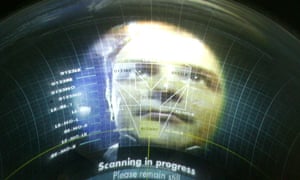
Professor whose study suggested technology can detect whether a person is gay or straight says programs will soon reveal traits such as criminal predisposition
Voters have a right to keep their political beliefs private. But according to some researchers, it won’t be long before a computer program can accurately guess whether people are liberal or conservative in an instant. All that will be needed are photos of their faces.
Michal Kosinski – the Stanford University professor who went viral last week for research suggesting that artificial intelligence (AI) can detect whether people are gay or straight based on photos – said sexual orientation was just one of many characteristics that algorithms would be able to predict through facial recognition.
Using photos, AI will be able to identify people’s political views, whether they have high IQs, whether they are predisposed to criminal behavior, whether they have specific personality traits and many other private, personal details that could carry huge social consequences, he said.
Kosinski outlined the extraordinary and sometimes disturbing applications of facial detection technology that he expects to see in the near future, raising complex ethical questions about the erosion of privacy and the possible misuse of AI to target vulnerable people.
“The face is an observable proxy for a wide range of factors, like your life history, your development factors, whether you’re healthy,” he said.
Faces contain a significant amount of information, and using large datasets of photos, sophisticated computer programs can uncover trends and learn how to distinguish key traits with a high rate of accuracy. With Kosinski’s “gaydar” AI, an algorithm used online dating photos to create a program that could correctly identify sexual orientation 91% of the time with men and 83% with women, just by reviewing a handful of photos.
Kosinski’s research is highly controversial, and faced a huge backlash from LGBT rights groups, which argued that the AI was flawed and that anti-LGBT governments could use this type of software to out gay people and persecute them. Kosinski and other researchers, however, have argued that powerful governments and corporations already possess these technological capabilities and that it is vital to expose possible dangers in an effort to push for privacy protections and regulatory safeguards, which have not kept pace with AI.
Kosinski, an assistant professor of organizational behavior, said he was studying links between facial features and political preferences, with preliminary results showing that AI is effective at guessing people’s ideologies based on their faces.
This is probably because political views appear to be heritable, as research has shown, he said. That means political leanings are possibly linked to genetics or developmental factors, which could result in detectable facial differences.
Kosinski said previous studies have found that conservative politicians tend to be more attractive than liberals, possibly because good-looking people have more advantages and an easier time getting ahead in life.
Kosinski said the AI would perform best for people who are far to the right or left and would be less effective for the large population of voters in the middle. “A high conservative score … would be a very reliable prediction that this guy is conservative.”
Kosinski is also known for his controversial work on psychometric profiling, including using Facebook data to draw inferences about personality. The data firm Cambridge Analytica has used similar tools to target voters in support of Donald Trump’s campaign, sparking debate about the use of personal voter information in campaigns.
Facial recognition may also be used to make inferences about IQ, said Kosinski, suggesting a future in which schools could use the results of facial scans when considering prospective students. This application raises a host of ethical questions, particularly if the AI is purporting to reveal whether certain children are genetically more intelligent, he said: “We should be thinking about what to do to make sure we don’t end up in a world where better genes means a better life.”
Some of Kosinski’s suggestions conjure up the 2002 science-fiction film Minority Report, in which police arrest people before they have committed crimes based on predictions of future murders. The professor argued that certain areas of society already function in a similar way.
He cited school counselors intervening when they observe children who appear to exhibit aggressive behavior. If algorithms could be used to accurately predict which students need help and early support, that could be beneficial, he said. “The technologies sound very dangerous and scary on the surface, but if used properly or ethically, they can really improve our existence.”
There are, however, growing concerns that AI and facial recognition technologies are actually relying on biased data and algorithms and could cause great harm. It is particularly alarming in the context of criminal justice, where machines could make decisions about people’s lives – such as the length of a prison sentence or whether to release someone on bail – based on biased data from a court and policing system that is racially prejudiced at every step.
Kosinski predicted that with a large volume of facial images of an individual, an algorithm could easily detect if that person is a psychopath or has high criminal tendencies. He said this was particularly concerning given that a propensity for crime does not translate to criminal actions: “Even people highly disposed to committing a crime are very unlikely to commit a crime.”
He also cited an example referenced in the Economist – which first reported the sexual orientation study – that nightclubs and sport stadiums could face pressure to scan people’s faces before they enter to detect possible threats of violence.
Kosinski noted that in some ways, this wasn’t much different from human security guards making subjective decisions about people they deem too dangerous-looking to enter.
The law generally considers people’s faces to be “public information”, said Thomas Keenan, professor of environmental design and computer science at the University of Calgary, noting that regulations have not caught up with technology: no law establishes when the use of someone’s face to produce new information rises to the level of privacy invasion.
Keenan said it might take a tragedy to spark reforms, such as a gay youth being beaten to death because bullies used an algorithm to out him: “Now, you’re putting people’s lives at risk.”
Even with AI that makes highly accurate predictions, there is also still a percentage of predictions that will be incorrect.
“You’re going down a very slippery slope,” said Keenan, “if one in 20 or one in a hundred times … you’re going to be dead wrong.”
.Hackers Already Weaponizing A.I.
By George Dvorsky

Last year, two data scientists from security firm ZeroFOX conducted an experiment to see who was better at getting Twitter users to click on malicious links, humans or an artificial intelligence. The researchers taught an AI to study the behavior of social network users, and then design and implement its own phishing bait. In tests, the artificial hacker was substantially better than its human competitors, composing and distributing more phishing tweets than humans, and with a substantially better conversion rate.
The AI, named SNAP_R, sent simulated spear-phishing tweets to over 800 users at a rate of 6.75 tweets per minute, luring 275 victims. By contrast, Forbes staff writer Thomas Fox-Brewster, who participated in the experiment, was only able to pump out 1.075 tweets a minute, making just 129 attempts and luring in just 49 users.
Thankfully this was just an experiment, but the exercise showed that hackers are already in a position to use AI for their nefarious ends. And in fact, they’re probably already using it, though it’s hard to prove. In July, at Black Hat USA 2017, hundreds of leading cybersecurity experts gathered in Las Vegas to discuss this issue and other looming threats posed by emerging technologies. In a Cylance poll held during the confab, attendees were asked if criminal hackers will use AI for offensive purposes in the coming year, to which 62 percent answered in the affirmative.
The era of artificial intelligence is upon us, yet if this informal Cylance poll is to be believed, a surprising number of infosec professionals are refusing to acknowledge the potential for AI to be weaponized by hackers in the immediate future. It’s a perplexing stance given that many of the cybersecurity experts we spoke to said machine intelligence is alreadybeing used by hackers, and that criminals are more sophisticated in their use of this emerging technology than many people realize.
“Hackers have been using artificial intelligence as a weapon for quite some time,” said Brian Wallace, Cylance Lead Security Data Scientist, in an interview with Gizmodo. “It makes total sense because hackers have a problem of scale, trying to attack as many people as they can, hitting as many targets as possible, and all the while trying to reduce risks to themselves. Artificial intelligence, and machine learning in particular, are perfect tools to be using on their end.” These tools, he says, can make decisions about what to attack, who to attack, when to attack, and so on.
Scales of intelligence
Marc Goodman, author of Future Crimes: Everything Is Connected, Everyone Is Vulnerable and What We Can Do About It, says he isn’t surprised that so many Black Hat attendees see weaponized AI as being imminent, as it’s been part of cyber attacks for years.
“What does strike me as a bit odd is that 62 percent of infosec professionals are making an AI prediction,” Goodman told Gizmodo. “AI is defined by many different people many different ways. So I’d want further clarity on specifically what they mean by AI.”
Indeed, it’s likely on this issue where the expert opinions diverge.
The funny thing about artificial intelligence is that our conception of it changes as time passes, and as our technologies increasingly match human intelligence in many important ways. At the most fundamental level, intelligence describes the ability of an agent, whether it be biological or mechanical, to solve complex problems. We possess many tools with this capability, and we have for quite some time, but we almost instantly start to take these tools for granted once they appear.
Centuries ago, for example, the prospect of a calculating machine that could crunch numbers millions of times faster than a human would’ve most certainly been considered a radical technological advance, yet few today would consider the lowly calculator as being anything particularly special. Similarly, the ability to win at chess was once considered a high mark of human intelligence, but ever since Deep Blue defeated Garry Kasparov in 1997, this cognitive skill has lost its former luster. And so and and so forth with each passing breakthrough in AI.
Today, rapid-fire developments in machine learning (whereby systems learn from data and improve with experience without being explicitly programmed), natural language processing, neural networks (systems modeled on the human brain), and many other fields are likewise lowering the bar on our perception of what constitutes machine intelligence. In a few years, artificial personal assistants (like Siri or Alexa), self-driving cars, and disease-diagnosing algorithms will likewise lose, unjustifiably, their AI allure. We’ll start to take these things for granted, and disparage these forms of AI for not being perfectly human. But make no mistake—modern tools like machine intelligence and neural networks are a form of artificial intelligence, and to believe otherwise is something we do at our own peril; if we dismiss or ignore the power of these tools, we may be blindsided by those who are eager to exploit AI’s full potential, hackers included.
A related problem is that the term artificial intelligence conjures futuristic visions and sci-fi fantasies that are far removed from our current realities.
“The term AI is often misconstrued, with many people thinking of Terminator robots trying to hunt down John Connor—but that’s not what AI is,” said Wallace. “Rather, it’s a broad topic of study around the creation of various forms of intelligence that happen to be artificial.”
Wallace says there are many different realms of AI, with machine learning being a particularly important subset of AI at the current moment.
“In our line of work, we use narrow machine learning—which is a form of AI—when trying to apply intelligence to a specific problem,” he told Gizmodo. “For instance, we use machine learning when trying to determine if a file or process is malicious or not. We’re not trying to create a system that would turn into SkyNet. Artificial intelligence isn’t always what the media and science fiction has depicted it as, and when we [infosec professionals] talk about AI, we’re talking about broad areas of study that are much simpler and far less terrifying.”
Evil intents
These modern tools may be less terrifying than clichéd Terminator visions, but in the hands of the wrong individuals, they can still be pretty scary.
Deepak Dutt, founder and CEO of Zighra, a mobile security startup, says there’s a high likelihood that sophisticated AI will be used for cyberattacks in the near future, and that it might already be in use by countries such as Russia, China, and some Eastern European countries. In terms of how AI could be used in nefarious ways, Dutt has no shortage of ideas.
“Artificial intelligence can be used to mine large amounts of public domain and social network data to extract personally identifiable information like date of birth, gender, location, telephone numbers, e-mail addresses, and so on, which can be used for hacking [a person’s] accounts,” Dutt told Gizmodo. “It can also be used to automatically monitor e-mails and text messages, and to create personalized phishing mails for social engineering attacks [phishing scams are an illicit attempt to obtain sensitive information from an unsuspecting user]. AI can be used for mutating malware and ransomware more easily, and to search more intelligently and dig out and exploit vulnerabilities in a system.”
Dutt suspects that AI is already being used for cyberattacks, and that criminals are already using some sort of machine learning capabilities, for example, by automatically creating personalized phishing e-mails.
“But what is new is the sophistication of AI in terms of new machine learning techniques like Deep Learning, which can be used to achieve the scenarios I just mentioned with a higher level of accuracy and efficiency,” he said. Deep Learning, also known as hierarchical learning, is a subfield of machine learning that utilizes large neural networks. It has been applied to computer vision, speech recognition, social network filtering, and many other complex tasks, often producing results superior to human experts.
“Also the availability of large amounts of social network and public data sets (Big Data) helps. Advanced machine learning and Deep Learning techniques and tools are easily available now on open source platforms—this combined with the relatively cheap computational infrastructure effectively enables cyberattacks with higher sophistication.”
These days, the overwhelming number of cyber attacks is automated, according to Goodman. The human hacker going after an individual target is far rarer, and the more common approach now is to automate attacks with tools of AI and machine learning—everything from scripted Distributed Denial of Service (DDoS) attacks to ransomware, criminal chatbots, and so on. While it can be argued that automation is fundamentally unintelligent (conversely, a case can be made that some forms of automation, particularly those involving large sets of complex tasks, are indeed a form of intelligence), it’s the prospect of a machine intelligence orchestrating these automated tasks that’s particularly alarming. An AI can produce complex and highly targeted scripts at a rate and level of sophistication far beyond any individual human hacker.
Indeed, the possibilities seem almost endless. In addition to the criminal activities already described, AIs could be used to target vulnerable populations, perform rapid-fire hacks, develop intelligent malware, and so on.
Staffan Truvé, Chief Technology Officer at Recorded Future, says that, as AI matures and becomes more of a commodity, the “bad guys,” as he puts it, will start using it to improve the performance of attacks, while also cutting costs. Unlike many of his colleagues, however, Truvé says that AI is not really being used by hackers at the moment, claiming that simpler algorithms (e.g. for self-modifying code) and automation schemes (e.g. to enable phishing schemes) are working just fine.
“I don’t think AI has quite yet become a standard part of the toolbox of the bad guys,” Truvé told Gizmodo. “I think the reason we haven’t seen more ‘AI’ in attacks already is that the traditional methods still work—if you get what you need from a good old fashioned brute force approach then why take the time and money to switch to something new?”
AI on AI
With AI now part of the modern hacker’s toolkit, defenders are having to come up with novel ways of defending vulnerable systems. Thankfully, security professionals have a rather potent and obvious countermeasure at their disposal, namely artificial intelligence itself. Trouble is, this is bound to produce an arms race between the rival camps. Neither side really has a choice, as the only way to counter the other is to increasingly rely on intelligent systems.
“For security experts, this is Big Data problem—we’re dealing with tons of data—more than a single human could possibly produce,” said Wallace. “Once you’ve started to deal with an adversary, you have no choice but to use weaponized AI yourself.”
To stay ahead of the curve, Wallace recommends that security firms conduct their own internal research, and develop their own weaponized AI to fight and test their defenses. He calls it “an iron sharpens iron” approach to computer security. The Pentagon’s advanced research wing, DARPA, has already adopted this approach, organizing grand challenges in which AI developers pit their creations against each other in a virtual game of Capture the Flag. The process is very Darwinian, and reminiscent of yet another approach to AI development—evolutionary algorithms. For hackers and infosec professionals, it’s survival of the fittest AI.
Goodman agrees, saying “we will out of necessity” be using increasing amounts of AI “for everything from fraud detection to countering cyberattacks.” And in fact, several start-ups are already doing this, partnering with IBM Watson to combat cyber threats, says Goodman.
“AI techniques are being used today by defenders to look for patterns—the antivirus companies have been doing this for decades—and to do anomaly detection as a way to automatically detect if a system has been attacked and compromised,” said Truvé.
At his company, Recorded Future, Truvé is using AI techniques to do natural language processing to, for example, automatically detect when an attack is being planned and discussed on criminal forums, and to predict future threats.
“Bad guys [with AI] will continue to use the same attack vectors as today, only in a more efficient manner, and therefore the AI based defense mechanisms being developed now will to a large extent be possible to also use against AI based attacks,” he said.
Dutt recommends that infosec teams continuously monitor the cyber attack activities of hackers and learn from them, continuously “innovate with a combination of supervised and unsupervised learning based defense strategies to detect and thwart attacks at the first sign,” and, like in any war, adopt superior defenses and strategy.
The bystander effect
So our brave new world of AI-enabled hacking awaits, with criminals becoming increasingly capable of targeting vulnerable users and systems. Computer security firms will likewise lean on a AI in a never ending effort to keep up. Eventually, these tools will escape human comprehension and control, working at lightning fast speeds in an emerging digital ecosystem. It’ll get to a point where both hackers and infosec professionals have no choice but to hit the “go” button on their respective systems, and simply hope for the best. A consequence of AI is that humans are increasingly being kept out of the loop.
White Christians Are Now A U.S. Population Minority
By Rachel Zoll

NEW YORK — The share of Americans who identify as white and Christian has dropped below 50 percent, a transformation fueled by immigration and by growing numbers of people who reject organized religion altogether, according to a new survey released Wednesday.
Christians overall remain a large majority in the U.S., at nearly 70 percent of Americans. However, white Christians, once predominant in the country’s religious life, now comprise only 43 percent of the population, according to the Public Religion Research Institute, or PRRI, a polling organization based in Washington. Four decades ago, about eight in 10 Americans were white Christians.
The change has occurred across the spectrum of Christian traditions in the U.S., including sharp drops in membership in predominantly white mainline Protestant denominations such as Presbyterians and Lutherans; an increasing Latino presence in the Roman Catholic Church as some non-Hispanic white Catholics leave; and shrinking ranks of white evangelicals, who until recently had been viewed as immune to decline.
The trends identified in the survey are fueling anxiety about the place of Christians in society, especially among evangelicals, alarmed by support for gay marriage and by the increasing share of Americans — about one-quarter — who don’t identify with a faith group. President Donald Trump, who repeatedly promised to protect the religious liberty of Christians, drew 80 percent of votes by white evangelicals, a constituency that remains among his strongest supporters.
About 17 percent of Americans now identify as white evangelical, compared to 23 percent a decade ago, according to the survey. Membership in the conservative Southern Baptist Convention, the largest U.S. Protestant group, dropped to 15.2 million last year, its lowest number since 1990, according to an analysis by Chuck Kelley, president of the New Orleans Baptist Theological Seminary.
The trends identified in the survey are fueling anxiety about the place of Christians in society, especially among evangelicals, alarmed by support for gay marriage and by the increasing share of Americans — about one-quarter — who don’t identify with a faith group.
“So often, white evangelicals have been pointing in judgment to white mainline groups, saying when you have liberal theology you decline,” said Robert Jones, chief executive of PRRI. “I think this data really does challenge that interpretation of linking theological conservatism and growth.”
The PRRI survey of more than 100,000 people was conducted from January 2016 to January of this year and has a margin of error of plus or minus 0.4 percentage points. Previous surveys had found that the Protestant majority that shaped the nation’s history had dropped below 50 percent sometime around 2008. The PRRI poll released Wednesday included a more in-depth focus on race and religion. Jones said growth among Latino Christians, and stability in the numbers of African-American Christians, had partly obscured the decline among white Christians.
The survey also found that more than a third of all Republicans say they are white evangelicals, and nearly three-quarter identify as white Christians. By comparison, white Christians have become a minority in the Democratic Party, shrinking from 50 percent a decade ago, to 29 percent now. Forty percent of Democrats say they have no religious affiliation.
Among American Catholics, 55 percent now identify as white, compared to 87 percent 25 years ago, amid the growing presence of Latino Catholics, according to the report. Over the last decade, the share of white Catholics in the U.S. population dropped from 16 percent to 11 percent. Over the same period, white mainline Protestants declined from 18 percent to 13 percent of all Americans.
Sen. Feinstein Blasted For Anti-Catholic Bigotry By Notre Dame President
By Todd Starnes

The president of the University of Notre Dame said he is deeply concerned after Sen. Dianne Feinstein questioned a colleague’s religious beliefs during a Senate Judiciary Committee nomination hearing.
Amy Coney Barrett, a law professor at Notre Dame, was grilled by Democrats over how her Catholic beliefs might influence her decisions from the bench. Barrett was recently nominated by President Trump for a seat on the federal court.
“When you read your speeches, the conclusion one draws is that the dogma lives loudly within you, and that’s of concern when you come to big issues that large numbers of people have fought for, for years in this country,” Sen. Feinstein said.
Feinstein has been widely condemned for what many are calling anti-Catholic bigotry and bullying.
“It is chilling to hear from a United States Senator that this might now disqualify someone from service as a federal judge,” Notre Dame President John Jenkins wrote in a public letter to the California lawmaker.
He took great exception to her remark that the “dogma lives loudly” in the professor.
AI Can Determine Sexual Orientation From A Photograph
By Sam Levin
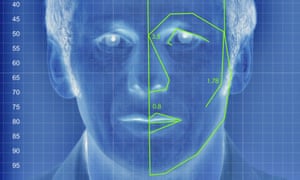
An algorithm deduced the sexuality of people on a dating site with up to 91% accuracy, raising tricky ethical questions
Artificial intelligence can accurately guess whether people are gay or straight based on photos of their faces, according to new research that suggests machines can have significantly better “gaydar” than humans.
The study from Stanford University – which found that a computer algorithm could correctly distinguish between gay and straight men 81% of the time, and 74% for women – has raised questions about the biological origins of sexual orientation, the ethics of facial-detection technology, and the potential for this kind of software to violate people’s privacy or be abused for anti-LGBT purposes.
The machine intelligence tested in the research, which was published in the Journal of Personality and Social Psychology and first reported in the Economist, was based on a sample of more than 35,000 facial images that men and women publicly posted on a US dating website. The researchers, Michal Kosinski and Yilun Wang, extracted features from the images using “deep neural networks”, meaning a sophisticated mathematical system that learns to analyze visuals based on a large dataset.
The research found that gay men and women tended to have “gender-atypical” features, expressions and “grooming styles”, essentially meaning gay men appeared more feminine and vice versa. The data also identified certain trends, including that gay men had narrower jaws, longer noses and larger foreheads than straight men, and that gay women had larger jaws and smaller foreheads compared to straight women.
Human judges performed much worse than the algorithm, accurately identifying orientation only 61% of the time for men and 54% for women. When the software reviewed five images per person, it was even more successful – 91% of the time with men and 83% with women. Broadly, that means “faces contain much more information about sexual orientation than can be perceived and interpreted by the human brain”, the authors wrote.
The paper suggested that the findings provide “strong support” for the theory that sexual orientation stems from exposure to certain hormones before birth, meaning people are born gay and being queer is not a choice. The machine’s lower success rate for women also could support the notion that female sexual orientation is more fluid.
While the findings have clear limits when it comes to gender and sexuality – people of color were not included in the study, and there was no consideration of transgender or bisexual people – the implications for artificial intelligence (AI) are vast and alarming. With billions of facial images of people stored on social media sites and in government databases, the researchers suggested that public data could be used to detect people’s sexual orientation without their consent.
It’s easy to imagine spouses using the technology on partners they suspect are closeted, or teenagers using the algorithm on themselves or their peers. More frighteningly, governments that continue to prosecute LGBT people could hypothetically use the technology to out and target populations. That means building this kind of software and publicizing it is itself controversial given concerns that it could encourage harmful applications.
But the authors argued that the technology already exists, and its capabilities are important to expose so that governments and companies can proactively consider privacy risks and the need for safeguards and regulations.
“It’s certainly unsettling. Like any new tool, if it gets into the wrong hands, it can be used for ill purposes,” said Nick Rule, an associate professor of psychology at the University of Toronto, who has published research on the science of gaydar. “If you can start profiling people based on their appearance, then identifying them and doing horrible things to them, that’s really bad.”
Rule argued it was still important to develop and test this technology: “What the authors have done here is to make a very bold statement about how powerful this can be. Now we know that we need protections.”
Kosinski was not immediately available for comment, but after publication of this article on Friday, he spoke to the Guardian about the ethics of the study and implications for LGBT rights. The professor is known for his work with Cambridge University on psychometric profiling, including using Facebook data to make conclusions about personality. Donald Trump’s campaign and Brexit supporters deployed similar tools to target voters, raising concerns about the expanding use of personal data in elections.
In the Stanford study, the authors also noted that artificial intelligence could be used to explore links between facial features and a range of other phenomena, such as political views, psychological conditions or personality.
This type of research further raises concerns about the potential for scenarios like the science-fiction movie Minority Report, in which people can be arrested based solely on the prediction that they will commit a crime.
“AI can tell you anything about anyone with enough data,” said Brian Brackeen, CEO of Kairos, a face recognition company. “The question is as a society, do we want to know?”
Brackeen, who said the Stanford data on sexual orientation was “startlingly correct”, said there needs to be an increased focus on privacy and tools to prevent the misuse of machine learning as it becomes more widespread and advanced.
Rule speculated about AI being used to actively discriminate against people based on a machine’s interpretation of their faces: “We should all be collectively concerned.”
Researchers Reverse the Negative Effects Of Adolescent Marijuana Use
Researchers at Western University have found a way to use pharmaceuticals to reverse the negative psychiatric effects of THC, the psychoactive chemical found in marijuana. Chronic adolescent marijuana use has previously been linked to the development of psychiatric diseases, such as schizophrenia, in adulthood. But until now, researchers were unsure of what exactly was happening in the brain to cause this to occur.
“What is important about this study is that not only have we identified a specific mechanism in the prefrontal cortex for some of the mental health risks associated with adolescent marijuana use, but we have also identified a mechanism to reverse those risks,” said Steven Laviolette, professor at Western’s Schulich School of Medicine & Dentistry.
In a study published online today in Scientific Reports the researchers demonstrate that adolescent THC exposure modulates the activity of a neurotransmitter called GABA in the prefrontal cortex region of the brain. The team, led by Laviolette and post-doctoral fellow Justine Renard, looked specifically at GABA because of its previously shown clinical association with schizophrenia.
“GABA is an inhibitory neurotransmitter and plays a crucial role in regulating the excitatory activity in the frontal cortex, so if you have less GABA, your neuronal systems become hyperactive leading to behavioural changes consistent with schizophrenia,” said Renard.
The study showed that the reduction of GABA as a result of THC exposure in adolescence caused the neurons in adulthood to not only be hyperactive in this part of the brain, but also to be out of synch with each other, demonstrated by abnormal oscillations called ‘gamma’ waves. This loss of GABA in the cortex caused a corresponding hyperactive state in the brain’s dopamine system, which is commonly observed in schizophrenia.
By using drugs to activate GABA in a rat model of schizophrenia, the team was able to reverse the neuronal and behavioural effects of the THC and eliminate the schizophrenia-like symptoms.
Laviolette says this finding is especially important given the impending legalization of marijuana in Canada. “What this could mean is that if you are going to be using marijuana, in a recreational or medicinal way, you can potentially combine it with compounds that boost GABA to block the negative effects of THC.”
The research team says the next steps will examine how combinations of cannabinoid chemicals with compounds that can boost the brains GABA system may serve as more effective and safer treatments for a variety of mental health disorders, such as addiction, depression and anxiety.
Viral Vigil Ep #1 / 9.11.17
Justice Department Sides With Baker Who Refused To Make Wedding Cake For Gay Couple
By Robert Barnes
In a major upcoming Supreme Court case that weighs equal rights with religious liberty, the Trump administration on Thursday sided with a Colorado baker who refused to bake a wedding cake for a same-sex couple.
The Department of Justice on Thursday filed a brief on behalf of baker Jack Phillips, who was found to have violated the Colorado Anti-Discrimination Act by refusing to created a cake to celebrate the marriage of Charlie Craig and David Mullins in 2012. Phillips said he doesn’t create wedding cakes for same-sex couples because it would violate his religious beliefs.
The government agreed with Phillips that his cakes are a form of expression, and he cannot be compelled to use his talents for something in which he does not believe.
“Forcing Phillips to create expression for and participate in a ceremony that violates his sincerely held religious beliefs invades his First Amendment rights,” Acting Solicitor General Jeffrey B. Wall wrote in the brief.
The Post’s Steven Petrow sits down with Jim Obergefell, the main plaintiff in the landmark Supreme Court case, Obergefell v. Hodges, and talks about gay marriage, equality for the transgender community and his late husband John.(Video: Erin Patrick O’Connor/Photo: Maddie McGarvey/The Washington Post)
The DOJ’s decision to support Phillips is the latest in a series of steps the Trump administration has taken to rescind Obama administration positions favorable to gay rights and to advance new policies on the issue.
But Louise Melling, the deputy legal counsel of the American Civil Liberties Union, which is representing the couple, said she was taken aback by the filing.
“Even in an administration that has already made its hostility” toward the gay community clear, Melling said, “I find this nothing short of shocking.”
Since taking office, President Trump has moved to block transgender Americans from serving in the military and his Department of Education has done away with guidance to schools on how they should accommodate transgender students.
The DOJ also has taken the stance that gay workers are not entitled to job protections under federal anti-discrimination laws. Since 2015, the Equal Employment and Opportunity Commission has taken the opposite stance, saying Title VII, the civil-rights statute that covers workers, protects against bias based on sexual orientation.
Federal courts are split on that issue, and the Supreme Court this term might take up the issue.
Indeed, lawyers for Jameka Evans, who claims she was fired by Georgia Regional Hospital because of her sexual orientation and “nonconformity with gender norms of appearance and demeanor,” on Thursday asked justices to take her case.
Citing a 1979 precedent, a panel of the U.S. Court of Appeals for the 11th Circuit rejected her protection claims.
Taking that case, along with Masterpiece Cakeshop v. Colorado Civil Rights Commission, would make the coming Supreme Court term the most important for gay rights issues since the justices voted 5 to 4 in 2015 to find a constitutional right for same-sex couples to marry.
The case of Phillips, a baker in the Denver suburbs, is similar to lawsuits brought elsewhere involving florists, calligraphers and others who say providing services to same-sex weddings would violate their religious beliefs. But these objectors have found little success in the courts, which have ruled that businesses serving the public must comply with state anti-discrimination laws.
Mullins and Craig visited Masterpiece Cakeshop in July 2012, along with Craig’s mother, to order a cake for their upcoming wedding reception. Mullins and Craig planned to marry in Massachusetts, where same-sex marriages were legal at the time, and then hold a reception in Colorado.
But Phillips refused to discuss the issue, saying his religious beliefs would not allow him to have anything to do with same-sex marriage. He said other bakeries would accommodate them.
The civil rights commission and a Colorado court rejected Phillips’ argument that forcing him to create a cake violated his First Amendment rights of freedom of expression and exercise of religion.
The court said the baker “does not convey a message supporting same-sex marriages merely by abiding by the law.”
143 Million People Could Be Affected In Giant Equifax Data Breach
By Sara Ashley O’Brien
NEW YORK (CNNMoney) – Equifax says a giant cybersecurity breach compromised the personal information of as many as 143 million Americans — almost half the country.
Cyber criminals have accessed sensitive information — including names, social security numbers, birth dates, addresses, and the numbers of some driver’s licenses.
Additionally, Equifax said that credit card numbers for about 209,000 U.S. customers were exposed, as was “personal identifying information” on roughly 182,000 U.S. customers involved in credit report disputes. Residents in the U.K. and Canada were also impacted.
The breach occurred between mid-May and July, Equifax said. The company said it discovered the hack on July 29.
The data breach is one of the worst ever, by its reach and by the kind of information exposed to the public.
“This is clearly a disappointing event for our company, and one that strikes at the heart of who we are and what we do,” said Equifax chairman and CEO Richard F. Smith.
Equifax is one of three nationwide credit-reporting companies that track and rates the financial history of U.S. consumers. The companies are supplied with data about loans, loan payments and credit cards, as well as information on everything from child support payments, credit limits, missed rent and utilities payments, addresses and employer history, which all factor into credit scores.
Unlike other data breaches, not all of the people affected by the Equifax breach may be aware that they’re customers of the company. Equifax gets its data from credit card companies, banks, retailers, and lenders who report on the credit activity of individuals to credit reporting agencies, as well as by purchasing public records.
Equifax is mailing notices to people whose credit cards or dispute documents were affected.
It also says that consumers can check to see if they’ve potentially been impacted by submitting their name and the last six digits of their social security number. Users are given a date when they will be enrolled in free identity theft protection and credit file monitoring services. Equifax did not immediately reply to CNN Tech’s request for more information about the process.
“This is reason Number 10,000 to check your online bank statements and credit card statements on a regular basis, ideally weekly,” said Matt Schulz, senior industry analyst at CreditCards.com. “Bad guys can be very patient, so it’s important to keep an eye out long after this story fades from the headlines.”
How The Transgender Crusade Made Me Rethink My Support For Gay Marriage – Bethany Mandel
By Bethany Mandel
Over the course of the last few months, whenever I write or tweet anything, on any topic, I usually receive a caustic social media response about my position on transgenderism. These trolls post links to my tweets about the subject and screenshots, as if showing me my own recent opinion is some sort of gotcha. These individuals even send tweets to my husband and employers, perhaps in hope that they will use their power over me to get my opinion in check with The Approved Position.
One Twitter follower who “favorited” a tweet of mine about my view on transgenderism even received an email from a stranger demanding to know if her decision to “favorite” my tweet meant she agreed with me. I’ve been called every name in the book: hateful, bigoted, transphobic, etc. All for having a belief that was utterly uncontroversial just three years ago: men are born with penises, women are born with vaginas, and, to quote the great Ben Shapiro, facts don’t care about your feelings.
We Are Being Made to Care
Many of my fellow millennial conservatives, out of what they view as courtesy, use the preferred pronoun and name for individuals who identify as transgender. Here is why I won’t: We will be made to care.
The phrase is care of another great conservative thinker, Erick Erickson. He coined it in the midst of the gay marriage debate. During that debate, I was like many of these younger millennial conservatives. I naively thought the issue was merely about gay marriage, and thought “Hey, marriage is great, so let’s just give into the Left’s demands about the redefinition of a cornerstone of our society because not doing so would be bigoted.”
But there was more to the Left’s battle with conservatives than that. It wasn’t just about redefining marriage to these activists; it was also about punishing those who weren’t 100 percent on board, especially religious Christians. The livelihoods and lives of bakers, photographers, farmers, and the CEO of Mozilla were destroyed for not completely adhering to the Thought Police’s demands. These Americans were made to care.
The Trans Police Are Frightening Control Freaks
My colleague Joy Pullmann provided just the latest example last week of how the progressive Left is making the rest of us care about the transgender debate: “Angry parents stampeded a California charter school board meeting Monday after a teacher read her kindergarten class picture books about transgenderism to affirm a gender dysphoric classmate. During the class, parents say, the gender dysphoric boy also switched clothes to look more like a girl in a ‘gender reveal.’ Parents were not notified beforehand of the discussion or the classmate’s psychological condition, and learned about it when their confused kindergarteners arrived home from school that day.”
For Acculturated recently, I gamed out a frightening thought experiment about how parents who decide not to play along with their child’s gender dysphoria could one day be faced with a visit from Child Protective Services.
The Left has shown the totalitarian manner in which it exacts support, or at least silence, from everyday Americans. We’ve seen how lives were destroyed in the wake of the gay marriage debate, how many individuals were shouted down into submission by the side that proclaims itself to be “open-minded” and employed the slogans “No H8” and “Love Wins.” For many conservatives, including myself, the lesson has been learned.
With every tweet aimed at publicizing and shaming my position on transgenderism, the progressive Left is solidifying my decision to call Bruce Jenner by his given name instead of the name he has chosen because of a condition that mental health professionals once took seriously. Playing along with delusions isn’t a kindness to those suffering from other psychological conditions, and it isn’t a kindness for those with gender dysphoria either.
And if we lend credibility to the notion that adults can choose their sex, parents who refuse to allow a child who, just the week before, self-identified as a butterfly to choose her own gender could then be accused of denying their child health care (because many progressive activists view opposite-sex hormones and plastic surgery as health care now).
My answer for those on the Left who ask me “Why do you care what transgender individuals call themselves?” is simply this: because you have made me.
12 Year Old Boy Who Transitioned to Female Changes Mind 2 Years Later
By Sarah Young
An Australian schoolboy who decided to transition into a female has changed his mind two years later.
At just 12-years-old, Patrick Mitchell, begged with his mother to begin taking oestrogen hormones after doctors diagnosed him with gender dysphoria – a condition where a person experiences distress because there is a mismatch between their biological sex and gender identity.
“You wish you could just change everything about you, you just see any girl and you say I’d kill to be like that”, Mitchell told 60 Minutes.
After heeding advice from professionals who suggested that it was right choice, his mother was fully supportive and Mitchell began to transition.
He grew out his hair and started to take the hormones, which caused his body to grow breasts. But two years on, Mitchell had a change of heart.
In the beginning of 2017, teachers at school began to refer to him as a girl which triggered Mitchell to question if he had made the right decision.
“I began to realise I was actually comfortable in my body. Every day I just felt better,” he told Now To Love.

Patrick’s mother said he used to dress up in girls clothes (60 Seconds)
As a result, Mitchell confided in his mother and explained that he wanted to transition back into a boy.
“He looked me in the eye and said ‘I’m just not sure that I am a girl’”, his mother explained.
Now, in a bid to revert back to his original body, he has stopped taking his medication and is about to have an operation to remove excess breast tissue in what will be the final stage of his transition.

At 12-years-old he began taking oestrogen hormones after doctors diagnosed him with gender dysphoria (60 Seconds)
While gender dysphoria is rare, the number of people being diagnosed with the condition is increasing, due to growing public awareness.
A survey of 10,000 people undertaken in 2012 by the Equality and Human Rights Commission found that 1% of the population surveyed was gender variant, to some extent.
If you think you or your child may have gender dysphoria, the NHS suggests seeing your GP who, if necessary, can then refer you to a specialist Gender Identity Clinic (GIC).
Post-Harvey Mosquito Invasion Seems Terrible
By Adam Clark Estes
Plenty of people have described Hurricane Harvey as a disaster of biblical proportions, and it seems the next plague is upon us. It’s not locusts. Thanks to untold quantities of filthy standing water, millions of mosquitos are starting to hatch. And yes, they do bite. They love to bite.
A little bit of itch isn’t what folks in Texas are afraid of, however. Public health officials warn that the surge in the mosquito population caused by the flooding could lead to a spike of mosquito-borne illness. As the Centers for Disease Control explained in a recent advisory, the mosquito population increases dramatically after a major flooding event as dormant eggs hatch. These so-called floodwater mosquitoes are a different breed than those that would typically carry dangerous diseases, however.
“Most of these mosquitoes are considered nuisance mosquitoes and will not spread viruses,” said the CDC. “However, some types of mosquitoes could spread viruses like Zika, dengue, or West Nile.”
Before we get into the threat of disease, let’s have a look at what large populations of nuisance or floodwater mosquitoes look like. This video was filmed near Refugio, Texas:
That looks like a nuisance indeed! Without that netting, the worker’s face would undoubtedly be covered with mosquitoes and—what’s worse—mosquitoes that like to bite. Meanwhile, someone posted this horror show to the Houston subreddit:
And the follow up is actually worse:
Considering these images, calling these bugs a “nuisance” seems like an understatement. Dr. Charles Allen, an associate professor of entomology at Texas A&M, uses more colorful language to describe the behavior of the post-flood mosquito populations. They are definitely rude little bastards, but for now, they’re probably not deadly.
“There will soon be a lot of mosquitoes and they will be very noticeable, because of their sheer numbers and because they are vicious biters,” Dr. Allen said in a press release. “It’s important to realize though that as unpleasant as these will be, they are not a species that typically transmits disease. So at least in the short-term, it’s not a Zika issue and it’s not a West Nile Virus issue.”
Over time, the threat of West Nile and Zika will unfortunately come back, and it might do so with a vengeance. West Nile, specifically, is a concern. The virus has been in Texas at least since 2002, and last year, there were370 recorded cases. And while the floodwater mosquitoes will be a conspicuous pain in the ass for the next few weeks in the areas affected by Harvey, the more dangerous mosquitoes will eventually come back, perhaps with a vengeance. For instance, after Hurricane Katrina in 2005, the West Nile Virus wasn’t a major problem for New Orleans, but the following year saw twice as many cases in the area than were recorded before the storm.
Texans can do their best to temper the mosquito explosion for now by eradicating any standing water that could become a breeding ground. Otherwise, it’s a good idea to wear long sleeves and pants. A good douse of DEET will also help. If all else fails, just stay inside and keep the windows closed. Because based on the images coming out of Texas, the mosquitoes will find you when you go outside. And they will bite you.
Elon Musk: A.I. Battle Is A “Likely Cause” Of WWIII
By Brett Molina
Elon Musk says global race for artificial intelligence will cause World War III. Elizabeth Keatinge (@elizkeatinge) has more. Buzz60
A race toward “superiority” between countries over artificial intelligence will be the most likely cause of World War III, warns entrepreneur Elon Musk.
The CEO of Tesla and SpaceX has been outspoken about his fears of AI, urging countries to consider regulations now before the technology becomes more widely used.
The comments were sparked by comments from Russian President Vladimir Putin, who said the country leading the way in AI “will become ruler of the world,” reports news site RT.
“It begins,” said Musk in an earlier tweet ahead of his warning about the potential risks.
“China, Russia, soon all countries w strong computer science,” Musk wrote in a tweet posted Monday. “Competition for AI superiority at national level most likely cause of WW3 imo.”

China, Russia, soon all countries w strong computer science. Competition for AI superiority at national level most likely cause of WW3 imo.
In response to a Twitter user, Musk notes the AI itself — not a country’s leader — could spark a major conflict “if it decides that a preemptive strike is most probable path to victory.”
An automated WWIII at that. That’s a worry…

May be initiated not by the country leaders, but one of the AI’s, if it decides that a prepemptive strike is most probable path to victory
Musk has emerged as a critic of AI safety, seeking ways for governments to regulate the technology before it gets out of control. Last month, Musk warned fears over the security of AIare more risky than the threat of nuclear war from North Korea.
In July, during the National Governors Association meeting, Musk pushed states to consider new rules for AI.
“AI is a rare case where I think we need to be proactive in regulation than reactive,” said Musk.
Robert E. Lee Decendant/Denouncer Quits N.C. Pastorship After “Hurtful” Reaction to VMA’s Speech
Highlights from the 2017 VMAs
From Kendrick Lamar winning video of the year to emotional speeches on the violence in Charlottesville, here are the highlights from MTV’s Video Music Awards.(Courtesy of MTV)
He was the great-great-great-great-nephew of Confederate Army General Robert E. Lee, and he felt it was his moral duty to speak out against his ancestor, “an idol of white supremacy, racism and hate.” He said as much when he took the microphone near the end of the 2017 MTV Video Music Awards, when he introduced himself by a familiar-sounding name: Robert Lee IV.
Lee’s speech at the VMAs on Aug. 27 followed the glitz and glam of red carpets and all-star performances by the likes of Lorde and Ed Sheeran. But his appearance quickly caught Internet fame as among the night’s most memorable. As he appeared before the cameras, Lee stood in stark contrast to the sleek, geometric set behind him, dressed simply in a black cleric’s shirt and collar. Soon he would introduce Susan Bro, whose daughter Heather Heyer had been killed 15 days before, after being mowed down by a car as she protested white supremacy in Charlottesville.
“My name is Robert Lee IV, I’m a descendant of Robert E. Lee, the Civil War general whose statue was at the center of violence in Charlottesville,” he said. “We have made my ancestor an idol of white supremacy, racism, and hate. As a pastor, it is my moral duty to speak out against racism, America’s original sin.
“Today, I call on all of us with privilege and power to answer God’s call to confront racism and white supremacy head-on.
“We can find inspiration in the Black Lives Matter movement, the women who marched in the Women’s March in January, and, especially, Heather Heyer, who died fighting for her beliefs.”
On Monday, Lee announced he would be leaving his church — Bethany United Church of Christ in Winston-Salem, N.C. In his statement, published on the website of the Auburn Theological Seminary, Lee wrote that while he did have congregants who supported his freedom of speech, many resented the attention the church received after the VMAs.
“A faction of church members were concerned about my speech and that I lifted up Black Lives Matter movement, the Women’s March, and Heather Heyer as examples of racial justice work,” he wrote, adding that his “church’s reaction was deeply hurtful.” Lee wrote that he never sought the kind of attention that has followed him since the protests in Charlottesville last month, even while his visibility as a religious leader and staunch opponent of Confederate memorials garnered international recognition, a turn of events no doubt fueled by his namesake. (Technically, he’s an “indirect” rather than a “direct” descendant.)

Lee did not describe specific responses he received from congregants. But the comments section on an article about his VMA speech in the Winston-Salem Journal gives some sense of the backlash. One commenter wrote that there was “no way” Lee was a Christian and that “it seems anybody that wants to protect our country is a racist, or white supremacist. … It’s a sin to use your position to name-call and judge.”
Another commenter wrote that rather than appear on television, Lee should devote his time to ministering: “You have how many faithful members? Maybe if you spent more time around the church that number would increase.”
[Gen. Robert E. Lee is his namesake ancestor. On Sunday, he’ll preach about the evils of racism.]
In an Aug. 18 interview with BBC News, Lee argued that statues of his ancestor honor white supremacy and endorse a system in which it is acceptable to be racist in America. He pointed to the complete lack of markers to fascists in Europe following World War II as evidence that there is a way to “remember your history and not commemorate it.” Lee talked of how he had spoken with a descendant of a slave owned by the Lee family, describing his heartbreak over hearing the firsthand experiences of those “hurt and oppressed by statues.”
Lee has spoken openly about how he arrived at his own conclusions about his lineage, saying he has at once felt pride in the fact that Lee family members signed the Declaration of Independence and shame over Robert E. Lee’s leadership over the Confederacy. In one NPR interview, he spoke of how he was often given mixed messages on whether the elder Lee was a proponent of slavery or states’ rights.
From his pulpit, Lee implored his parishioners to condemn the racism swirling around them, insisting they would be doing the church wrong if they remained silent.
“It’s not the message that we’re used to hearing from our pulpits. But maybe now is the time to start having those messages,” Lee said in the NPR interview.
In his first appointment out of seminary, Lee has been the pastor of Bethany Church since April, according to the church’s website. The church was founded in a log meeting house around 1789 and is one of the oldest Reformed churches in North Carolina, having been originally founded as a “union effort of persons of Reformed and Lutheran faith.” The church’s website still listed Lee as its pastor as of early Tuesday.
The United Church of Christ has been known for its liberal views, given its support for social justice issues. For instance, it has called on the Washington Redskins to change its name.
A graduate of Appalachian State University and Duke University Divinity School, Lee is the author of “Stained-Glass Millennials”— a book about the relationship between millennials and institutional church — and is a regular columnist for the Statesville Record & Landmark, which has covered Iredell County, N.C., for more than a century. Lee did not return requests for an interview Monday night.
In an Aug. 31 column for the newspaper, Lee emphasized the “cost of discipleship,” particularly when condemning hate.
“I wish I could say it was easy to speak up and speak out in God’s name,” Lee wrote in the column. “But it wasn’t.”
Story and headline was updated to reflect the fact that while Lee calls himself a descendant, he’s an indirect descendant.
Can Nightmares Cause Death?
By Tara MacIsaac
In Beyond Science, Epoch Times explores research and accounts related to phenomena and theories that challenge our current knowledge. We delve into ideas that stimulate the imagination and open up new possibilities. Share your thoughts with us on these sometimes controversial topics in the comments section below.
A lot of the research on nightmares suggests these events test the strength of one’s mind. If the mind is not strong, nightmares can take hold with greater force and the torment can extend beyond one’s dreams.
Dr. Patrick McNamara of the Boston University School of Medicine looks at nightmares in a modern clinical context that also takes into account the history of dream phenomena in many cultures. He connects nightmares with a world of malevolent spirits.
Spirit Possession
Some people who experience frequent nightmares, both today and throughout history, also show signs in waking life of mental illness and even what may be seen as spirit possession.
Dr. McNamara seems unabashed in speaking about spirit possession.
“Nightmares very often involve supernatural characters that attack or target the dreamer in some way. I mean monsters, creatures, demons, spirits, unusual animals, and the like,” Dr. McNamara said in an interview with Boston University’s alumni publication Bostonia. “The self escapes unscathed only if it refuses to look at or speak to or in any way engage the monster. When the self engages the monster, all kinds of ill effects ensue, including, in ancestral cultures, demonic or spirit possession.”
“It is an interesting clinical fact that, even today, most cases of involuntary spirit possession across the world occur overnight. The person wakes up possessed,” he said. He said spirit possession is much more common than most people think. “It is a universal human experience.”
Under attack, the strength of a dreamer’s ego is challenged in nightmares. As with facing other hardships in life, overcoming a nightmare attack can make a person stronger, Dr. McNamara said.
Nightmares are more frequent for people with “thin boundaries,” he said—that is, people who are sensitive to sensory impressions and creative people.
People who’ve experienced trauma also experience frequent nightmares. As has been suggested in other modern spirit possession studies, trauma victims may sometimes withdraw their consciousness from their bodies as a coping method, thus leaving their bodies open to the control of other consciousnesses.
ALSO SEE: Science of Spirit Possession
Neurologist and psychiatrist Dr. McNamara studied nightmares for more than a decade before writing “The Science and Solution of Those Frightening Visions During Sleep” in 2008.
Mental Illness

Concept image of a woman suffering from mental illness via Shutterstock
Researchers at the University of Warwick in England released a study earlier this year linking chronic childhood nightmares with mental illness later in life.
A link does not mean a cause-effect relationship. It may be that people likely to have nightmares are also likely to be mentally ill. Children who experienced frequent nightmares were three times more likely to have psychotic experiences in their teenage years.
When considering the lasting impact of nightmares on one’s mind, another question that has been raised is, if a person dies in a dream could he die in real life as a result?
Can You Really Die if Killed in a Nightmare?
There is a phenomenon called “sudden unexplained nocturnal death syndrome” (SUNDS) that some have speculated may be linked to nightmares, but this link has not been rigorously tested and is far from certain. SUNDS is more common among a particular demographic, young men, and often happens when the men have gone to bed with a full stomach, suggesting more physiological causes.
Another phenomenon related to death in sleep is parasomnia pseudo-suicide, when people commit suicide in their sleep. A 2003 article in the Journal of Forensic Science explained: “Complex behaviors arising from the sleep period may result in violent or injurious consequences, even death. Those resulting in death may be erroneously deemed suicides.”
Some have said this is what happened to modern artist Tobias Wong, who hanged himself in New York in 2010.
Doree Shafrir of Buzzfeed wrote an article about her personal experiences with night terrors and also mentioned Wong. Night terrors differ slightly from nightmares in that the sleepers may exhibit more physical movement or yelling during the terrors and they may not remember dream episodes that caused the reaction. “It crosses my mind that I could actually scare myself to death,” she wrote.
“The prevailing theory about Tobias Wong’s death was that he hanged himself while experiencing a night terror. I imagine that something in his mind told him that hanging himself was the only way to escape whoever, or whatever, was chasing him, in the same way that I have thought that the only way to save myself was to jump out of a window or smash a pane of glass.”
It is difficult, of course, to establish any clear link between nightmares and death, since the cause of death would be manifest in the person’s mind and the person would not be able to report it if he or she actually died as a result.
How to Fight Nightmares: Make the Scary Thing Silly
A common therapy to help people with chronic nightmares overcome them is turning the scary image into something benign. In waking life, the person identifies the frightening imagery that comes up in recurrent nightmares or nightmares with similar themes. He or she Reimagines it in a way that makes it less scary, sometimes drawing it out on paper to help visualize it more clearly and reinforce the image.
“Harry Potter,” fans may think of the scene in which Neville Longbottom pictures the frightful Professor Snape dressed in his grandmother’s clothes, effectively dispelling the fear associated with that figure.
The S-Word: How Young Americans Fell In Love With Socialism
By Chris McGreal
At 18, Olivia Katbi was answering the phones and emails in a Republican state senator’s office in Ohio. Then the legislator threw his weight behind a particularly contentious anti-abortion law. “I realised that the party I’m working for is evil. After that I identified as a Democrat but I wasn’t really happy with their policies either,” said Katbi, now 25.
Back then, she couldn’t articulate her reservations about President Barack Obama. There were the drone strikes, and the limitations of his healthcare reforms. But mostly it was a frustrating sense he wasn’t serving her interests so much as those of a monied elite. So in the 2012 presidential election, Katbi voted for Jill Stein, the Green party candidate. But that didn’t change the world.
It was only last year, when Bernie Sanders made his run under the banner of democratic socialism, that it all started to fall into place.
“My politics were to the left of the Democratic party but I didn’t realise there was an entire ideology, an entire movement that was there. It had never occurred to me,” said Katbi. “Bernie was my introduction to the concept of democratic socialism. It’s not like I associated it with the cold war. It was a new concept to me completely. That was the case for a lot of millennials, which is why the movement has grown so much.”
Katbi, who works at an organization helping to settle immigrants and refugees in Portland, Oregon, became “socialist curious”. She joined the Democratic Socialists of America (DSA), a rapidly growing big-tent movement that has drawn in former communists and fired up millennials. The DSA is now the largest socialist organization in the US as surging membership, which has quadrupled since the election to around 25,000, has breathed new life into a once dormant group. New branches have sprung up, from Montana to Texas and New York. Earlier this month, hundreds of delegates gathered in Chicago for the only DSA convention in years to attract attention.
Part of its membership veers toward Scandavian-style social democracy of universal healthcare and welfare nets. Others embrace more traditional socialism of large-scale public ownership. But the label has been taken up by other millennials who do not identify with any particular political institution. They come at it through protest movements such as Occupy and Black Lives Matter, fueled by frustration at the Democratic party’s failure to take seriously the deepening disillusionment with capitalism, income inequality and the corporate capture of the US government.
With that has come debate not only about pay, housing and proposals for universal basic income, but a reappraisal of the role of the government in people’s lives in favor of greater state intervention.
According to recent polling, a majority of Americans adults under the age of 30 now reject capitalism, although that does not translate into automatic support for socialism. For Katbi, though, the path is clear. Six months after the election, she is leaving Sanders behind. “I really don’t like saying that Bernie was my gateway to socialism, just because I feel like I’m more left than him now, and I also think there’s a very bizarre cult of personality around Bernie,” she said.
Ask what socialism is, and Katbi looks to the campaign by the Labour party leader, Jeremy Corbyn, in this year’s British election.
“I really liked Labour’s succinct tagline: for the many, not the few. That’s a great summary of what socialism is. It’s democratic control of the society we live in. That includes universal healthcare. Universal education. Public housing. Public control of energy resources. State ownership of banks. That’s what I understand socialism to be when I heard Bernie Sanders introduce it,” she said.

Labour’s manifesto caught the attention of young leftwing activists in the US because, in contrast to Hillary Clinton’s presidential campaign platform, it laid out a clear set of ideas they could identify with. Some in the DSA are also finding common cause with Momentum, the leftwing British grassroots organisation formed in 2015 to back Corbyn which in turn has drawn inspiration from Syriza in Greece and Podemos in Spain.
“The people I’m friends with who don’t identify as socialist are definitely supportive of certain socialist policies, like single-payer healthcare,” said Katbi. “Everyone has student loan debt and everyone’s rents are exorbitant and everyone’s paying like $300-a-month premiums for Obamacare. It’s common sense for people my age.”
The alarm created at the prospect of millions of people losing their coverage while millions more see their health insurance premiums surge has pushed the new breed of democratic socialists to embrace universal healthcare as the gateway issue to bring large numbers of Americans, including a lot of Trump voters, around to the idea that government regulation can work for them.
Americans who came of age during the cold war saw socialism being characterized as the close cousin of Soviet communism, and state-run healthcare as a first step to the gulags. There are still those attempting to keep the old scare stories alive.
It was the old cold war warriors who helped detoxify socialism for younger Americans when the Tea Party and Fox News painted Obama – a president who recapitalised the banks without saving the homes of families in foreclosure – as a socialist for his relatively modest changes to the healthcare system.
Then came Sanders.
“With the Bernie phenomenon, suddenly you’re able to utter the S-word in public,” said Nick Caleb, 35, a long time leftwing activist who joined the DSA shortly after the election, as membership of its Portland branch surged.
Caleb said that even before Sanders ran, the Occupy Wall Street movement had prompted a scrutiny of capitalism. “Occupy Wall Street happened and there was a broader debate about what capitalism was, and we started to highlight the pieces of it that were most awful. So there was an articulation of what capitalism was, and then it meant someone had to define what socialism means, and we sort of left that space open,” he said.
At the heart of the ideas flooding into that space is a debate about the role of the state after decades of conservatives painting government as oppressive and a burden keeping good Americans down.
The campaign over healthcare, the anger sparked by the rapaciousness of big banks bailed out by the taxpayer, and a belief that only the state has the strength to reverse deepening inequality is breathing new life into the old idea that the government is there to control capitalism, rather than capitalism controlling the government.
If that takes hold among a wider group of millennials, it will represent a seismic shift in the way many Americans think about the pre-eminent role of the state and capitalism in their lives.
To an older generation of leftwing activists, that sounds a lot like the New Deal – President Franklin Roosevelt’s bold attempt to remake the American economic system and rein in the forces of capitalism in response to the Great Depression of the 1930s. The Works Progress Administration, which provided jobs to millions made unemployed by economic collapse, was at one time the single largest employer in the country. A raft of legislation addressed pay, working conditions and housing. Roosevelt also introduced banking regulation that stayed in place until the 1990s. Roosevelt saw the reforms as laying the foundations for the kind of social democratic society the US helped build in western Europe after the second world war.
“Young people who say that they’re socialists, or look favourably on socialism, they’re thinking about a kind of New Deal government or democracy against markets,” said Frances Fox Piven, coauthor of a widely debated radical plan in the 1960s to alleviate poverty and create a basic income, and more recently the targetof a vilification campaign by Fox News.
“What the New Deal represented was government efforts to regulate an unbridled capitalism and to supplement the distribution of income under markets with government programs.”
Piven, a City University of New York professor, sees a shift in thinking among some younger Americans reflecting a time before politicians conflated democracy with the free market and government with private business.
“The New Deal is the clearest and boldest period in the wake of real collapse in capitalist markets. You could just call it economic democracy,” she said. “What they got right was the imperative of regulating the economy. That development was cut short by the second world war and the urgency with which the government turned to big business to cooperate in the war effort and gave a lot of licence to big business. It stopped the New Deal in its tracks.”
After that came the red scare, McCarthyism and the rise of global corporations. Still, President Lyndon B Johnson built on the New Deal’s legacy in the 1960s with his “war on poverty” and “great society” programs expanding welfare, greatly reducing the number of people living in poverty, and establishing Medicaid and Medicare – America’s system of public health insurance for the very poor and the elderly.
Then came Reagan revolution and the Democrats’ embrace of neoliberalism.
The New Deal still lingers in the American consciousness. Not so the once bouyant Socialist Party of America, long faded from popular memory. A century ago, socialists were routinely elected to public office in the US and the party’s presidential candidate drew close to a million votes in the 1912 and 1920 elections.
There are few socialists elected to public office in the US today. The most prominent is Kshama Sawant of the Socialist Alternative party, who won a seat on Seattle’s city council in 2013 and drove through an increase in the city’s minimum wage to $15 an hour. She was re-elected two years ago promising a tax on the rich in a state with no income tax. In July, the city council unanimously passed a 2.25% city tax on people earning more than $250,000 a year, although there will be no windfall from the Amazon and Microsoft billionaires who live outside its boundaries.

Sawant has few illusions about why the measure passed. She describes the Democratic party majority on the council as beholden to corporate interests whose hand was forced by the popular mood. Sawant also suspects that other council members are counting on the courts to strike down the new tax. But that the vote happened at all is evidence of the political shift under way.
Sawant is a Marxist who wants to see industry taken into public ownership or worker cooperatives. But she recognises that there’s a long way to go before Americans are ready for that. Still, she sees opportunity in what she calls an “amazing change in the consciousness of America”.
“We are in a fundamentally new period. The Occupy movement really took people by surprise. They realized there was something different going on here. The younger generation of America was not going to be another docile generation waiting for their little piece of the American dream, partly because that little piece of the American dream wasn’t going to come to them because of the crisis capitalism is in,” she said.
“I, for one, am elated, actually elated, at the starting point where people are angry at corporate politics, angry at neo-liberalism, angry at austerity. This is a massive cauldron and this is historic.”
One challenge for the new breed of social democrats and socialists is to find the vehicle to electoral success. In the UK, the Labour party is the official opposition, with socialist antecedents Corbyn is attempting to revive. Today’s American socialists are split on whether to revive a New Deal-style Democratic party or forge a new organisation. The DSA has for now decided against becoming a political party.
A recently elected member of Chicago city council, Carlos Ramirez-Rosa, argued that the Democratic party offered a path to single-payer healthcare and $15-an-hour minimum wage because so many people vote for it as a default. But Caleb is sceptical. He thought for a short while that the Democrats might learn the lessons of Sanders’ campaign and Clinton’s defeat to back away from neoliberalism.
“I was somewhat hopeful after the election that the Democrats would get the memo but it’s obvious the party’s not going to change. They’ll make minor concessions but they’re tied to Silicon Valley. They had a chance to make an abrupt change and they haven’t done it,” he said. “They can’t think of anything but a market solution with tax credits and things like that. The Democratic party couldn’t even reconstitute a platform like the New Deal.”
Piven, meanwhile, said the two party system smothered real debate about the issues most people care about. She said protest movements such as Occupy and Black Lives Matter – as well as the Women’s March after Trump’s inauguration and the mass protests over the Muslim ban – forced issues on to the political agenda.
One of the bigger obstacles to broadening support for real socialism in America may not be so much specific policies – although there will be a lot of people doubtful about the DSA’s proposals to abolish police forces and prisons – so much as perceptions of who is now a socialist.
“I want to dispel the reputation of socialism that it’s a bunch of white men talking about theory,” said Katbi. “People are hesitant to join because they’re like, is it a bunch of Bernie bros? The implication is it’s a bunch of white men yelling about Marx. It’s not.”
The “brocialist” label has given added impetus to a drive for more diversity. “In DSA we’ve been very intentional about building a movement that is diverse,” said Katbi. “Amplifying the voices of women and people of color and people who have previously been oppressed. Everything we do, we do it with that in mind.”
That has created its own tensions amid debate about how much focus should be put on class. “Every day you see debates around what should be emphasized,” said Caleb. “Is it a class discussion? Is it an identity discussion?”
Attempts to paint millennials as beholden to identity politics is more than unfair given the Clinton campaign’s assumption that young women like Katbi would automatically vote for a female presidential candidate who claimed she was going to blast through the glass ceiling. Instead, Katbi’s support went to an old white man on the basis of his ideas.
Still, Piven sees lessons in the legacy of the civil rights movement. “There’s a certain amount of discrediting of the identity politics developments that have seemed to dominate the left over the last few decades, but maybe these developments were in a way necessary,” she said. “How could there have been a black civil rights movement without identity politics? Blacks were so disparaged, so dehumanized by American political culture that you had to first have a ‘black is beautiful’ cultural and intellectual and political current. I think the same thing is true of the women’s movement. But if we stay just with identity politics then we can’t grapple with the class forces that are producing the system of stratification and oppression in the United States.”
That means winning over the large numbers of low-income working people who voted for Trump, a task complicated by the sense that the left is dominated by identity politics.
“We won’t be able to build a mass movement for any of the social democratic reforms, let alone for a fundamental shift toward socialism, if we don’t create an opening for those many people who voted for Trump,” said Sawant. “It is extremely important for the left in America to build movements that accomplish a dual task. One is never compromise on the question of oppression – but at the same time reaching the vast majority of working people on a class basis.”
Sawant is not alone in thinking that the entry point is healthcare. She points to packed town hall meetings Sanders has had in West Virginia since the election.
“Who are these people? White people who have been beaten down with entrenched intergenerational poverty and who are desperately looking for a solution. Sanders reached out to them by talking about healthcare, living wages, the need to tax Wall Street and billionaires who have wrought such havoc on their lives. I didn’t see any resistance from those people. I didn’t see anybody saying it was black people or gay people who are responsible for their misery,” she said.
“It would be a fatal mistake not to recognise that there is a whole mass of white working-class people in America who can be won over.”
Katbi recognises that’s a task made even more challenging by Americans’ famed individualism. “There’s a lot of polarisation. I know of people my age who are ardent Trump supporters who are very about individualism, about libertarianism, to an extent. But I think when you really start to think about these things, it’s clear that’s just selfishness and socialism is about the collective good versus hoarding it all for yourself,” she said.
The Science of Spirit Possession
By Tara MacIsaac
In Beyond Science, Epoch Times explores research and accounts related to phenomena and theories that challeange our current knowledge. We delve into ideas that stimulate the imagination and open up new possibilities. Share your thoughts with us on these sometimes controversial topics in the comments section below.
Modern science questions much of the knowledge gained through the collective memory of humanity over the course of millennia.
“Every culture and religious belief system throughout human history has its traditional beliefs of spirit possession in some form or another with corresponding rituals for the release or exorcism of spirit entities,” wrote Dr. Terence Palmer, a psychologist and the first person in the U.K. to earn a Ph.D. in spirit release therapy.
Some psychologists are returning to the methods developed by our ancestors to help patients with symptoms of possession.
Dr. William Baldwin (1939–2004) founded the practice of spirit release therapy and he also used past-life regression treatments. Baldwin was cautious about saying whether he believed in reincarnation or not, but he did say his treatments helped patients, and that’s what matters.
Spirit release practitioner Dr. Alan Sanderson wrote in a paper titled “Spirit Release Therapy: What Is It and What Can It Achieve?”: “I want to stress that the concept of spirit attachment and the practice of spirit release are not based on faith, as are religious and mystical beliefs. They are based on the observation of clinical cases and their response to standard therapeutic techniques. This is a scientific approach, albeit one that takes account of subjective experience and is not confined by contemporary scientific theory.”
Dr. Palmer commented in the introduction to a lecture titled “The Science of Spirit Possession”: “SRT [spirit release therapy] sits uncomfortably between the disbelief of a materialist secular society and the subjective experience of spirit possession: whether that experience is a symptom of psychosis, symbolic representation, socio-cultural expectation or a veridical manifestation.”
Parapsychology has been called a “pseudoscience,” as have other scientific approaches to phenomena that cannot be entirely explained by conventional science. However one views the method, it appears a revival of ancient wisdom has been effective in many cases.
Here’s a look at some of the thinkers, including those already mentioned, who have approached possession scientifically.
Frederick W.H. Myers
Frederick W.H. Myers (1843–1901) wrote in his book “Human Personality and Its Survival of Bodily Death,” which was published posthumously in 1906: “The controlling spirit proves his identity mainly by reproducing, in speech or writing, facts which belong to his memory and not to the automatist’s memory.”
He noted that the brain is little-understood; scientists don’t have a solid understanding of many of its ordinary functions let alone extraordinary functions (and this still holds true today). He theorized about a sort of radiation or energy that could be behind the telepathic influence of one person on another. He tried to consider how the memory centers might be related to the gaps in memory experienced by people said to be possessed.
Myers has not been shown to have any formal education in the field of psychology and much of his work relied on two mediums he worked with. It was his belief in a science that takes fuller account of human consciousness that has continued to inspire scientists. Myers also noted that the origin of the idea is not as important as its effectiveness or veracity.
“Instead of asking in what age a doctrine originated—with the implied assumption that the more recent it is, the better—we can now ask how far it is in accord or in discord with a great mass of actual recent evidence which comes into contact, in one way or another, with nearly every belief as to an unseen world which has been held at least by Western men.
“Submitted to this test, the theory of possession gives a remarkable result. It cannot be said to be inconsistent with any of our proved facts. We know absolutely nothing which negatives its possibility.
“Nay, more than this. The theory of possession actually supplies us with a powerful method of co-ordinating and explaining many earlier groups of phenomena, if only we will consent to explain them in a way which at first sight seemed extreme in its assumptions.”
Dr. Terence Palmer
Dr. Palmer’s Ph.D. thesis revived Myers’s work. He said that Myers and others have tried to bring the mental, emotional, and spiritual elements of human experience into natural science.
“To permit the accommodation of all human experience into a broader scientific framework is a scary prospect for several reasons. But fear is the cause of all human suffering, and only when medical science puts aside its own fears of being proven wrong can it treat sickness effectively by showing how fear is to be remedied,” Dr. Palmer wrote.
In a recorded lecture on his thesis, he looked at ways in which we come to know things. Some of the ways include learning from others, using logic and deduction, and through personal experience. He noted that in these ways, a good deal of evidence exists for the possibility of real spirit possession.
Funding, he said, has been one of the obstacles to conducting more rigorous scientific research of spirit possession. He said further studies must be done with remote telepathic intervention. This would bypass any placebo effect or any psychological impact a patient’s belief system may have.
Dr. Alan Sanderson
Dr. Sanderson asked in his paper “So where is the research to back these heretical claims [about spirit possession]?”
He gave three reasons for minimal research in this field of study. First, spirit release is a new study, which has only been systematically taught and practiced for about a decade. Second, much mistrust and many misconceptions still present obstacles. Third, research funds are hard to come by.
He is hopeful the field will progress and funds with come forth. In the meantime, he said, “individual cases have much to say.” Dr. Sanderson uses the method developed by Dr. Baldwin to treat spirit possession. Following is an outline of Dr. Baldwin’s work and an example of how Dr. Sanderson used it to help a woman allegedly possessed by the ghost of her father.
Dr. William Baldwin
Dr. Baldwin developed a method of helping people exorcise their demons so to speak. It is thought that traumatic experiences can especially cause a person’s consciousness to withdraw and give the body over to other forms of consciousness.
In spirit release therapy, the patient is hypnotized so it is easier to access the other consciousnesses in the person’s mind. The therapist asks the possessing entity to look inside. Dr. Baldwin has said that about half of his hypnotized patients could see silver threads, like those described in Ecclesiastes in the Bible as connecting the human spirit to the body, according to author Kerry Pobanz.
The therapist is said to help the spirits resolve issues so they will no longer have a negative impact on the patient and the therapist may even ask for divine intervention.
Dr. Sanderson’s Case Study of a Woman With Multiple Personalities
Pru, 46, had long-term psychological problems found to stem from sexual abuse by her father when she was a child. Under hypnosis in a session with Dr. Sanderson, she identified herself as her father, Jason. Jason would become angry and threaten Dr. Sanderson.
“In deep trance, Jason agreed to look within himself, where he saw blackness,” Dr. Sanderson wrote. “I called for angelic help. With the use of Baldwin’s protocol for dealing with demonic spirits, the blackness left. Thereafter, Jason was amenable. He agreed to leave. Other destructive entities responded similarly.”
Not all spirits found inside a person are malevolent, say spirit release practitioners.
Pru wrote a paragraph to describe her experience: “‘The spiritual approach left me freer from the remaining daily distress than anything tried before. Whilst under hypnosis I found myself talking about some experiences that I had definitely not had and places I certainly had not been to. So, was this spirits, split off parts of my personality, ancestral memory or even false memory/imagination? I very much doubt the latter. There was reluctance, yet at the same time relief, to be spoken to, accepted and contacted. The release from the darkness, into the light and to the beyond had to be experienced to be believed. It was amazing and I still marvel at the sight of these ‘entities’ disappearing and freeing me.”
*Image of woman being hypnotized via Shutterstock
“Hacking” Street Signs With Stickers Could Confuse Smart Cars
By Jonathan M. Gitlin
Progress in the field of machine vision is one of the most important factors in the rise of the self-driving car. An autonomous vehicle has to be able to sense its environment and react appropriately. Free space has to be calculated, solid objects avoided, and any and all of the instructions we helpfully leave everywhere—painted on the tarmac or posted on signs—have to be obeyed.
Deep neural networks turned out to be pretty good at classifying images, but it’s still worth remembering that the process is quite unlike the way humans identify images, even if the end results are fairly similar. I was reminded of that once again this morning when reading about a method of spoofing road signs. It’s a technique that just looks like street art to you or me, but it completely changes the meaning of a stop sign to the machine reading it.
No actual self-driving cars were harmed in this study
First off, it’s important to note that the paper is a proof-of-concept; no actual automotive-grade machine vision systems were used in the test. Covering your local stop signs in strips of black and white tape is not going to lead to a sudden spate of car crashes today. Ivan Evtimov—a grad student at the University of Washington—and some colleagues first trained a deep neural network to recognize different US road signs. Then, they created an algorithm that generated changes to the signs that human eyes find innocuous, but which changed the meaning when a sign was read by the AI classifier they just trained.




Evtimov and his co-authors propose two different ways to hack a street sign, either by printing out an altered copy that you cover the existing sign with or by just making small additions with stickers. There’s also a choice of those alterations. One is to use subtle perturbations that make the sign look weathered to a human observer. The other is to camouflage the changes so they look like street art: in this case either small black and white strips or blocky text reading LOVE and HATE.
The results were pretty interesting. One test was able to cause a stop sign to be reliably misread as a speed limit sign, and another caused a right turn sign to be classified as either a stop or added lane sign. To repeat: these kinds of attacks worked on the specific machine vision system the researchers trained, and the altered signs in the gallery above would not fool any cars on the road today. But they do prove the concept that this kind of spoofing would work, provided one had access to the training set and the system they were attacking.
Life imitates art
You should be forgiven if your reaction to this study is to wonder “Gee, what took them so long?” Artists and writers have been exploring the idea of exploiting the quirks and vagaries of machine recognition for a while now. Take for an example the “ugly shirt” in William Gibson’s Zero History, which renders the wearer invisible to CCTV:
Pep, in black cyclist’s pants, wore the largest, ugliest T-shirt she’d ever seen, in a thin, cheap-looking cotton the color of ostomy devices, that same imaginary Caucasian flesh-tone. There were huge features screened across it in dull black halftone, asymmetrical eyes at breast height, a grim mouth at crotch-level. Later she’d be unable to say exactly what had been so ugly about it, except that it was somehow beyond punk, beyond art, and fundamentally, somehow, an affront.
Gibson wrote that in 2010, crediting the idea to friend and fellow author Bruce Sterling. In the book, the “ugly shirt” is dismissed first as myth, then recognized by some as an exploit of the digital world which may be just a little too dangerous.
Since then, artists like Adam Harvey and Simone Niquille have been playing around with ideas like CV Dazzle and Glamouflage to confuse cameras. We’re also starting to see it get applied to cars: earlier this year the artist James Bridle’s work Autonomous Trap 001 imagines using a salt circle to trap a self-driving car “using no-entry and other glyphs.”
The future is sure going to be interesting…
Human Footprints Discovered Dating From 5 Million Years Ago
By Jamie Seidel

These footprints, found at Trachilos in western Crete, have been attributed to an ancient human ancestor that walked upright some 5.7 million years ago. Credit: Andrzej Boczarowski
HUMAN-like footprints have been found stamped into an ancient sea shore fossilised beneath the Mediterranean island of Crete.
They shouldn’t be there.
Testing puts the rock’s age at 5.7 million years.
That’s a time when palaeontologists believe our human ancestors had only apelike feet.
And they lived in Africa.
But a study into the Trachilos, western Crete, prints determines them to feature prominent human features and an upright stance.
And that’s significant as the human foot has a unique shape. It combines a long sole, five short toes, no claws — and a big toe.
In comparison, the foot of a Great Ape look much more like a human hand.
And that step in evolution wasn’t believed to have taken place until some 4 million years ago.

Comparison of Trachilos footprint with bears (top), non-hominin primates (middle), and hominins (bottom). (a) Brown bear (b) Grizzly bear (c) Vervet monkey (d) Lowland gorilla (e) chimpanzee. (f) modern human (g) Trachilos footprint (h) modern human foot (i) Archaic Homo footprint. Pictures: Gerard D. Gierliński et al / Elsevier
Published in the latest edition of Proceedings of the Geologists’ Association, the study’s conclusions are bound to raise eyebrows in the human evolution community.
“The interpretation of these footprints is potentially controversial,” the study’s abstract admits.
“The print morphology suggests that the trackmaker was a basal member of the clade Hominini (human ancestral tree), but as Crete is some distance outside the known geographical range of pre-Pleistocene (2.5 million to 11,700 years ago) hominins we must also entertain the possibility that they represent a hitherto unknown late Miocene primate that convergently evolved human-like foot anatomy.”
Put simply, the study argues there was another — previously unidentified — human-like creature walking the Earth long before we believed it was possible.

A reconstruction of the skeleton of Australopithecus sediba, centre, next to a small-bodied modern human female, left, and a male chimpanzee. Picture: AP
The existing pool of evidence into humanity’s origins is built around Australopithecus fossils found in south and East Africa, along with a 3.7 million-year-old set of upright hominin (human ancestor) footprints found in Tanzania.
RELATED: Mystery of the Kimberley dinosaur prints solved
Called the Laetoli footprints, these are believed to have been made by Australopithecus with a narrow heel and poorly defined arch.
In contrast, a set of 4.4 million-year-old prints found in Ethiopia are believed from the hominin Ardipithecus ramidus. These prints are much closer to that of an ape than a modern human.
But the Trachilos footprints, at 5.7 million years, appear to be more human than Ardipithecus.

Maps and photos detailing the location and shape of the track-bearing stone in Crete. Pictures: Gerard D. Gierliński et al / Elsevier
They were found by the study’s lead author, Gerard Gierlinski, while he was holidaying on the island of Crete in 2002. The palaeontologist at the Polish Geological Institute has taken more than a decade to analyse his find.
The Trachilos prints have a big toe very similar to our own in size, shape and position. It has a distinct ball on its sole. It has the human-like sole. It doesn’t have claws.
They were pressed into the firm but wet sands of a small river delta at a time when the Sahara was lush and green, and savanna extended from North Africa around the Eastern Mediterranean. Crete itself was still part of the Greek mainland then.

The three most well-preserved footprints, each shown as a photo (left), laser surface scan (middle) and scan with interpretation (right). a was made by a left foot, b and c by right feet. Scale bars, 5cm. 1—5 denote digit number; ba, ball imprint; he, heel imprint. Pictures: Gerard D. Gierliński et al / Elsevier
They have been dated using foraminifera (analysis of marine microfossils) as well as their position beneath a distinctive sedimentary rock layer created when the Mediterranean Sea dried up about 5.6 million years ago.
The footprints’ discovery also comes shortly after the fragmentary fossils of a 7.2 million-year-old primate Graecopithecus, discovered in Greece and Bulgaria, were reclassified as belonging to the human ancestral tree.
Houston: A Global Warning.
By Jeff Goodell
Let there be no doubt: the horrific damage wrought by Hurricane Harvey was an almost entirely man-made catastrophe, one fingerprinted by all-too-human neglect, corruption and denial. If we needed a reminder of the power of water to destroy an American city, Hurricane Harvey provided it. In Houston, a fast-growing metropolis of more than 2 million people, it wasn’t the wind that was so damaging, or a storm surge pushing in – it was just water everywhere, falling for days in biblical torrents and transforming highways into rivers, flowing into homes, killing dozens, sending tens of thousands of people fleeing for higher ground. It was a terrifying and deadly display of what happens when nature collides with urban life on a planet radically altered by climate change.
Harvey is the worst rainfall event ever in the continental U.S. More than 50 inches of rain deluged parts of Houston. The amount of water that poured from the sky is difficult to conceptualize. By some estimates, 19 trillion gallons of water fell in five days. That’s roughly a million gallons of water for every person in southeastern Texas. Harvey’s economic toll will likely exceed Katrina as the most expensive disaster in American history.
Hurricanes are nothing new in Texas. In 1900, a hurricane hit Galveston, causing 15-foot storm surges, killing an estimated 8,000 people. But given what scientists know now about how rising CO2 levels impact the climate, it’s wrong to dismiss Harvey as a purely “natural” event.
First, thanks to increasing carbon pollution, the waters in the Gulf of Mexico, over which Harvey formed, were about five degrees higher than average. “As the world warms, evaporation speeds up,” explained climate scientist Katherine Hayhoe. So on average, there is more water vapor in the air now to sweep up and later dump over land. Also, because hurricane winds are generated by the difference in temperature between the atmosphere and oceans, the warmer waters tend to intensify a hurricane’s gales.
Second, a warming climate fuels sea-level rise, which is the result of the thermal expansion of the oceans and the melting of glaciers. Higher seas mean bigger storm surges, which can be devastating (recall the destruction wrought by Hurricane Sandy). But when the seas are higher, it also means that it is more difficult to drain rainwater into the ocean. And that is what happened in Houston: The water had nowhere to go.
“19 trillion gallons of water fell from the sky in five days, roughly a million gallons for every person in southeast Texas.”
This was a disaster foretold. In the 1990s, climate scientist Wallace Broecker said that the Earth’s climate was “an angry beast” and that by dumping massive quantities of CO2 into the atmosphere, we were “poking it with sticks” – and nobody could say how the beast would react. That’s where we are today. Harvey is the third 500-year flood to hit the Houston area in the past three years. Ten years ago, most scientists thought we might see three feet of sea-level rise by 2100. Now, estimates by the National Oceanic and Atmospheric Administration say the worst-case might be eight feet by 2100, while former NASA scientist James Hansen argues that it could be 10 feet or more. The larger reality is, we’re moving into an era of unknown impacts, where it is impossible to say how fast our world will change, or how bad it will get. “We are dealing with an event that no human has ever witnessed,” Penn State scientist Richard Alley recently told me as we discussed the collapsing Antarctic ice sheets. “We have no analog for this.”
At the same time, we’ve allowed cities like Houston to become empires of denial. If you set out to design a metropolis that is poorly adapted to the future, you couldn’t do much better than Houston. Consider the rate at which it’s paved over the wetlands, nature’s sponges for absorbing water. Thirty percent of the surrounding coastal prairie wetlands was developed between 1992 and 2010, creating what amount to concrete catch basins that capture the water and funnel it toward destruction. In Houston, the bayou is just a place to drive your Lexus – this is a city that’s said to have 30 parking spots for every resident.
Houston proudly touts itself as “the City With No Limits,” playing up its Wild West heritage of endless land and opportunity. But it is also the largest U.S. city to have no zoning laws, meaning you can build whatever you want, wherever you want. While that makes developers happy, it’s not how you build a climate-resilient city. According to a Washington Post investigation, more than 7,000 residential buildings have been constructed in 100-year FEMA-designated flood plains since 2010. But given that FEMA’s flood maps haven’t been updated to reflect sea-level rise and other factors, the actual number of new buildings constructed in high-risk places is likely much larger. And this is true not just in Houston but in Miami, South Carolina and every other flood-prone region. Ten years ago, Houston officials banned development in areas with high risk of flooding. But developers sued, until the policy was weakened by the City Council. Government officials tried putting up flood gauges in low-lying areas to show how high the water could get during a hurricane, but pressure from real-estate agents got the signposts removed.
The feds bear some responsibility for the disaster-friendly design of Houston, too. Virtually all flood insurance in America is administered through the National Flood Insurance Program, which is supposed to prevent risky development by requiring better building standards and relocation of buildings that flood repeatedly. But since it was founded in 1968, the program has been contorted by developers, real-estate agents, and politicians lobbying for special treatment for their constituents. In places like Houston, the program helps enable development in high-risk areas by offering subsidized insurance rates that don’t reflect the real cost of living in flood-prone areas, as well as by offering repeat payouts for often-flooded homes. Even before Harvey, the program was already $25 billion in debt.
As always, it’s poor people and people of color who end up bearing most of the risk. “They not only have to deal with flooding in their homes, but pollution in water that’s contaminated when water floods refineries and plants,” Texas Southern University sociologist Robert Bullard told Huffington Post. “You’re talking about a perfect storm of pollution, environmental racism, and health risks that are probably not going to be measured and assessed until decades later. The fact is that laissez-faire, unrestrained capitalism and lack of zoning mean people with money can put protections up, and people without can’t.”
In moments like this, it’s always tempting to say that a disaster like Hurricane Harvey is a game-changer, that seeing the devastation and suffering this storm has wrought will help us think differently about the world we live in. In the past, big catastrophes have led to big changes. The fire on Ohio’s Cuyahoga River in the 1960s resulted in the Clean Water Act; after the spill of the Exxon Valdez,Congress passed the Oil Pollution Act. In a rational world, Harvey would lead to (among other things) passage of carbon legislation to reduce emissions, as well as a fundamental restructuring of the National Flood Insurance Program to quit subsidizing development in risky places.
Instead, we are likely to get a lot of rah-rah about rebuilding Houston bigger and better than before, some marginal improvements in building codes, and a lot of fighting in Congress over how much money to spend on recovery. President Trump will tout the heroics of the rescuers and the TV ratings of the storm – he is his own empire of denial. He not only pulled the U.S. out of the Paris climate deal, but just weeks before Harvey hit, he rolled back common-sense requirements for flood protection in federal projects.
Beyond the post-storm platitudes, it’s not hard to foresee what is coming. There will be another hurricane – next time it might hit Charleston or Miami or Norfolk, and it will destroy buildings and highways built in harm’s way and it will again cause billions of dollars worth of damage. Eventually, taxpayers in Kansas will get tired of bailing out people who live on the coast, and disaster-relief funds will dry up. As seas rise, mortgage companies will stop writing 30-year loans for homes by the sea. Bond ratings for cities will fall. Coastal roads will be washed away. Airports will be flooded. And the great coastal retreat will begin.
The simple truth is, it’s not just Houston that’s done a poor job of thinking about the future – it’s all of us. We’ve spent 40 years denying the risks of climate change, thinking that if we can just get everyone to buy a Prius and recycle their plastic, everything will be OK. The message of Hurricane Harvey is that it will not be OK. We’re living in a new world now, and we better get ready. Mother Nature is coming for us.
Leonardo DiCaprio, Sandra Bullock, Kevin Hart among the actors and artists leading the donations for Hurricane Harvey relief. Watch here.
Joel Osteen Is the Quintessential Pastor of the Trump Era
By Sarah Posner
Last Friday, hours before Hurricane Harvey made landfall in Texas, Houston’s most famous pastor tweeted out a teaser for his latest podcast, “The God Who Goes Before You.” In a video excerpt embedded in the tweet, televangelist Joel Osteen, the city’s wealthiest ecclesiastical son, is seen preaching in the altar of his 16,000-seat capacity Lakewood Church, formerly the Compaq Center, where the Houston Rockets once played basketball. “Many sports champions have been crowned there,” Osteen said when the church took over the property in 2005. “We believe we can crown champions in life.”
That’s the heart of Osteen’s notoriously saccharine version of a theology known as the prosperity gospel: You, too, can be a champion – like Osteen, who’s worth a reported $40 million and lives in a $10 million mansion in Houston’s River Oaks neighborhood. Just trust God.
Trusting God was Osteen’s message in his unaccountably sanguine missive ahead of what was forecast to be a catastrophic weather event. Although it’s not clear that the podcast was recorded with Harvey in mind, Osteen’s decision to share it just as Houston was bracing for disaster turns out to have been a fraught one. “The good news is He’s going ahead of you right now, lining up the right people, the right supplies, the right opportunities,” Osteen said in his Texas drawl, his wide-toothed grin fixed like hard plastic across his face. “He has solutions to problems you haven’t had.”
But if God has a solution for the victims of Harvey’s apocalyptic flooding, those solutions were not on display at Lakewood, which quickly came under heavy criticism for not opening its doors to Harvey evacuees, as many houses of worship in Houston did.
One might think Osteen’s theology, anchored by what he calls a “strategic God,” would allow him to point to God’s solutions for, say, being flooded out of one’s home. But the next day, as Houstonians sought shelter amid Harvey’s devastation, Osteen tweeted only that he and his wife Victoria “are praying for everyone affected by Hurricane Harvey. Please join us as we pray for the safety of our Texas friends & family.”
After an onslaught of social media criticism about offering prayers but no shelter in his church of champions, Osteen agreed to open Lakewood’s doors. He protested to the Today Show on Wednesday that he had initially not opened the church because the city had not asked him to, and called the criticism a “false narrative.”
If that sequence of events sounds familiar – a wealthy, out-of-touch man offers platitudes on Twitter, then lashes out at critics who say he should have done more – it’s because the prosperity gospel has completely infected Republican politics. And President Trump represents the pinnacle of the party’s embrace of prosperity gospel values.
In the prosperity gospel, one can clearly see Trump, and vice-versa: the cruel indifference toward the travails of the less fortunate, the magical thinking that supersedes reason, the cult of personality and the evident disdain for the poor, who would be champions but for their insufficient faith in a God who crowns champions and relegates losers to the sidelines.
The prosperity gospel teaches that God will bless those who have faith, and that one’s health – and, particularly, wealth – are a manifestation of that blessing. Its proponents include the cheerful Osteen, who has said, “I don’t think it’s God’s best” to be poor. “Some people have this poverty mindset, and I’m a Christian, and I’m supposed to suffer,” he told CNN in 2012. “That’s just not how I see it.”
Some purveyors of this teaching pressure their congregants with what’s known as seed-faith theology: Sow a seed – meaning, give money to your pastor or a televangelist – and you will receive a thousand-fold “harvest” in return. Often people are shamed into giving money, even money they can’t afford to give. And when they don’t magically get rewarded for their “faith” and “sowing the seed,” they are told it’s because they don’t have enough faith.
Ten years ago I was writing a book about the GOP’s unholy alliance with prosperity preachers – but at the time, the relationship was largely a transactional one, as politicians sought the endorsements of televangelists with huge audiences and influence over their political choices. But with Trump, that relationship has blossomed in unique ways, largely because the president himself was actually drawn to the prosperity gospel with a sort of kismet. Paula White, a longtime friend and spiritual adviser to Trump who spends time in the White House with Trump’s Evangelical Advisory Board, is a leading figure among prosperity televangelists. According to the lore shared by White and others, Trump became enamored of her more than a decade ago when he saw her preach on television. In 2005, she and her then husband bought a $3.5 million condo in Trump Tower. When Trump appeared on her television program in 2008, White asked him to share life lessons that “caused you to succeed financially today.” The pair agreed that it was “key” to discover one’s passion, and then, in White’s words, to “figure out a way to make money.”
White has emerged as one of Trump’s most impassioned evangelical defenders in the face of the Russia investigation, and even after his widely criticized reaction to white supremacist violence in Charlottesville. On a recent appearance, after Charlottesville, on the television program of once-disgraced televangelist Jim Bakker, White declared that opposition to Trump is akin to being anti-God. Trump, she said, has been “raised up by God because God says that He raises up and places all people in places of authority. It is God that raises up a king, it is God that sets one down and so when you fight against the plan of God, you’re fighting against the hand of God.” She also seized the opportunity to promote her recent book, Dare to Dream, and its front-cover blurb from Trump: “Read this and you’ll be ready for great success.”
In case there’s any doubt, making money is the coveted side hustle of Trump and his televangelist friends, whether you’re president of the United States or a follower of Jesus. In the store on White’s website, if you “sow your prophetic seed of $77 or more,” she will send you your own “special, anointed prayer cloth as a point of contact for this prophetic word!” When Trump traveled to Texas this week to (not) view Harvey’s devastation, he prominently wore an Official USA 45th Presidential Hat, which sells on his reelection website for $40, prompting criticism from ethics watchdogs. It’s worth remembering the Trump-White mantra: “Figure out a way to make money.”
It’s the use of the church to profit that led the Senate Finance Committee to launch an investigation of six televangelists, including White, in 2007. Although the religious right portrayed the probe as improper government intrusion into church doctrine, the real question under scrutiny was whether the churches were using tax-exempt donations for personal enrichment. The investigation ended with no actual or proposed changes to the law requiring more accountability and transparency from churches that are essentially operating as for-profit enterprises. We’d know more about how this works if churches were required to release their tax returns – but they’re not, just like the president.
In interviewing former followers of prosperity preachers, I found that many of them were in such thrall of the “success” of these pastors that they refused to acknowledge or heed any criticism of them. If the local newspaper were to run a story about their church and any impropriety – financial, sexual or otherwise – they wouldn’t even read it. Prosperity preachers had their followers convinced of “fake news” long before Trump turned it into a national obsession.
Trump is the culmination of the Republican Party’s long love affair with the prosperity gospel. Other Republican politicians have courted prosperity gospel preachers for their huge audiences and influence; Trump is the embodiment of this particular marriage of politics and a religion. When Trump proclaims, “the evangelicals love me, and I love them,” though, he’s talking about a particular evangelical subculture in evangelicalism, one that is closer to Trump than it is to Jesus.
Anti-LGBTQ+ Pastor Adds TV Screen Outside His Harlem, Manhatten Church To Air Sermons
By Ayana Harry
HARLEM, Manhattan — A controversial Harlem pastor known for his anti-gay sentiments added a TV to the message board outside his church so his sermons can be seen and heard by pedestrians.

James David Manning, pastor of Atlah World Missionary Church, came under fire in recent years after he posted messages implying that people who support LGBT individuals should be “cursed” with cancer, HIV, syphilis, stroke and madness. He’s now hoping to use the TV to get his message out in a new way.
“It ain’t going nowhere,” Manning said about the TV. “They don’t have the right to tell me how to preach.”
Pastor Manning noted that a picture is worth a thousand words and, in a neighborhood that’s rapidly changing, it’s important for him to stand his ground and share his message.
“The TV gives an opportunity to do live and living color,” he said.
But residents have begged the pastor to take the messages down.
“Some of the message that you see here are disturbing,” said Isseu Campbell, a local who walks by the church every day. “I think it should be a positive place with positive energy.”
Los Angeles Cancels Columbus Day
By Joshua Rhett Miller
Columbus Day is no more in the nation’s second-largest city.
The Los Angeles City Council voted 14-1 on Wednesday to officially mark the second Monday in October as Indigenous Peoples Day on the city’s calendar — a day to commemorate “indigenous, aboriginal and native people.” The day will remain a paid holiday for city employees, the Los Angeles Times reported.
The vote followed a contentious hearing, during which some Italian-Americans said the switch would eradicate a key portion of their history, while others argued that city lawmakers needed to “dismantle a state-sponsored celebration of genocide of indigenous peoples” and dismissed the idea of celebrating Indigenous Peoples Day on a different date altogether.
“To make us celebrate on any other day would be a further injustice,” said Chrissie Castro, vice chairwoman of the Los Angeles City-County Native American Indian Commission.
Councilman Mitch O’Farrell, a member of Oklahoma’s Wyandotte Nation tribe, had pushed for the change, saying Wednesday that the move would provide “restorative justice.” In a blog post prior to the vote earlier this week, O’Farrell said the “historical record is unambiguous in documenting the horrors” Christopher Columbus and his men imposed on the native people in present-day Haiti and the Dominican Republic.

“Removing Columbus Day and replacing it with Indigenous Peoples Day is the appropriate action for this city to take,” O’Farrell wrote. “We must send a signal to Washington D.C. that there is no better day to honor our original inhabitants while highlighting the absurdity of celebrating a historical figure responsible for such profound suffering, still felt by generations of Indigenous People everywhere. This is more than symbolic. It is spiritually and morally necessary.”
Councilman Joe Buscaino, a first-generation Italian-American, suggested replacing Columbus Day with a new name to celebrate “all of the diverse cultures in the city” before being the lone city lawmaker to oppose the switch, asking fellow councilors not to “cure one offense with another.”
With the change, Los Angeles joins a growing list of places that have already replaced Columbus Day — first recognized as a federal holiday in 1937 — with Indigenous Peoples Day, including Alaska, Vermont, Seattle, Albuquerque, San Francisco and Denver. Most recently, the Bangor City Council in Maine voted to rename the holiday, the Bangor Daily News reports
Google Threatens Conservative Website With Taking Away Ad Revenue Unless It Takes Down It’s “Hateful” Post.
By Tyler O’Neil
On Tuesday evening, Google sent a conservative website an ultimatum: remove one of your articles, or lose the ability to make ad revenue on your website. The website was strong-armed into removing the content, and then warned that the page was “just an example and that the same violations may exist on other pages of this website.”
“Yesterday morning, we received a very bizarre letter from Google issuing us an ultimatum,” Shane Trejo, media relations director of the Republican Liberty Caucus of Michigan, wrote on The Liberty Conservative. “Either we were to remove a particular article or see all of our ad revenues choked off in an instant. This is the newest method that Big Brother is using to enforce thought control.”
The ultimatum came in the form of an email from Google’s ad placement service AdSense. The email specifically listed an article on The Liberty Conservative’s site, stating that the article violated AdSense’s policies.
“As stated in our program policies, Google ads may not be placed on pages that contain content that: Threatens or advocates harm on oneself or others; Harasses, intimidates or bullies an individual or group of individuals; Incites hatred against, promotes discrimination of, or disparages an individual or group on the basis of their race or ethnic origin, religion, disability, age, nationality, veteran status, sexual orientation, gender, gender identity, or other characteristic that is associated with systemic discrimination or marginalization,” the email stated.
The email warned The Liberty Conservative that it must either remove ads from that page, or “modify or remove the violating content to meet our AdSense policies.”
“Please be aware that if additional violations are accrued, ad serving may be disabled to the website listed above,” the AdSense email warned. “Please be aware that the URL above is just an example and that the same violations may exist on other pages of this website or other sites that you own.”
Trejo argued that the article Google specified “contained no offensive content.” Rather, it “was merely distinguishing the many differences between the alt-right and literal Nazis.”
The Liberty Conservative writer suggested that the article was singled out because it was written by former Liberty Conservative contributor James Allsup. Allsup was involved in the “Unite the Right” riot (which Trejo described as a “rally-turned-riot”) in Charlottesville, Va. Trejo said the article was targeted because “it was authored by a man deemed to be an ‘unperson’ by the corporate elite.”
“Due to financial constraints, we had to comply with Google’s strong-arming tactics for the time being,” Trejo admitted. “An independent publisher such as The Liberty Conservative needs revenue from the Google ad platform in order to survive.”
Despite this necessary surrender, The Liberty Conservative writer remained optimistic. “We look forward to the day where rival ad platforms who respect the intellectual freedom of their customers can outcompete Google, but those days have not arrived yet,” he wrote. “These tech companies have us all by the short hairs, and post-Charlottesville, they are all working in unison to enforce the Orwellian nightmare. Nobody is safe.”
Chillingly, Trejo called on “all conservatives and libertarians” to “realize that the Orwellian nightmare enforced by private hands is just as harmful to human freedom as if the dystopia was enforced by the hands of government commissars. The results will be the same, as freedom of expression will be sacrificed to the God of political correctness.”
This was not the first time The Liberty Conservative faced censorship, Trejo added. “In the past, Facebook banned users from sharing content immediately after they posted our controversial article criticizing a ‘libertarian’ Washington D.C. thinktank official who denigrated Ron Paul,” he wrote. But this was the first time the site faced demonetization.
Earlier this week, The Washington Post reported that Google was targeting critics in academia and journalism. The company has come under fire for firing senior software engineer James Damore after he published a controversial memo inside the company. Ironically, he accused Google of being an “ideological echo chamber,” and his dismissal arguably proved his point.
Following the riots in Charlottesville, one website in particular became notorious for its hateful attack on Heather Heyer, who died in the riots. Daily Stormer was a white supremacist, neo-Nazi website, and its article was genuinely hateful, so the web hosting company GoDaddy gave the site a 24-hour notice before removing the site from the Internet. Google later announced that it would cancel the domain registration, removing the possibility of Daily Stormer remaining on the Internet.
Daily Stormer was legitimately hateful, but its removal from the Internet can set off a slippery slope of Internet blacklisting, which has arguably already begun. Google’s ultimatum to The Liberty Conservative may be the next step in that direction.
If Trejo is correct, and the article in question was targeted merely because of its author rather than for any particular “hatred”-inciting content, AdSense’s threat violated its own policies — unless the very name of a Charlottesville rioter is to be considered “discriminatory” speech towards minorities.
Daily Stormer was disgusting, and because The Liberty Conservative article has been removed from the Internet, PJ Media could not ascertain whether it was legitimately offensive. But even if it was, these attacks set a dangerous precedent.
The Southern Poverty Law Center (SPLC) is a cash cow that uses its coffers to slander mainstream conservative and Christian organizations as “hate groups.” The SPLC began by tracking real hate groups like the Ku Klux Klan and black nationalist groups, but later it added mainstream groups to its list.
The SPLC publishes a list of “hate groups” — along with a “hate map” — that lists Christian organizations like D. James Kennedy Ministries, the Family Research Council (FRC), Liberty Counsel, the American Family Association (AFA), and Alliance Defending Freedom (ADF), along with other groups like the American College of Pediatricians and the Center for Immigration Studies. It also lists Muslim reformer Maajid Nawaz as an “anti-Muslim extremist.”
This matters because in the summer of 2012, Floyd Lee Corkins III broke into the FRC, aiming to murder everyone in the building. Corkins later pled guilty to committing an act of terrorism and was sentenced to 25 years in prison. During an FBI interrogation, the shooter said he targeted FRC because it was listed as an “anti-gay group” on the SPLC website.
The man who shot Rep. Steve Scalise (R-La.), James Hodgkinson, also “liked” the SPLC on Facebook, and the SPLC repeatedly attacked Scalise.
Since the events in Charlottesville, the SPLC has received wide support. George Clooney and his wife Amal pledged $1 million to the group, and J.P. Morgan pledged $500,000. Apple CEO Tim Cook was even more generous, announcing his company would give $1 million to the SPLC, that it would match any donations from employees, and that it would set up a system in iTunes software to let consumers directly donate to the organization.
CNN broadcast the SPLC’s “hate map” on its website and Twitter account this month (with the FRC still marked on the map). In June, the charity navigation website GuideStar adopted the SPLC “hate group” list, marking each profile of the targeted organizations as a “hate group.” ABC and NBC parroted the SPLC’s “hate group” label against Alliance Defending Freedom (ADF) last month.
If Google is targeting websites with any connection to white supremacists, in order to take them off the Internet after Charlottesville, and Apple and CNN are partnering with the SPLC to tar mainstream conservative, Christian, and anti-Islamist groups as on par with the KKK, it is not a stretch to think that Google might start targeting mainstream sites next.
Should Google, Apple, and GoDaddy decide to “fight hate” by following the SPLC and abolishing all of its “hate groups” from the Internet, the Left would effectively silence the Right overnight.
The Liberty Conservative is not National Review, but it’s not Daily Stormer, either.
Many turn to the words of Lutheran Minister Martin Niemöller, who warned in the time of the Holocaust, “First they came for the Socialists, and I did not speak out — Because I was not a Socialist.” Then they came for other groups, and he did not speak out. But: “Then they came for me—and there was no one left to speak for me.”
First they came for Daily Stormer. Then they came for The Liberty Conservative. Then they came for the Family Research Council. LGBT activists speak openly about “punishing the wicked,” by which they mean anyone who refuses to take part in a same-sex wedding.
Internet blacklisting should scare any American who loves free speech. Every American should speak up about websites being removed from the Internet, because once tech companies start “fighting hate,” it doesn’t end with Daily Stormer or even The Liberty Conservative. The SPLC won’t let it end there. Americans must speak up, or their views might be next on the blacklist.
“I Do… Until I Don’t” Movie Review
By Mary Jenkins

Ed Helms and Lake Bell play documentary subjects Noah and Alice, whose marriage may be headed for a seven-year ditch, in the comedy I Do … Until I Don’t.
The Film Arcade
The manipulative British filmmaker seems to have come to the right place. Fresh from her own bitter breakup, Vivian (Dolly Wells) arrives in Florida in search of couples who are about to split. She has an assistant/cameraperson, Mel (Connie Shin), and a thesis: Marriage should last for only seven years, with an option to renew.
Vivian also has a title for her planned film on the topic: I Do… Until I Don’t. That title also belongs, of course, to the movie about the film. It’s the second writer-director-star vehicle for Lake Bell, whose 2013 film In a World … is one of the sharpest Hollywood comedies of the decade. This follow-up has its moments but is considerably less winning.
Bell plays Alice, whose union with Noah (Ed Helms) is beset by two of the big marital perils: money and procreation. The couple’s blinds store is on the verge of bankruptcy, and four years of attempted baby-making has not yielded a child. (Bell, mother of two preschoolers, has packed the movie with pregnancy and child-rearing material.) A fan of Vivian’s previous documentary, Tween Jungle, Alice is eager to be in the next one. Noah is not, but agrees when he is led to believe, fraudulently, that the couple will be paid to participate.
As a contrast to Alice and Noah’s bourgeois quagmire, Vivian will also document Fanny and Alexander (Amber Heard and Wyatt Cenac), the happiest twosome ever named after an Ingmar Bergman flick. Their blissful hippie existence is unencumbered by marital vows and fidelity; they’re known to be polyamorous. Fanny also happens to be Alice’s younger, infinitely hipper sister. One more couple is needed, and Vivian is thrilled to encounter bickering Harvey and Cybil (Paul Reiser and Mary Steenburgen) in a diner. Cybil broods about the emotional distance of her grown daughter from her first marriage, while the unfulfilled Harvey has turned to motorcycling as an escape. Like a cartoon character, he sometimes keeps his helmet on indoors.
Much of the movie sputters, in part because timid, repressed Alice doesn’t hold the screen the way Bell’s punchier In a World… alter ego did. (The characterization is based on her mother, Bell has said.) With seven main roles and several flimsy subplots, I Do… lacks focus and drive. The unifying figure is Vivian, but she’s a shallow caricature whose faults don’t add up to either a compelling villain or a significant critique of documentary filmmaking. Aside from Vivian’s brazen pursuit of her own agenda, the principal cinematic in-joke is the lousiness of Mel’s camerawork, which we see in inserts of interviews with the three couples.
The liveliest of the principals are Reiser and Steenburgen, consistently funny even if working from a script that doesn’t exactly specify why their marriage is so troubled. Also droll is Chauntae Pink as a massage-parlor owner in a misjudged sequence that — while necessary to introduce two of the characters — doesn’t provide anything close to a happy ending. The movie’s last act actually works, largely because Bell picks up the pace and brings all the major players together. The final developments are agreeably manic, if a little too sweet. In her previous movie, Bell lampooned the movie biz from a gently feminist perspective, but this time, she takes the side of conventional domesticity. I Do… Until I Don’t may be a fine title for Vivian’s film. But Bell’s would be more aptly called I Do, I Do, I Do, I Do.
American Satan
Where Do Demons Come From
By Michael S. Heiser

Everyone familiar with the Bible knows it talks about angels and demons. But most would be surprised to learn that there’s no verse in the Bible that explains where demons came from. Christians typically assume that demons are fallen angels, cast from heaven with Satan (the Devil) right before the temptation of Adam and Eve. But guess what? There’s no such story in the Bible. The only description of anything like that is in Revelation 12:9—but the occasion for that whole episode was the birth of the messiah (Rev 12:4-6), an event long after Adam and Eve. The idea of a primeval fall of angels actually comes from church tradition and the great English poet John Milton in his epic Paradise Lost.
So if the Bible doesn’t record an ancient expulsion from heaven by hordes of angels who then became known as demons, where do demons come from?
There’s actually a straightforward answer to that question, but it’s likely one you’ve never heard of: In ancient Jewish texts like the Dead Sea Scrolls, demons are the disembodied spirits of dead Nephilim giants who perished at the time of the great flood.
I know what you’re thinking—Mike, you’re trying to freak us out because it’s Halloween season. I’ll admit this is great fodder for Halloween, but I’m serious about that being the answer. I’ll briefly sketch the idea below, but if you want all the serious data and high-browed scholarship behind it, you’ll have to read my book, The Unseen Realm: Recovering the Supernatural Worldview of the Bible.
While I referenced the Dead Sea Scrolls above, don’t be misled. This explanation for the origin of demons has secure links in the biblical text, they just aren’t obvious—to us anyway. To an ancient reader, someone who lived during the time of the Bible, this explanation would have been quite clear. For us to see what they saw, we need to go back to the Bible’s account of the great flood.
The sons of God, the Nephilim, and the Mesopotamian Apkallu

The first four verses of the Bible’s flood account read:
When man began to multiply on the face of the land and daughters were born to them, the sons of God saw that the daughters of man were attractive. And they took as their wives any they chose. Then the Lord said, ‘My Spirit shall not abide in man forever, for he is flesh: his days shall be 120 years.’ The Nephilim were on the earth in those days, and also afterward, when the sons of God came in to the daughters of man and they bore children to them. These were the mighty men who were of old, the men of renown. (Gen 6:1-4, ESV)
The sons of God—angels in more familiar parlance—transgress the divinely-ordained boundary between heaven and earth by producing children with human women. Those children are referred to as Nephilim. The term “Nephilim” doesn’t mean “fallen ones”; it means “giants.” Those who want to read the scholarly data behind that conclusion can read The Unseen Realm. For our purposes, what we need to focus on is that scholars of ancient cuneiform—the wedge-writing on clay tablets known from ancient Mesopotamia—have recently uncovered new evidence in those tablets that provide clear, explicit parallels to Genesis 6:1-4 that validate what I’m presenting—and explain why this weird story was included in the flood story.

Apkallu wall relief.
In Mesopotamian religion, divine beings known as apkallu are a central focus of the Mesopotamian version of the flood story. The apkallu were dispensers of divine knowledge to humanity. They get credited with teaching the people of Mesopotamia what they needed to know to establish human civilization. When the great gods decided humans were too noisy and irritating and needed to be wiped out, the apkallu came up with a plan to preserve the divine knowledge humanity would need—they fathered children with human woman. Sure enough, the plan worked, as the quasi-divine humans who survived the flood—also known as apkallu—rebuilt civilization. They were the mighty ones whose wisdom and exploits led to the greatness of cities like Babylon. These “second generation apkallu” were not only divine-human hybrids, but they were also described as giants in the Mesopotamian epics. Gilgamesh is perhaps the most familiar example. He is called “lord of the apkallu” in a cuneiform inscription on a small clay seal.
Let’s not miss the point. Each element of the biblical story—the divine beings who cohabit with human women and produce giant offspring—are represented in the Mesopotamian story. Both the divine fathers and their giant children are called apkallu in the cuneiform sources. Incidentally, statues of the apkallu have been discovered by archaeologists in boxes in the foundations of walls for protection against evil spirits. The boxed apkallu are referred to by another Mesopotamian term: mats-tsarey, which means “watchers.”
While that’s interesting (and bizarre), you might ask what that has to do with demons. The answer is theology.
The “Anakim, who are counted as Rephaim” (Deut 2:11)
Genesis 6:1–4 was written by Israelites who wanted to make a statement: the apkallu before the flood were not good guys. What they did was wicked, and the giant offspring apkallu produced by their transgression were enemies of the true God of heaven. In fact, their own giant offspring were bent on annihilating Israel many years later.
Later in biblical history, during the days of Moses and Joshua, the Israelites ran into groups of very large warriors called Anakim. Numbers 13:32–33 tells us explicitly that the Anakim came from the Nephilim. The giant clans went by other names as well: Emim, Zamzummim, and Rephaim (Deut 2-3). The wars of conquest for the land required the annihilation of these giant Anakim, which is why Joshua summed up the conquest this way: “There was none of the Anakim left in the land of the people of Israel. Only in Gaza, in Gath, and in Ashdod did some remain.” Those were three Philistine cities. Goliath would come from one of them (Gath) in the days of David (1 Sam 17:4).
The key to understanding how these giants were perceived as demons in the biblical material—an idea that got a lot of focus in Jewish writings produced after the Old Testament—is the term Rephaim. In the Old Testament, the Rephaim are described as giant warlords (Deut 2:8-11; 3:1-11; Josh 13:12), but also as frightening, sinister disembodied spirits (“the shades”) in the Underworld, called Sheol in Hebrew (Isa 14:9; 26:14; Job 26:5). The disembodied spirits of these giants were therefore associated with the abode of the dead, something everyone feared, since everyone feared death.
But the Rephaim also had another awful association. There are nearly 10 references in the Old Testament to a place called the Valley of the Rephaim (e.g., 2 Sam 5:18, 22; 23:13). Joshua 15:8 and 18:16 tell us that the Valley of the Rephaim adjoined another valley—the Valley of Hinnom, also known as the Valley of the Son of Hinnom. In Hebrew “Valley of Hinnom” is ge hinnom, a phrase from which the name gehenna derives—a term conceptually linked to Hades/Hell in the New Testament.
Tying the threads together
While this supernatural backdrop has eluded most Christian thinkers in the history of Christianity to the present day, it was well known to the generation of Jews who lived right after the Old Testament period—what scholars call the “Second Temple” period or, more popularly, the “Intertestamental” period. It was during this era that books like 1 Enoch were written, as well as the Dead Sea Scrolls.
In the book of 1 Enoch the villainous sons of God of Genesis 6:1-4 are not only called angels—they are called Watchers. The link back to the Mesopotamian apkallu is transparent and unmistakable. 1 Enochspells out how the Watchers and their offspring were the source of demons:
In those days, when the children of man had multiplied, it happened that there were born unto them handsome and beautiful daughters. 2 And the angels, the children of heaven, saw them and desired them; and they said to one another, ‘Come, let us choose wives for ourselves from among the daughters of man and beget us children.’ . . . And they took wives unto themselves, and everyone (respectively) chose one woman for himself, and they began to go unto them. . . .
Then Michael, Surafel, and Gabriel observed carefully from the sky and they saw much blood being shed upon the earth, and all the oppression being wrought upon the earth. . . . As for the women, they gave birth to giants to the degree that the whole earth was filled with blood and oppression. And now behold, the Holy One will cry, and those who have died will bring their suit up to the gate of heaven. Their groaning has ascended (into heaven), but they could not get out from before the face of the oppression that is being wrought on earth. . . . And to Gabriel the Lord said, ‘Proceed against the bastards and the reprobates and against the children of adultery; and destroy the children of adultery and expel the children of the Watchers from among the people. And send them against one another (so that) they may be destroyed in the fight, for length of days have they not. . . .’
And when they and all their children have battled with each other, and when they have seen the destruction of their beloved ones, bind them for 70 generations underneath the rocks of the ground until the day of their judgment and of their consummation, until the eternal judgment is concluded. . . . But now the giants who are born from the (union of) the spirits and the flesh shall be called evil spirits upon the earth, because their dwelling shall be upon the earth and inside the earth. 9 Evil spirits have come out of their bodies. Because from the day that they were created from the holy ones they became the Watchers; their first origin is the spiritual foundation. They will become evil upon the earth and shall be called evil spirits.
—1 Enoch 6:1-2; 7:1; 9:1, 9-10; 10:9; 15:8-9; translation from J. H. Charlesworth, Old Testament Pseudepigrapha, vol. 1
1 Enoch calls the giants “bastard spirits”—a phrase used of demons in several Dead Sea Scrolls.[1] A non-biblical psalm found among the Dead Sea Scrolls calls demons “offspring of man and the seed of the holy ones,” a clear reference to the disembodied spirits of the divine-human offspring from Genesis 6:1-4.[2]
Several threads of this explanation for demons surface in the New Testament, but I’ll mention only one. The excerpt from 1 Enoch notes that the Watchers whose transgression led to the origin of demons were to be bound “for 70 generations underneath the rocks of the ground.” This belief is found in 2 Peter 2:4-5, where Peter, speaking about the days of Noah says, “God did not spare angels when they sinned, but cast them into hell and committed them to chains of gloomy darkness to be kept until the judgment.” Peter and the author of 1 Enoch were on the same wavelength—they both understood the original context for Genesis 6:1-4.
What’s the take-away from all this? The message to most Bible readers is that, when it comes to the supernatural worldview of the Bible, what you think you know may not be so. Don’t be satisfied with handed down traditions about what’s in the Bible (and isn’t). I’m hoping that even an occasion like Halloween, with its deserved reputation for darkness, can motivate us to make the effort to understand the Bible in light of the worldview of the people who produced it. That’s the goal of The Unseen Realm.
[1] 4Q510 [=4QShira] frag. 1:5; 4Q511 [=4QShirb] frag. 35:7; 4Q204 [=4QEnochc ar], Col V:2–3.
[2] 11QapocPsa[=11Q11], Col V:6.
Scientist Crack The Code On “Neandertar”
By George Dvorsky

Over a hundred thousand years ago, Neanderthals used tar to bind objects together, yet scientists have struggled to understand how these ancient humans, with their limited knowledge and resources, were able to produce this sticky substance. A new experiment reveals the likely technique used by Neanderthals, and how they converted tree bark into an ancient form of glue.
Neanderthals were manufacturing their own adhesives as far back as 200,000 years ago, which is kind of mind blowing when you think about it. We typically think of fire, stone tools, and language as the “killer apps” of early human development, but the ability to glue stuff together was as much of a transformative technology as any of these.
New research published in Scientific Reports reveals the startling ingenuity and intellectual capacities of Neanderthals, and the likely method used to cook up this ancient adhesive.
Based on the archaeological evidence, we know that Neanderthals were manufacturing tar during the Middle Pleistocene Era. The oldest traces of this practice date back to a site in Italy during a time when only Neanderthals were present in Europe. Similar tar lumps and adhesive residues have also been found in Germany, the oldest of which dates back some 120,000 years ago. The Neanderthals used tar for hafting—the practice of attaching bones or stone to a wooden handle to create tools or weapons. It was a force multiplier in engineering, allowing these ancient humans to think outside the box and build completely new sets of tools.
What makes the presence of tar at this early stage in history such a mystery, however, is that Neanderthals had figured out a way to make the useful goo thousands of years before the invention of ceramics, which by the time of the ancient Mesopotamians was being used to produce tar in vast quantities. For years, archaeologists have suspected that Neanderthals performed dry distillation of birch bark to synthesize tar, but the exact method remained a mystery—particularly owing to the absence of durable containers that could be used to cook the stuff up from base materials. Attempts by scientists to replicate the suspected Neanderthal process produced tar in miniscule amounts and far short of what would be required for hafting.
To finally figure out how the Neanderthals did it, a research team led by Paul Kozowyk from Leiden University carried out a set of experiments. Tar is derived from the dry distillation of organic materials, typically birch bark or pine wood, so Kozowyk’s team sought to reproduce tar with these substances and the cooking methods likely at the disposal of the Neanderthals. It’s very likely that the Neanderthals stumbled upon the idea while sitting around the campfire.
“A tightly rolled piece of birch bark simply left in a fire and removed when partially burned, once opened, will sometimes contain small traces of tar inside the roll along the burned edge,” explained the authors in the study. “Not enough to haft a tool, but enough to recognize a sticky substance.”
With this in mind, the researchers applied three different methods, ranging from simple to complex, while recording the amount of fuel, materials, temperatures, and tar yield for each technique. Their results were compared to known archaeological relics to see if they were on the right (or wrong) track. By the end of the experiments, the researchers found that it was entirely possible to create tar in the required quantities using even the simplest method, which required minimal temperature control, an ash mound, and birch bark.
“A simple bark roll in hot ashes can produce enough tar to haft a small tool, and repeating this process several times (simultaneously) can produce the quantities known from the archaeological record,” write the researchers. “Our experiments allowed us to develop a tentative framework on how the dry distillation of birch bark may have evolved, beginning with the recognition of small traces of birch bark tar in partially burned bark rolls.” They added: “Our results indicate that it is possible to obtain useful amounts of tar by combining materials and technology already in use by Neandertals.”
Indeed, by repeating even the simplest process, the researchers were able to obtain 15.9 grams of useable tar in a single experiment, which is far more than any tar remains found in Middle Paleolithic sites. What’s more, temperature control doesn’t need to be as precise as previously thought, and a durable container, such as a ceramic container, is not required. That said, the process did require a certain amount of acumen; for this process to come about, Neanderthals needed to recognize certain material properties, such as the degree of adhesiveness and viscosity. We’ll never be certain this is exactly what Neanderthals were doing, but it’s a possibility with important implications for early humans in general.
“What this paper reinforces is that all of the humans that were around 50,000 to 150,000 years ago roughly, were culturally similar and equally capable of these levels of imagination, invention and technology,” explained Washington University anthropologist Erik Trinkaus, who wasn’t involved in the study, in an interview with Gizmodo. “Anthropologists have been confusing anatomy and behavior, making the inference that archaic anatomy equals archaic behavior, and ‘modern’ behavior [is equivalent to] modern human anatomy. What is emerging from the human fossil and Paleolithic archeological records across the Eurasia and Africa is that, at any one slice in time during this period, they were all doing—and capable of doing—basically the same things, whatever they looked like.”
Sabrina Sholts, an anthropologist at the Smithsonian Institute’s National Museum of Natural History, says this study is a nice example of how experimental archaeology can be used to supplement the material record and address questions about past hominid behavior.
“I think it’s certainly worthwhile to test methods of tar production that could have been used by Neanderthals and early modern humans, if only to challenge our assumptions about the kind of technologies—and ideas—within their reach,” she told Gizmodo.
Hundreds Of Christian Leaders Renounce The So-Called “Nashville Statement”
By Antonia Blumberg
A day after evangelical leaders released a manifesto railing against same-sex marriage and the LGBTQ community, hundreds of Christian leaders and thousands of other concerned citizens have come forward with strong messages of inclusion.
“WE AFFIRM that every human being is created in the image and likeness of God and that the great diversity expressed in humanity through our wide spectrum of unique sexualities and gender identities is a perfect reflection of the magnitude of God’s creative work,” expressed one statement, titled “Christians United,” signed by over 300 religious leaders, educators and activists from all major Christian denominations.
“We stand in solidarity with LGBTQ folks, and commit to standing alongside them in the work of resisting those who persecute them,” read a statement released by The Liturgists, a faith-based artists’ collective that produces a popular podcast by the same name.
The affirmations were a response to Tuesday’s “Nashville Statement” by a coalition of over 150 evangelical leaders. The document not only doubles down on the belief that marriage should be between a man and a woman but also asserts that God created two distinct sexes, that sex outside of heterosexual marriage is sinful and that LGBTQ-affirming people can’t call themselves Christians.
“There are many ‘evangelicals’ who are trying to convince other evangelicals that homosexual immorality is a special case,” wrote Denny Burk, one of the architects of the Nashville Statement, in a defense of the document. “Anyone who persistently rejects God’s revelation about sexual holiness and virtue is rejecting Christianity altogether, even if they claim otherwise.”
The divisive and bizarrely-timed statement drew harsh criticism from many other Christians, members of the LGBTQ community and even the mayor of Nashville
“Yet again, powerful people of means use the platform of the Church to demean the basic dignity of gay, bisexual, lesbian, trans, intersex, and queer people,” asserted The Liturgists’ statement, which had garnered over 3,500 signatures by Wednesday afternoon. It continued:
This isn’t new. “Biblical” morality has been used to justify slavery, resistance to interracial marriage, genocide, and war. The scope of the Bible’s narrative allows a broad interpretation of what is right and moral, and both the church and society at large have moved toward universal justice and acceptance on issues once thought to be “crystal clear.”
It’s high time Christians heard from a different moral authority on queer identity, said Brandan Robertson, a pastor and LGBTQ activist who drafted the “Christians United.”
“Conservative evangelicals often get the most air time, polluting the image of Christianity as one that is exclusive, condemning, and archaic,” Robertson told HuffPost. “The reality is that there is a rapidly growing wave of Christians around the world that embrace an inclusive, unifying, healing message, and that’s what I had hoped to portray in this statement.”
Americans, overall, including members of all U.S. Christian affiliations, are becoming increasingly accepting of the LGBTQ community. Several Christian denominations, including the Episcopal Church and the Presbyterian Church (U.S.A.), have affirmed same-sex marriage in recent years.
But LGBTQ people still face daily violence and discrimination. One recent report by the National Coalition of Anti-Violence Programs found that more LGBTQ people were killed this year in hate-related crimes by the beginning of August than in all of 2016.
“Personal beliefs about human sexuality have life-or-death consequences in our world,” wrote The Liturgists. “The social and systemic persecution of LGBTQ people creates real harm: limited and lost employment, physical assault, discrimination, depression, and suicide. This is not of God.”
The Rev. Paul Brandeis Raushenbush, senior vice president of Auburn Seminary, called on faith leaders across the U.S. religious landscape to denounce the “Nashville Statement” and show solidarity with the LGBTQ community.
“Yesterday’s ‘Nashville Statement’ weaponizes Christianity to attack the rights and lives of LGBTQ people,” he wrote in a statement. “We ask that all leaders of faith and moral courage embrace and build an inclusive loving worldview, united in one belief: We are all God’s children, each deserving dignity and love.”
Megachurch Pastor Joel Osteen Did Open His Church As Shelter For Hurricane Flee-ers Because No One Asked.
By Rafi Schwartz
After finally opening the doors to his massive Lakewood megachurch on Tuesday, pastor Joel Osteen spent his Wednesday morning doing interviews on a string of morning shows to defend his decision to delay sheltering Houstonians fleeing Hurricane Harvey.
“We’re all about helping people. This is what our church is all about,” Osteen insisted on the Today show.
“I think if people were here, they would realize there were safety issues. This building had flooded before, so we were just being precautions, he added. “But the main thing is the city didn’t ask us to become a shelter then.”
Osteen’s apology tour comes after days of intense criticism following his initial offer of “prayers” for those affected by the massive storm system. Osteen originally claimed that his massive, 16,000 capacity megachurch was “inaccessible due to severe flooding”—a charge seemingly refuted by social media users who posted multiple pictures of a relatively sedate landscape around the facility.
By the time Osteen announced that Lakewood would soon open its doors, at least four Houston-area mosques had already transformed themselves into 24-hour relief shelters.
“This is an obligation, a religious obligation to help others,” Islamic Society of Greater Houston president M.J. Khan said told Mic.com. “When you give, you don’t give only to your own family. … You give to anybody who needs help.”
Mic’s Anna Swartz later tweeted that the decision to turn the mosques into shelters was done entirely without city request.
A representative for the Houston Mayor’s office pushed back on criticism of Osteen’s delayed decision, telling BuzzFeed News:
We are appalled that your organization is trying to give Lakewood Church a bad reputation. We appreciate all the help we can get from all of our great partners across the city.
However, even Osteen seemed to understand that it all looked very bad. “I’m sure we’d have done something differently,” he told the Today show, after blaming social media for the “false narrative” surrounding his decision.
Which isn’t to say he would have necessarily acted on that regret.
“I mean, think of the story if we housed a whole bunch of evacuees and the building flooded,” Osteen said. “That wouldn’t have been a good story.”
According to NBC News, the Lakewood megachurch is currently sheltering approximately 300 people.
Ancient Sharp-Toothed Whale Boogles Researchers
By George Dvorsky

All living whales are descended from terrestrial mammals, but how these aquatic creatures evolved into giant filter-feeders remains a biological mystery. New research shows that ancient whales had razor-sharp teeth similar to land-based carnivores—an observation that’s upsetting a prevailing idea that ancient whales used their teeth for filter feeding.
Whales equipped with bristle-like baleen structures for filter feeding are the gentle giants of the sea, but as new research from Monash University and Museums Victoria points out, their ancestors were ferocious predators, featuring decidedly sharp teeth. This means that ancient whales likely never used their teeth for sifting seawater, and that some other evolutionary mechanism was responsible for the emergence of filter feeding behavior.
Today, whales are comprised of two main groups. You’ve got your filter feeding whales, also known as mysticeti, a group that includes humpbacks, fin whales, blue whales, and minke whales. And then you’ve got toothed whales, such as orcas. Filter feeding whales use their rows of baleen to filter plankton and small fish from the ocean, whereas orca whales use their teeth to chomp down on large prey, such as sea lions and other whales. Scientists have theorized that baleen evolved from teeth, but this latest research, published in Biology Letters, casts doubt on this line of thinking.
“Contrary to what many people thought, it seems that whales never used their teeth as a sieve, and instead evolved their signature filter feeding strategy only later—maybe after their teeth had already been lost,” noted study lead co-author Alistair Evans in a press release. “Our findings provide crucial new insights into how the biggest animals ever evolved their most important trait: filter feeding.”
For the study, Evans and his colleagues studied the 3D shape of fossilized teeth and modern teeth collected from museums in Australia and overseas. They compared the teeth of eight ancient whale species to four extant terrestrial animals—lions, coyotes, pumas, and dingoes—and five seals. As Evans explained, the size, orientation, and sharpness of teeth can tell us much about what an animal eats.
“Predators that kill and chew their prey need sharp teeth with cutting blades,” he said. “By contrast, species that use their teeth as a sieve have blunt teeth with rounded edges that help to filter prey from water. We found that ancient whales had sharp teeth similar to lions and dingoes so it likely they used their teeth to kill rather than filter.”
The study shows that the teeth of ancestral mysticeti whales were just as sharp as those of modern, land-dwelling carnivores and predatory seals, and that these animals were capable of both capturing and devouring prey with their teeth.
“Our results suggest that mysticetes never passed through a tooth-based filtration phase, and that the use of teeth and baleen in early whales was not functionally connected,” conclude the authors in their study. The “raptorial” composition of this ancient teeth (i.e. teeth used to grab and chomp-up large prey) highly preclude the possibility of these features evolving into the keratinous, comb-like filtering structure that now grows in the upper jaw of modern baleen whales, say the researchers.
So if the teeth of ancient mysticeti whales didn’t evolve into baleen, how did filter-feeding emerge? That’s still an open question, but there are at least two possibilities. First, it’s conceivable that baleen emerged alongside raptorial teeth, and that a period of overlap existed for a while until the filter-feeding strategy eventually won out. The other possibility is that ancient mysticeti evolved into suction feeders, triggering tooth loss and, eventually, a new evolutionary course that led to filter-feeding (on that point, recent research shows that an ancient offshoot of dwarf dolphins evolved into suction feeders).
More work clearly needs to be done in this area, but it would really help if paleontologists were to discover a “missing link” species of whale, showing what was going on in the mouths of these aquatic animals during this important transitionary time.
Recommended Stor
Unseen Realm Seminar W/ Dr. Michael Hieser
Best Buy Apologizes For “Disaster Capitalism”
By Matt Novak
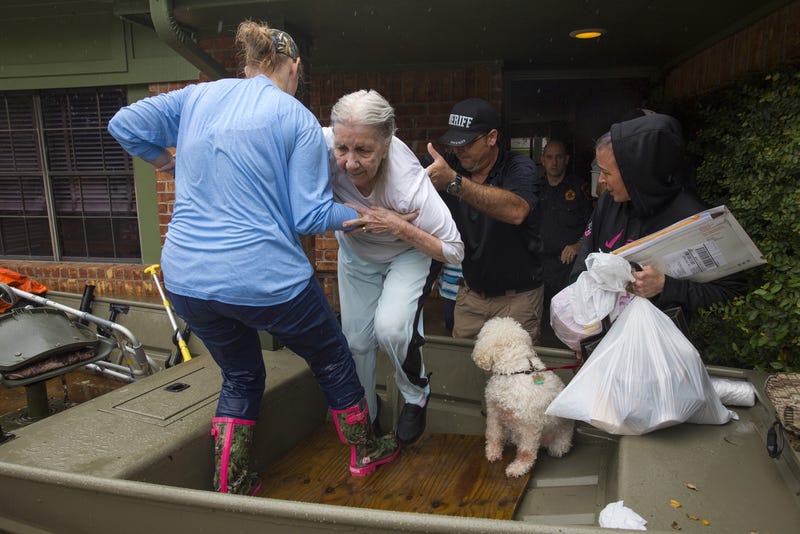
Did you see those packs of water being sold at a Best Buy store in Houston for as much as $42 per pack? The photos went viral as an example of predatory price-gouging in the wake of Hurricane Harvey. But the company is now apologizing and saying it was all a big misunderstanding. Meanwhile, CNBC doesn’t think that disaster capitalism is such a big deal.
There have been over 550 complaints so far about price gouging on everything from food to gasoline. According to the Texas Attorney General, the price gouging has included hotel prices quadrupling, fuel for as much as $10 per gallon, and cases of water being sold for $99.
But Best Buy was recently singled out on social media when a tweet showed that some packs were being sold at a Houston location for $29 while other cases of water were $42. People were disgusted, to say the least.
“This was a big mistake on the part of a few employees at one store on Friday,” a Best Buy spokesperson told CNBC.
“As a company we are focused on helping, not hurting affected people. We’re sorry and it won’t happen again,” the statement continued.
“Not as an excuse but as an explanation, we don’t typically sell cases of water. The mistake was made when employees priced a case of water using the single-bottle price for each bottle in the case,” the spokesperson from Best Buy concluded.
The penalty for price gouging in Texas is a fine of up to $20,000 per infraction. And if the victim is over the age of 65, the fine is up to $250,000. So while Best Buy contends that it was all an honest mistake, they have a legal responsibility not to price gouge during a disaster. That’s the law in Texas.
But amazingly, a host from CNBC acknowledged that while it might be immoral to overcharge during a crisis, he still wondered if the law should be enforced. CNBC had the Attorney General of Texas, Ken Paxton, on their network this week and asked why businesses shouldn’t be allowed to charge whatever they want, even after a natural disaster.
“Attorney General, clearly all of us would be agreed that it’s a moral issue to try and oversell necessities at a time of crisis. Is it and should it be a legal issue as well?” the CNBC host asked. “Surely it’s up to the seller to sell their product at the price they wish, even if morally clearly at this time they shouldn’t be overcharging for necessities.”
The Attorney General shot back that the law is in place for a reason and that he was going to enforce it.
“Well, clearly the Texas legislature thought differently, because they were the ones who put the penalties in place. It’s up to $20,000 per occurrence and if you do this to somebody 65 and older it’s $250,000 per occurrence,” Texas Attorney General Ken Paxton said.
“So, of course, our legislature, signed by a governor many years ago, clearly didn’t want during natural disasters the necessities to be jacked up in price,” Paxton continued. “So that was a decision that they made and we’re enforcing it.”
It’s incredible that anyone could ask whether selling $100 cases of water is actually good in the middle of this disaster like this, but here we are. Nothing, not even the lives of hundreds of thousands of people, should apparently get in the way of making a buck.
[CNBC]
Correction: This post originally misstated one of the prices for the packs of water. I regret the error.
“Fast Radio Burst” Detected in Deep Space
By Eric Mack
The unexplained signals from the other side of the universe known as fast radio bursts are a rarely observed phenomenon and only one of them has been picked up more than once. Now scientists engaged in the search for extraterrestrial intelligencesay that lone repeating fast radio burst (FRB) is being heard twittering away.
FRBs are bright, millisecond-long pulses of radio signals from beyond the Milky Way that were first identified only a decade ago. Suggested explanations include everything from neutron star outbursts to alien civilizations using some form of directed energy to propel a spacecraft.
One burst first observed in 2012, named FRB 121102, was later found to repeat in 2015. On Saturday, UC Berkeley postdoctoral researcher Dr. Vishal Gajjar used the Breakthrough Listen backend instrument at the Green Bank Telescope in West Virginia to target FRB 121102 once again. After observing for five hours and across the entire 4 to 8 GHz frequency band, Gajjar and the Listen team analyzed the 400 terabytes of data gathered and found 15 new pulses from FRB 121102.
“The possible implications are two folds,” Gajjar told me via email Tuesday. “This detection at such a high frequency helps us scrutinize many (of FRB 121102’s) origin models. The frequency structure we see across our total band of 4 to 8 GHz also allows us to understand the intervening medium between us and the source.”
The location of FRB 121102 has already been previously traced to a dwarf galaxy about 3 billion light years away, but what exactly might be sending out such strong signals from there remains a mystery. Gajjar says that the repeating nature and current state of heightened activity for FRB 121102 does seem to rule out some of the most destructive explanations, such as colliding black holes.
“As the source is going into another active state means that the origin models associated with some sort of cataclysmic events are less likely to be the case of FRB 121102,” he said. “It should be noted that they can still be valid for other FRBs.”
Whatever or whoever sent out the bright radio bursts, they left their source a very long time ago when the only life here on Earth was single-celled. Perhaps some ancient intelligent species was clued in to the emergence of life on our planet and knew that a signal sent would reach us just as we were becoming technologically sophisticated for the first time?
Perhaps, but given the current lack of evidence of such extra-terrestrial life, a natural phenomenon like a pulsar seems a more likely explanation.
The Breakthrough Listen team urged other astronomers to make follow-up observations of FRB 121102 during its current state of heightened activity in an Astronomer’s Telegram post that first reported the new results on Monday. The researchers say the new bursts will be described in more detail in an upcoming paper for a scientific journal.
Technically Literate: Original works of short fiction with unique perspectives on tech, exclusively on CNET.
Crowd Control: A crowdsourced science fiction novel written by CNET readers.
Taylor Swift’s “Look What You Made Me Do” Music Video Being Hailed As “Petty” By Critics
By Maeve McDermott
Less than two weeks into her Reputation era, Taylor Swift has never been more exhausting.
After a week-long buildup, Swift’s Look What You Made Me Do video premiered at the VMAs Sunday night — stealing the spotlight from host Katy Perry, whose history with Swift continues to be exhausting. Directed by her favorite visual collaborator, Joseph Kahn — whose previous videos for the star haven’t always nailed the right tone — the macabre clip plays out a meta revenge fantasy that casts Swift as an evil overlord, gazing down as a writhing mass of her former personas claw to her pedestal.
The video is full of Easter eggs and hidden messages that critics have feverishly unpacked in the hours since its release. Most notably, it ends with a line of former Taylors, wearing hyper-specific outfits from her past performances and music videos, lobbing increasingly on-the-nose insults at one another, as one Taylor sneers, “There she goes, playing the victim again.”
Trouble is, while those past Taylor Swifts that she symbolically kills off in the video weren’t perfect, at least they were centered around more than just a lust for revenge, which seems to be the only defining characteristic about Swift’s Reputation phase thus far. They played the guitar. They wore costumesinsilly music videos. They danced with Tom Hiddleston at the Met Gala.
Not seen in the video was a representation of the Taylor Swift that advocated for sexual assault victims in court last month, which many fans hoped would signal a new direction for the star. It’s hard not to wonder whether that version was also purged to make way for this new Taylor Swift, whose only discernible qualities are a drawer full of receipts and a penchant for Blackout-era Britney Spears. As Swift declares in the video, she’s always had a reputation for playing the victim. But now, that pettiness, that used to exist as part of a multifaceted artist, is all she has.
The Look What You Made Me Do video is Swift’s attempt at self-awareness, full of Easter eggs intended to prove to the viewer that Swift hasn’t forgotten all the nasty things people have said about her over the years. Unfortunately for Swift, simply commenting on her soured reputation does not a cultural critique make.
Yes, there’s some enjoyment for Swift fans in watching the singer skewer the many media narratives that dominated her past few years. But, watching Swift equate her “squad” of friends to plastic mannequins and spoof poor Tom Hiddleston with a line of dancers wearing a play on his infamous “I heart T-Swift” shirt, viewers have to wonder whether these figures would’ve preferred to be excluded from the video’s narrative.
While Swift may change her adversarial tone in her forthcoming singles prior to Reputation’s release on Nov. 10, she’s certainly signaling with the Look video that she’s not quite finished lashing out at her enemies. That’s a shame, considering that prior to Look’s release, there was hope that Swift’s forthcoming era would strike a different tone.
Swift took a much-needed year away from the spotlight last year after a series of wildly dumb tabloid dramas, including lashing out against Perry with her Bad Blood single and video, tussling with Kanye West and Kim Kardashian over Famous, and the humiliating saga that was Hiddleswift. Looking back, these headlines will all-but-overshadow her actual 1989album in the Swiftian history books. Too bad that 1989 is an infinitely better work of pop music than Look, a dull new single that cheapens the work of an artist who was once among her generation’s best songwriters.
After disappearing for much of 2016 and 2017, Swift returned for her successful trial against radio DJ David Mueller, where a jury concluded that he groped the singer during a meet-and-greet. Swift thanked her fans and recognized her privilege in a statement after the trial, before pledging to donate to organizations supporting sexual assault victims, signaling that a more mature and meaningful era for the singer may be on the horizon.
Fast forward to this week, when Swift is being accused of mocking Kim Kardashian’s Paris robbery with a scene in the Look video where she pantomimes shooting a gun while buried in jewels in a bathtub. Considering Kardashian was bound at gunpoint in a bathtub while being robbed of her diamonds, the video’s allusion is clueless at best, and merciless at worst, a microcosm of Swift’s Reputation era thus far.
While Swift may direct Look What You Made Me Do at an intentionally-vague “you,” blaming her villainous transformation on an unidentified target, the only person responsible for her regrettable new persona is herself.
AMC Show ‘Preacher’ Upsets Viewers With Jesus Sex Scene
By Fox News

(© 2017 AMC Networks Entertainment LLC. and Sony Pictures Television Inc. All Rights Reserved.)
The latest episode of AMC’s “Preacher” has some people incredibly upset thanks to a graphic scene depicting Jesus Christ having sex on the night of The Last Supper.
The AMC drama is based on a comic book about a modern-day Preacher who is losing his faith and encountering many different demonic entities and monsters. In the second episode of Season 2, which aired Monday, the main character goes on a hunt to find a literal relative of Christ. However, it’s the way the episode opened that has many very upset and offended.
The first seven minutes of the episode, titled “Dirty Little Secret,” depicts Jesus and a woman having sex, speaking graphically about various acts and showing the two’s various positions in silhouette. Later, he tells her to keep it a secret before saying that he’s got to go off to do something for his father. It later becomes clear that this is the night that Jesus would be eventually crucified.
“Depicting Jesus in a grotesque sex scene is an assault on the sensibilities of all Christians, as well as people of good will who are not Christians,” said Catholic League president Bill Donohue in a statement. “We have been treated to this kind of fare from some pay-per-view channels, but we are not accustomed to AMC getting into the mud. If this is a signal of what it aspires to become, we will rally Christians against it.”
Donohue linked to a scathing report from NewsBusters that broke down the episode’s infamous scene as well. In addition, some fans took to social media to express their outrage at the episode and AMC.
the use of dirty little secret in preacher is making me uncomfortable also is tyson literally playing jesus i can’t
— alexis (@wafflflower) August 22, 2017
Petition to Label “Antifa” As A Terror Group Gains 300,000 Signatures
By Dylan Stableford
A new petition calling on the Trump administration to formally recognize the so-called antifa as a “terrorist organization” has generated nearly 300,000 signatures in a week — well beyond the threshold that is supposed to trigger a formal response from the White House. But there’s been no indication under President Trump that it will.
The petition, created by last week in the wake of the violent clashes between white supremacists and antifascists in Charlottesville, Va., argues that the group’s tactics are akin to ISIS:
Terrorism is defined as “the use of violence and intimidation in pursuit of political aims”. This definition is the same definition used to declare ISIS and other groups, as terrorist organizations. AntiFa has earned this title due to its violent actions in multiple cities and their influence in the killings of multiple police officers throughout the United States. It is time for the pentagon to be consistent in its actions – and just as they rightfully declared ISIS a terror group, they must declare AntiFa a terror group – on the grounds of principle, integrity, morality, and safety.
At a campaign rally in Phoenix earlier this week, Trump himself referred to the masked antifascist protesters by name.
“You know, they show up in the helmets and the black masks and they’ve got clubs and they’ve got everything,” the president told the crowd. “Antifa!”
Related: Outside Trump’s rally, bikers, antifa, police, protesters and pepper spray
The State Department maintains a list of Foreign Terrorist Organizations (FTOs)that are designated by the secretary of state. There are currently 61, including ISIS, al-Qaida and Boko Haram.
The petition to add antifa to that list has more than 290,000 signatures — nearly triple the number it needed by Sept. 16 to get “an official response.”
The digital platform, which was created in 2011 under President Barack Obama, drew nearly half a million petitions during his presidency. And the Obama White House answered many of them, including a petition to forgive student loan debt, a call for Obama to pardon Edward Snowden and, most memorably, a plea for the federal government to begin construction on a Death Star, the galactic superweapon featured in the “Star Wars” film franchise.
“The Administration does not support blowing up planets,” Paul Shawcross, a White House science and technology adviser, replied in a statement. “Why would we spend countless taxpayer dollars on a Death Star with a fundamental flaw that can be exploited by a one-man starship?”
But the Trump administration has yet to respond to any of the 10 other petitions that have crossed the 100,000 threshold.
A petition calling on the Trump administration to immediately release the president’s tax returns, launched on the day of Trump’s inauguration, crossed that mark a day later. It now has more than a million signatures.
Another petition, also launched on Inauguration Day, demands that Trump “divest his financial and business holdings or have them administered by a truly blind trust.” That one has 350,000 signatures. A petition urging the administration to preserve the National Endowment for the Arts and the National Endowment for the Humanities received more than 200,000 signatures.
And one calling on Trump to resign because he is “in violation of the Emoluments Clause” — which some Constitutional lawyers have argued — also breezed past the 100,000-signature mark.

Police use pepper spray to disperse protesters outside of President Trump’s rally in Phoenix on Tuesday. (Photo: Laura Segall/AFP/Getty Images)
More
It’s Going Down, a website that bills itself as “a digital community center from anarchist, anti-fascist, autonomous anti-capitalist and anti-colonial movements,” called the idea of labeling antifa a terror group “absurd.”
“We see this petition as a part of a political campaign to criminalize dissent,” a spokesperson for the website wrote in an email to Yahoo News. “It is insidious accusation that anti-fascism is ‘terrorism’ given the number of actual murders, mass casualty incidents and violence white supremacists are directly responsible for.”
“To lump ISIS in with anti-fascism in the same sentence as if anti-fascists are not actively fighting ISIS in Syria is an intentional effort to conflate two polar opposite efforts,” the spokesperson added. “Anti-fascists see ISIS and the alt-right as two sides of the same fascism.”
On-Field Prayer Made by Christian Football Coach Ruled Unprotected by the Constitution
By Maura Dolan
A Christian football coach suspended for kneeling and praying on the 50-yard line after high school games Wednesday lost a bid to be reinstated and allowed to worship in front of students.
A three-judge panel of the U.S. 9th Circuit Court of Appeals said that Bremerton, Wash., High School football coach Joseph A. Kennedy was serving as a public employee when he prayed in front of students and parents immediately after games, and the school had the right to discipline him.
The Bremerton School District, located in Kitsap County across Puget Sound from Seattle, serves about 5,057 religiously diverse students, the court said.
Kennedy, an assistant football coach there from 2008 to 2015, led students and coaching staff in locker-room prayers before and after most games and also prayed on the 50-yard line after games.
Students eventually joined him in the prayers on the field, and he gave motivational speeches with religious content, the court said.
The school district objected, saying its employees could not publicly endorse a religion, and Kennedy asked for a religious exemption under the federal Civil Rights Act of 1964.
The school said he could pray on the 50-yard line after students and parents had left. Kennedy did this for a while, but eventually renewed his postgame practice of praying before people left.
Kennedy’s religious activities gained media attention, and a Satanist group said it too wanted to pray on the football field.
The district eventually suspended Kennedy with pay and did not rehire him when his contract expired.
Kennedy charged in his lawsuit that the school violated his 1st Amendment rights.
Disagreeing, the 9th Circuit panel said the fact that Kennedy insisted on praying in front of students and parents showed his speech was directed at least in part to others, not solely to God.
“When Kennedy kneeled and prayed on the fifty-yard line immediately after games while in view of students and parents, he spoke as a public employee, not as a private citizen, and his speech therefore was constitutionally unprotected,” wrote the 9th Circuit, upholding a decision by a district court judge.
29 States Banned Individual State Laws About Seeds
By Kristina Johnson
This story was originally published by Food and Environment Reporting Network.
With little notice, more than two dozen state legislatures have passed “seed-preemption laws” designed to block counties and cities from adopting their own rules on the use of seeds, including bans on GMOs. Opponents say that there’s nothing more fundamental than a seed, and that now, in many parts of the country, decisions about what can be grown have been taken out of local control and put solely in the hands of the state.
“This bill should be viewed for what it is — a gag order on public debate,” says Kristina Hubbard, director of advocacy and communications at the Organic Seed Alliance, a national advocacy group, and a resident of Montana, which along with Texas passed a seed-preemption bill this year. “This thinly disguised attack on local democracy can be easily traced to out-of-state, corporate interests that want to quash local autonomy.”
Seed-preemption laws are part of a spate of legislative initiatives by industrial agriculture, including ag-gag laws passed in several states that legally prohibit outsiders from photographing farms, and “right-to-farm” laws that make it easier to snuff out complaints about animal welfare. The seed laws, critics say, are a related thrust meant to protect the interests of agro-chemical companies.
Nearly every seed-preemption law in the country borrows language from a 2013 model bill drafted by the American Legislative Exchange Council (ALEC). The council is “a pay-to-play operation where corporations buy a seat and a vote on ‘task forces’ to advance their legislative wish lists,” essentially “voting as equals” with state legislators on bills, according to The Center for Media and Democracy. ALEC’s corporate members include the Koch brothers as well as some of the largest seed-chemical companies — Monsanto, Bayer, and DuPont — which want to make sure GMO bans, like those enacted in Jackson County, Oregon, and Boulder County, Colorado, don’t become a trend.
Seed-preemption laws have been adopted in 29 states, including Oregon — one of the world’s top five seed-producing regions — California, Iowa, and Colorado. In Oregon, the bill was greenlighted in 2014 after Monsanto and Syngenta spent nearly $500,000 fighting a GMO ban in Jackson County. Monsanto, Dow AgroSciences, and Syngenta also spent more than $6.9 million opposing anti-GMO rules in three Hawaiian counties, and thousands more in campaign donations. (These companies are also involved in mergers that, if approved, would create three seed-agrochemical giants.)
Montana and Texas were the latest states to join the seed-preemption club. Farming is the largest industry in Montana, and Texas is the third-largest agricultural state in terms of production, behind California and Iowa.
Language in the Texas version of the bill preempts not only local laws that affect seeds but also local laws that deal with “cultivating plants grown from seed.” In theory, that could extend to almost anything: what kinds of manure or fertilizer can be used, or whether a county can limit irrigation during a drought, says Judith McGeary, executive director of the Farm and Ranch Freedom Alliance. Along with other activists, her organization was able to force an amendment to the Texas bill guaranteeing the right to impose local water restrictions. Still, the law’s wording remains uncomfortably open to interpretation, she says.
In both Montana and Texas, the laws passed with support from the state chapter of the Farm Bureau Federation — the nation’s largest farm-lobbying group — and other major ag groups, including the Montana Stockgrowers Association and the Texas Seed Trade Alliance. In Texas, DuPont and Dow Chemical also joined the fight, publicly registering their support for the bill.
Echoing President Trump’s anti-regulatory rhetoric, preemption proponents argue that, fundamentally, seed-preemption laws are about cutting the red tape from around farmers’ throats. Supporters also contend that counties and cities don’t have the expertise or the resources to make sound scientific decisions about the safety or quality of seeds.
“We don’t believe the locals have the science that the state of Texas has,” said Jim Reaves, legislative director of the Texas Farm Bureau. “So we think it’s better held in the state’s hands. It will basically tell cities that if you have a problem with a certain seed, the state can ban it, but you can’t.”
Other preemption proponents claim that local seed rules would simply get too complicated, forcing growers to navigate conflicting laws in different counties. “Many of us farm fields in more than one county,” said Don Steinbeisser Jr., a Sidney, Montana, farmer who testified in support of his state’s bill at a legislative hearing this spring. “Having different rules in each county would make management a nightmare and add costs to the crops that we simply do not need and cannot afford.”
But critics of preemption laws, including farmers (organic and conventional) and some independent seed companies, are afraid of losing their legislative rights. They claim something far more serious than a single farmer’s crop is at stake.
“There is no looming threat that warrants forfeiting the independence of local agricultural communities in the form of sweeping language that eliminates all local authority governing one of our most valuable national resources,” says Hubbard of the Organic Seed Alliance.
Organic farmers can lose their crop if it becomes contaminated with genetically modified material. Even conventional farmers who rely on exports to Asia, where GMOs are banned by some countries, face risks from contamination. There are currently no plans to push for a GMO ban anywhere in Texas or Montana, and neither state requires companies to disclose the use of GMOs. (In Montana, at least, Gov. Steve Bullock, a Democrat, added an amendment to the preemption bill when he signed it, preserving the right of local governments to require that farmers notify their neighbors if they’re planting GMO seeds.) Yet critics of the preemption laws fear that they tie the hands of local governments, which will make it harder for communities to respond to problems in the future.
Still, the fight isn’t just about GMOs, says Judith McGeary, noting that seeds coated with neonicotinoids — a class of pesticides linked to colony collapse disorder in bees — are also at issue. Under the Texas bill, a local government can’t ban neonic seeds in order to protect pollinator insects, and in the current political climate, it’s hard to imagine that such a ban would happen on the state level.
“We have an extremely large state with an incredible diversity of agricultural practices and ecological conditions, and you’ve now hobbled any ability to address a problem that’s found in one local area,” says McGeary. “Until it’s a big enough issue for a state of 23 million to pay attention to through the state legislature, nothing is going to happen,” she says.
GOT Director Confirms More Incest
By William Hughes
Out all the shows of on TV, HBO’s Game Of Thrones is probably the last one you’d accuse of withholding intra-family sexual relationships from its viewership. So it’s not wholly surprising to learn that Alan Taylor—the episode director who handled last Sunday’s penultimate episode of the show’s seventh season, “Beyond The Wall”—has seemingly promised that the relationship between Jon Snow and Daenerys Targaryen is going exactly where we all expected it’s going, despite the fact that Dany is almost certainly Jon’s secret aunt.
Taylor has been making the rounds this week for interviews, but he seemingly confirmed the news to The Daily Beast, stating, “There’s no secret that this is where this is going. Readers of the book have known that things were heading towards this destination for a while. Even the characters in this story know it’s heading in this direction. Tyrion is making fun of Dany about what’s brewing.” And while he didn’t comment on the fan-theory-turned-fan-firm-belief that suggests Jon is the son of Dany’s dead brother, Rhaegar, he did confirm that, sex-wise, “It’s clear that that’s our destination at this point.”
Taylor also discussed some of the, let’s say, odd choices the characters made in the most recent episode, and expressed what appears to be mounting frustrations at the show’s fans, and their wacky need to watch something that can keep a basic timeline straight. “There’s been tremendous amount of talk about the airspeed velocity of the raven,” he noted, “Which seems to be catching some people a lot. I don’t have an answer for that, except to say those ravens are really fast.”
Discussion
Christopher Macbride Adapting Scott Snyder’s and Jeff Lemire’s “A.D. After Death” for Sony.
By Rich Johnston
Writer-director Christopher MacBride has already written and is directing Amnesiabased on the Arcana Comics graphic novel by Dwayne Harris. He also adapted Tim Truman‘s comic book series Scout for Studio 8 and producer Braden Aftergood. And now, third’s the charm: Deadline is reporting that he is tapped by Sony and producer Josh Bratman at Immersive Pictures to adapt the Scott Snyder and Jeff Lemire graphic novel A.D.: After Death.
A.D.: After Death was published by Image Comics last year and optioned by Sony in December.
Summary: WHAT IF WE FOUND A CURE FOR DEATH? Two of comics’ most acclaimed creators, SCOTT SNYDER (WYTCHES, Batman, American Vampire) and JEFF LEMIRE (DESCENDER, Moon Knight, Sweet Tooth) unite to create a three-part epic like no other, set in a future where a genetic cure for death has been found. Years after the discovery, one man starts to question everything, leading him on a mind-bending journey that will bring him face-to-face with his past and his own mortality. A unique combination of comics, prose, and illustration, A.D.: AFTER DEATH will be serialized monthly as three oversized prestige format books written by SNYDER and fully painted by LEMIRE.
You can read a review/recommendation of A.D.: After Death right here…
“Cooke is aware of the tensions between his parents, their losses, failures, and hopes, in a highly charged, novelistic, way. These are people struggling to find meaning and a sense of being in life, just as their son is, and he becomes obsessed with recording it as if it is all fragile, something precious that can be lost. Cooke’s life as narrated by him is depressing, scary, and beautiful.”
…and a preview below…




Examining the Iglesia Ni Cristo Cult from Apologia TV
Scientists Incubate Lamb In Artificial Womb For the Second Time.

It may look like a glorified Ziplock bag, but the artificial womb could one day save the lives of the thousands of babies born every year prematurely.
For the second time, researchers announced this week that they have successfully incubated lambs born before reaching full term in an artificial ‘womb.’ In findings published this week in The American Journal of Obstetrics & Gynecology, researchers from the University of Western Australia, Australia’s Women and Infants Research Foundation, and Tohoku University Hospital in Japan reported that several lambs continued to grow during a week-long incubation period in an “ex-vivo uterine environment” dubbed “EVE.” They appeared healthy when later delivered.
It’s not the first time that researchers have successfully used such a system to incubate preterm lambs. In April, researchers at the Children’s Hospital of Philadelphia used a similar system to incubate premature lambs for a record-breaking four weeks. Lambs have a shorter gestation period so the 105- to 115-day-old premature lamb fetuses in that study were the equivalent of about 23 weeks in a human. The hope is that such systems could help babies born as early as 22 weeks. Each year in the United States, approximately 30,000 births are critically preterm, meaning babies are born before 26 weeks of a full 37-week gestation period.
The system in the new study relies on a fluid-filled plastic bag to keep the lambs alive. A bath of artificial amniotic fluid fills the bag to mimic conditions inside the womb. An external oxygenator fills in for the mother’s placenta, allowing gas exchange of CO2 and oxygen in the fetal blood. Like the Children’s Hospital study, the Australian and Japanese researchers relied on the fetal heart to power the womb, ensuring that developing hearts and lungs don’t get overloaded and giving those organs a chance to develop normally.
Before the April study, the maximum duration a lamb fetus had survived in an artificial system was 60 hours, and those animals experienced brain damage.
The success—using a fetal-powered system for the second time—is an important step towards having something that could actually be tested in human babies. Such a system would be a vast improvement over the current treatment, which is to place premature infants in an incubator and rely on devices like ventilators to assist their still-developing organs.
Such new technologies, though, will also inevitably raise new ethical questions. Recently, one researcher pointed out that the availability of artificial womb technology could threaten a woman’s right to an abortion, since in the US the right hinges in part on whether a fetus is viable. The technology could also result in premature babies that survive, but have lifelong impairments or conditions, raising questions of when it would be appropriate to use such technology.
There is still much work to be done before artificial wombs are ready for humans—if they ever are at all. Researchers have said it will be at least five years before trials are even a possibility, if not more. But it is a future we are inching closer to every day.
America, Home of the Transactional Marriage
By Victor Tan Chen
Today, though, just over half of women in their early 40s with a high-school degree or less education are married, compared to three-quarters of women with a bachelor’s degree; in the 1970s, there was barely a difference. The marriage gap for men has changed less over the years, but there the trend lines have flipped too: Twenty-five percent of men with high-school degrees or less education have never married, compared to 23 percent of men with bachelor’s degrees and 14 percent of those with advanced degrees. Meanwhile, divorce rates have continued to rise among the less educated, while staying more or less steady for college graduates in recent decades.
Plummeting rates of marriage and rising rates of out-of-wedlock births among the less educated have been linked to growing levels of income inequality. More generally, these numbers are causes for concern, since—even though marriage is hardly a cure-all—children living in married households tend to do better on a wide range of behavioral and academic measures compared to kids raised by single parents or, for that matter, the kids of parents who live together but are unmarried.
Whether this can be attributed to marriage itself is a contentious question among researchers, since some studies suggest that what really drives these disparities is simply that those who are likeliest to marry differ from those who don’t, notably in terms of earnings. (Other studies, however, find better outcomes for the kids of married parents regardless of the advantages those households tend to have.) Regardless, it is clear that having married parents usually means a child will get more in the way of time, money, and guidance from their parents.
What’s more, the U.S.’s relatively meager safety net makes the cost of being unemployed even steeper than it is in other industrialized countries—which prompts many Americans to view the decision to stay married with a jobless partner in more transactional, economic terms. And this isn’t only because of the financial ramifications of losing a job, but, in a country that puts such a premium on individual achievement, the emotional and psychological consequences as well. Even when it comes to private matters of love and lifestyle, the broader social structure—the state of the economy, the availability of good jobs, and so on—matters a great deal.
* * *
Earlier this year, the economists David Autor, David Dorn, and Gordon Hanson analyzed labor markets during the 1990s and 2000s—a period when America’s manufacturing sector was losing jobs, as companies steadily moved production overseas or automated it with computers and robots. Because the manufacturing sector has historically paid high wages to people with little education, the disappearance of these sorts of jobs has been devastating to working-class families, especially the men among them, who still outnumber women on assembly lines.
In doing research for a book about workers’ experiences of being unemployed for long periods, I saw how people who once had good jobs became, over time, “unmarriageable.” I talked to many people without jobs, men in particular, who said that dating, much less marrying or moving in with someone, was no longer a viable option: Who would take a chance on them if they couldn’t provide anything?
And for those already in serious relationships, the loss of a job can be devastating in its own way. One man I met, a 51-year-old who used to work at a car plant in Detroit, had been unemployed on and off for three years. (As is standard in sociology, my interviewees were promised confidentiality.) Over that period, his marriage fell apart. “I’ve got no money and now she’s got a job,” he told me. “All credibility is out the tubes when you can’t pay the bills.” The reason his wife started cheating on him and eventually left him, he said, was that “a man came up with money.”
The theory that a lack of job opportunities makes marriageable men harder to find was first posed by the sociologist William Julius Wilson in regard to a specific population: poor, city-dwelling African Americans. (Disclosure: Wilson was my advisor in graduate school.) In later decades of the last century, rates of crime, joblessness, poverty, and single parenthood soared in cities across the country. Many conservatives blamed these trends on a “culture of poverty” that perpetuated indolence, apathy, and instant gratification across generations. Some, such as the political scientist Charles Murray, argued that federal assistance programs made these communities dependent on outside help and discouraged marriage.
Many liberals criticized these “cultural” explanations, pointing out that, among other things, the inflation-adjusted value of welfare and other benefits had been falling over this period—which meant overly generous government aid was unlikely to be the culprit. In a 1987 book, Wilson put forward a compelling alternative explanation: Low-income black men were not marrying because they could no longer find good jobs. Manufacturers had fled cities, taking with them the jobs that workers with less in the way of education—disproportionately, in this case, African Americans—had relied on to support their families. The result was predictable. When work disappeared, people coped as best they could, but many families and communities frayed.
The predicament of today’s working class is no longer just about the decline in manufacturing jobs. A study last year by the sociologists Andrew Cherlin, David Ribar, and Suzumi Yasutake found that in places with relatively large disparities in earnings, parents were more likely to have at least one child outside of marriage. Part of the reason, the researchers concluded, was that these highly unequal areas had little in the way of jobs that paid well and that high-school graduates could get—not just factory jobs, but also lower-level office and sales jobs. What have replaced jobs like that are, for the most part, low-wage service jobs as janitors, restaurant workers, and the like. “The kinds of jobs a man could hold for a career have diminished,” the sociologists wrote, “and more of the remaining jobs have a temporary ‘stopgap’ character—casual, short-term, and not part of a career strategy.” The result: As many men’s jobs have disappeared or worsened in quality, women see those men as a riskier investment.
At the same time, they are not necessarily postponing when they have kids. As the sociologists Kathryn Edin and Maria Kefalas have found in interviews with low-income mothers, many see having children as an essential part of life, and one that they aren’t willing to put off until they’re older, when the probability of complications in pregnancy can increase. For mothers-to-be from more financially stable backgrounds, the calculation is different: They often wait longer to have children, since their career prospects and earnings are likely to improve during the period when they might otherwise have been raising a child. For less-educated women, such an improvement is much rarer.
How do these findings square with those of Autor, Dorn, and Hanson? The authors of the fracking study suggest that the disappearance of good jobs could well have played a crucial role in an initial turn away from marriage, as well as childbirth within marriage. But what had taken over since then, they speculate, was a new set of social expectations: Over several decades, Americans have come to view marriage as less of a necessity, and more of an ideal, and this shift has continued into recent years. Now that singlehood and out-of-wedlock childbirth have shed a degree of social stigma, the theory suggests, an increase in men’s incomes won’t revive norms that have already faded away.
This model may seem to focus unduly on men’s economic prospects, compared to women’s, but that’s actually the point. Americans still on the whole expect men to provide, meaning their worth as partners is more closely tied to their income. In fact, what seems to be decisive in Autor, Dorn, and Hanson’s study is not really whether men’s incomes go up or down, but whether they go up or down relative to women’s. For instance, when competition from China chipped away at jobs in female-dominated manufacturing sectors, such as the leather-goods industry, marriage rates actually increased. As women’s wages fell compared to men’s, the economists argue, marriage was more likely to lead to economic security, and single motherhood became less attractive.
But even if expectations around gender and earnings remain firmly in place, they are clearly changing, likely in response to the reality that, nowadays, women are the primary breadwinner in four out of 10 families. I spoke to a 54-year-old former factory worker in Mount Clemens, Michigan, who told me that her husband’s resentment about the frequent temporary layoffs (which came during slow periods at her plant) eventually spilled over into vicious fights over money. “Anytime I got laid off, he got pissed,” she said. The two later separated. In today’s economy, when oftentimes both partners must pitch in their wages to make ends meet, it’s increasingly hard to see how anyone in the working class has the luxury of sticking with someone without a job—male or female.
* * *
Does it really have to be this way? Must a job—or a lack of a job—shape one’s romantic and family life? When I was doing research for my book, I talked to both Americans and Canadians affected by the retreat of manufacturing jobs, many of whom were separated by just a quick drive across the border between Michigan and Ontario. I was surprised, though, that unemployment appeared to be more toxic to the romantic relationships of the Americans I talked to, who were more likely to go through a separation or divorce following a layoff than my Canadian interviewees were.
To some extent, this reflects cultural differences. As Andrew Cherlin, a sociologist whose research was cited above, noted in his 2010 book The Marriage-Go-Round, Americans tend to place great importance on both marriage and personal autonomy, which is reflected in their very high marriage and divorcerates (higher than in other advanced industrialized countries, including Canada). An intensely individualistic worldview, when applied to relationships, may make someone more willing to end them when their partner doesn’t have a good job; the can-do, competitive values that America rightly celebrates can, when taken to extremes, make relationships seem to be as much about self-advancement as about unconditional love and acceptance.
At the other end of the earnings spectrum, this view of relationships leads well-educated people to search for partners who, on some level, will set them (and their children) up to be financially better off. Increasingly, this means that well educated people marry other well educated people—something that has always been the case, but not to this degree.
All that said, the difference I detected in the durability of Americans’ and Canadians’ relationships following the loss of one partner’s job may also have to do with how the two countries’ social policies shape residents’ views on the stakes of being employed. Of course, some researchers believe that a strong safety net may actually discourage people from getting married in the first place. They point to the fact that in European countries with expansive government programs, there tend to be lower rates of marriage and childbirth within marriage. But it’s unclear whether the explanation is different values, or different policies. In many European countries, for example, cohabiting relationships are often long-term and stable, such that they look much like marriages. In the U.S. that tends not to be the case, which suggests that attitudes about live-in relationships, like views on marriage, diverge across the Atlantic.
He and his wife talked things over, and he decided to get help. A local support program for people out of work—an “action center” funded by the government and staffed by some of his former coworkers at the plant—provided him with a support network of peers who understood his situation. The center also lobbied his former employer to extend his remaining health-insurance coverage so that he could pay for his therapy. (Even under Canada’s single-payer system, not all health-care costs are covered by the government.) He said he emerged from that experience with a stronger marriage and a stronger relationship with his daughter. “Before, we didn’t have that openness, that communication,” he said.
The Canadian safety net later helped him in other ways. He took remedial courses to get his high-school degree and then trained to become an addiction counselor; the government paid all his tuition, which included a job placement at the end of the program. Even when his public unemployment benefits ended, he continued to receive income through a special program for laid-off workers like him who had worked at least seven out of the previous 10 years. The fact that he could still bring home a check every other week, he said, made him feel less ashamed about not working. “Everything is moving in the right direction,” he told me at the time. For that he credited his family, his own motivation, and the government’s help.
Canada has a robust set of policies that help struggling families, especially those with just one earner. For example, Canadian parents receive “baby bonuses,” monthly tax-free cash benefits for each child under the age of 18, which were greatly expanded for lower-income households last year. (America’s federal government offers a child tax credit, but it helps only those who have done a certain amount of paid work that year, and jobless workers and low-income families who don’t pay much in the way of federal income taxes receive less or none of it.) Canadians with modest incomes also receive quarterly, tax-free payments to offset the costs of various sales taxes. Policies like these make having two full-time incomes less crucial in keeping a Canadian household financially afloat. They may also make the relationships in that household less transactional—that is, less dominated by a calculus that tallies what one partner does for another.
Confronted, like the United States, with global economic realities such as free trade and automation, some countries have built or strengthened safety nets to give their residents a measure of financial stability. There’s a reason American family relationships have been shaped so much by labor markets. It’s not a matter of destiny, but policy.
19 Businesses Millennials Are Killing
By Kate Taylor
Millennials’ preferences are killing dozens of industries.
There are many complex reasons millennials’ preferences differ from prior generations’, including less financial stability and memories of growing up during the recession.
“I think we have got a very significant psychological scar from this great recession,” Morgan Stanley analyst Kimberly Greenberger told Business Insider.
Here are 19 things millennials are killing
Casual dining chains like Buffalo Wild Wings and Applebee’s

Brands such as Buffalo Wild Wings, Ruby Tuesday, and Applebee’s have faced sales slumps and dozens of restaurant closings as casual-dining chains have struggled to attract customers and increase sales.
In August, Applebee’s announced it would close up to 135 restaurants, in part because it focused too much on winning over millennials and forgot its “Middle America roots.”
“Millennial consumers are more attracted than their elders to cooking at home, ordering delivery from restaurants, and eating quickly, in fast-casual or quick-serve restaurants,” Buffalo Wild Wings CEO Sally Smith wrote in a letter to shareholders earlier this year.
Beer

In late July, Goldman Sachs downgraded both Boston Beer Company and Constellation Brands based on data suggesting that younger consumers prefer wine and spirits to beer, as well as the fact that they’re drinking less alcohol than older generations more generally.
Beer penetration fell 1% from 2016 to 2017 in the US market, while both wine and spirits were unmoved, according to Nielsen ratings.
While some argue that calling a 1% drop in penetration a beer-industry homicide case is an overreaction, small shifts have a huge financial impact on beer industry giants. Beer already lost 10% of market share to wine and hard liquor from 2006 to 2016.
Napkins

Younger consumers are opting for paper towels over napkins, according a Washington Post article from 2016.
The Post points to a survey conducted by Mintel, which highlights that only 56% of shoppers said they bought napkins in the past six months. At the same time, 86% surveyed said they had purchased paper towels.
Paper towels are more functional than napkins and can be used for more purposes. And the Post noted that millennials are more likely to eat meals out of the home, contributing to the decline.
“Breastaurant” chains like Hooters

Business Insider Video
People ages 18 to 24 are 19% less likely to search for breasts on the pornographic website Pornhub compared with all other age groups, according to an analysis conducted by the website.
For “breastaurants” like Hooters and Twin Peaks, a loss of interest in breasts is bad for business. The number of Hooters locations in the US has dropped by more than 7% from 2012 to 2016, and sales have stagnated, according to industry reports.
Hooters has struggled to win over millennials for some time now. In 2012, the chain attempted to revamp its image with updated decor and new menu items to attract more millennial and female customers.
Cereal

Unsplash / Jennifer Pallian
Almost 40% of millennials surveyed by Mintel said cereal was an inconvenient breakfast choice because they had to clean up after eating it, The New York Times reported in 2016.
Instead, younger consumers are turning to convenient options with minimal cleanup that can be eaten on the go, from yogurt to fast-food breakfast sandwiches.
Cereal sales dropped 5% from 2009 to 2014, even though more Americans are eating breakfast than ever before.
Companies such as Kellogg and General Mills have reported that sales have stopped falling in 2017, so cereal may not be dead just yet.
Golf

“From the golf industry statistics, we know that rounds are down,” Matt Powell of the industry-research firm NPD said in a video in 2016. “We know that millennials are not picking up the game, and boomers are aging out. The game is in decline.”
While millennials have created new fitness crazes, like SoulCycle and barre classes, golf has failed to capture their interest in the same manner.
Motorcycles

“Our data suggests the younger Gen Y population is adopting motorcycling at a far lower rate than prior generations,” AB analyst David Beckel said in a July note downgrading its rating of Harley-Davidson shares from “outperform” to “market perform.”
Motorcycle sales at Harley-Davidson, which represents about half of the US big-bike market, were down 1.6% overall in 2016 versus the year before. US sales fell 3.9%.
The company shipped 262,221 motorcycles overall, which fell short of expectations of 264,000 to 269,000 units.
Homeownership

Shutterstock
Homeownership is hitting record lows among millennials,
“We believe the delay in homeownership is due to tighter credit standard and lifestyle changes, including delayed marriage and children,” Michelle Meyer, a US economist at BAML, wrote in a recent note.
“We do not expect these factors to change in the medium term, keeping the homeownership rate low for young adults.”
Yogurt — especially light yogurt

Unsplash / Peter Hershey
Light yogurt sales fell 8.5% in the year ended in September 2016, dropping $200 million from roughly $1.2 billion to $1 billion, according to Nielsen data.
Wider yogurt industry sales declined 1.5%, the fourth consecutive year of falling sales.
The decline in light yogurt can be traced to a growing demand for natural, protein-rich foods that fill up health-conscious consumers, instead of simply low-calorie and low-fat options. That’s been a huge help for Greek yogurt, which appeals to customers seeking a filling option packed with protein.
On the flip side of the rise of protein and organic options is the fall of sugar.
Low fat-diets were the norm in the US in the 1980s and ’90s. As food makers worked to cut fat from products, they began replacing it with another ingredient: sugar. As a result, “light” yogurts were often packed with sugar yet advertised as low-fat, healthy choices.
Bars of soap

Shutterstock
Bar soap sales fell 2.2% from 2014 to 2015, a time when the rest of the shower-and-bath category grew, according to Mintel.
And, millennials are to blame.
“Almost half (48%) of all US consumers believe bar soaps are covered in germs after use, a feeling that is particularly strong among consumers aged 18-24 (60%), as opposed to just 31% of older consumers aged 65-plus,” Mintel wrote in a press release.
Diamonds

REUTERS/Tyrone Siu
Fewer millennials are getting married, and those who are are increasingly choosing nontraditional rings, CNBC reported.
As sales of diamonds have slowed globally, trade associations such as Diamond Producers Association have attempted to win over millennial customers by retooling how the jewels are branded.
Fabric softener

Thomson Reuters
Sales of liquid fabric softeners fell 15% in the US from 2007 to 2015, The Wall Street Journal reported. The market leader Downy fell 26% in the same period.
According to Downy maker Procter & Gamble’s head of global fabric care, millennials “don’t even know what the product is for.”
Banks

Getty Images/Justin Sullivan
Millennials distrust financial establishments and rarely visit physical banks.
“There’s a massive shift in consumer behavior and consumer trust,” Rick Yang, a partner at the venture-capital firm New Enterprise Associates, told Business Insider. “I think coming out of [the financial crisis], millennials have a massive distrust of existing financial services.”
While banks themselves will probably never die, bank branches and physical bank locations may soon be a thing of the past.
Nearly three-quarters of millennials with a bank account visit a branch once or less a month, according to BI Intelligence data. And slightly less than 40% of millennials do not visit physical banks at all.
Department stores like Macy’s and Sears

Business Insider/Hayley Peterson
As millennials flock to fast-fashion brands like H&M and Zara, Macy’s and Sears have suffered. Sears is closing more than 300 Sears and Kmart stores this year, while Macy’s plans to shutter 68.
Part of the reason is that when millennials do spend money, they’re spending more on experiences like restaurants and traveling. Millennials are less drawn to aspirational, designer brands, and they’re perfectly happy saving money by buying private-label lines, which further hurts traditional department stores.
Designer handbags

Speaking of once popular brands, millennials are also hurting designer handbag sales.
Brands like Michael Kors and Kate Spade have been forced to sell handbags at major discounts as millennials lose interest (and lack the money to spend on the bags). In some ways, the brands’ mega-popularity contributed to their downfall.
Widespread popularity is the “kiss of death for trendy fashion brands, particularly those positioned in the up-market younger consumer sectors,” industry expert Robin Lewis wrote on his blog.
Gyms

Shutterstock/Uber Images
While millennials like to workout, they’re ditching gyms in favor of boutique, class-centric centers.
“Millennials don’t want to be tied down,” Megan Smyth, the CEO of FitReserve, a service that lets members book boutique studio classes, told the New York Post. “It’s a spontaneous demographic.”
In July, Foursquare found that mid-market gyms like 24 Hour Fitness, Snap Fitness, and New York Sports Club lost 5% of their gym visit share in the past year, as boutique fitness visits grew.
Home-improvement stores like Home Depot and Lowe’s

Joe Raedle/Getty
While people have been investing more in their homes, some experts have questioned whether millennials’ reluctance to buy homes could ultimately hurt these retailers.
“Millennials are redefining the American family,” Jeff Fromm wrote in Forbes. “Millennials are delaying marriage and childbirth at rates never seen before. This cultural shift will have a near-term impact on housing: millennials may not need the same space, permanence, and practicality that most Americans want out of their housing.”
Football

David Dermer/AP
Both college football games’ attendance and NFL viewership have recently declined.
Analysts said the drop could be tied to numerous things — the 2016 election, protests as NFL players have taken a knee during the national anthem, or that the game has simply gotten more boring.
However, one explanation would directly target millennials: Younger people are ditching cable at an increasing rate, leaving them to watch games in groups or simply stay updated on their iPhones.
Oil

AP/Jae C. Hong
Millennials’ conception of the oil industry means that it may struggle to find workers — and customers — in the future.
McKinsey found that 14% of millennials say they would not want to work in the oil and gas industry because of its negative image — the highest percentage of any industry. And a recent survey by EY found that millennials “question the longevity of the industry … Further, they primarily see the industry’s careers as unstable, blue-collar, difficult, dangerous and harmful to society.”
Teens are even more critical, with two out of three saying the oil and gas industry causes problems instead of solving them.
Oregon Governer Kate Brown Aproves Gun Confiscation Law
According to guns.com, Gov. Kate Brown of Oregon approved a piece of gun legislation this week that establishes Extreme Risk Protection (ERP) Orders, that forces subjects to surrender their firearms.
The law allows police, or a member of a subjects family or house hold, to file a petition with the court that could lead to an order stripping an individual’s Second Amendment rights if it is believed that they pose an imminent risk to themselves or others.
The bill, SB 719A, passed the Senate 17-11 in May and the House 31-28 in July, the story says.
Brown said in the story that the new Extreme Risk Protection Orders the “best way to ensure that a person who is at risk of harming themselves or others is identified, while still ensuring their rights are protected by a court review.”
The law establishes a process for obtaining the orders, which will be issued by a judge in civil court. The subject will be prohibited from possessing or buying firearms or ammunition for one year, the story says and must surrender any firearms they own, or they may be stored with a third party fur the duration of the order.
Once a judge issues an ERP order, the subject has 30 days to request a hearing to keep their firearms, which then must be held within 21 days, the story says.
Another aspect of the bill has riled gun rights supporters. Once an order is issued, it also grants police enforcing that order the power to search for and seize guns that were not willingly surrendered or stored somewhere else.
The fact remains, the signing of this law could very realistically lead to situations where armed police officers are forced to go to private citizens homes to seize their firearms, which could result in violent confrontations, especially since the citizens in question are likely disturbed in some way because of the nature of the of the ERP orders.
To mitigate the chances of these orders being used for any reason other than their intended purpose, there are penalties in place. Anyone discovered filing a fake order could be imprisoned for up to a year, and/or pay a fine of up to $6,250.
Second Amendment groups have spoken out strongly against the process, saying it doesn’t provide enough structure for those deemed at risk to receive any kind of assistance or counseling. There are also no provisions for taking a person deemed to be dangerous into custody. The gun rights groups also say there are due process concerns, according to the story.
From a statement issued by the NRA-ILA:
“By allowing a law enforcement officer, family member, or household member to seek the ERPO, SB 719A would allow people who are not mental health professionals, who may be mistaken, and who may only have minimal contact with the respondent to file a petition with the court and testify on the respondent’s state of mind.”
New Oregon Bill for Funding Abortions to Include Illegal Immigrants
Oregon has passed the nation’s most progressive abortion bill, requiring state insurers to provide free abortions for all, including illegal immigrants.
Gov. Kate Brown, a Democrat, signed the historic health bill Tuesday, after the Legislature approved it in July. It would require Oregon insurance companies to cover reproductive procedures, all on the taxpayers’ dime.
The $10.2 million bill takes effect immediately, allocating $500,000 for abortions for the estimated 22,873 women eligible under the Oregon health plan, the Washington Times reported. This will include abortions for immigrants who are otherwise ineligible under the state’s Medicaid program.
Opponents argued that the bill will force people who morally object to abortions to assume some of the costs. They also predicted that lawsuits will quickly follow, arguing that the new law violates the Weldon Amendment, a 2004 congressional provision that prohibits Health and Human Services funds for states that discriminate against health care providers that refuse to cover abortions, the Washington Times further reported.
Providence Health Care, a nonprofit Catholic health care provider that is also the only insurer operating in Oregon that does not cover abortions, will have its expenses reimbursed by the state.
Two other states, California and New York, also require state insurers to cover abortion.
The Associated Press contributed to this report.
The Theoretical Origin of Complex Life and “Snowball” Earth
Life on Earth goes back at least two billion years, but it was only in the last half-billion that it would have been visible to the naked eye. One of the enduring questions among biologists is how life made the jump from microbes to the multicellular plants and animals who rule the planet today. Now, scientists have analyzed chemical traces of life in rocks that are up to a billion years old, and they discovered how a dramatic ice age may have led to the multicellular tipping point.
Writing in Nature, the researchers carefully reconstruct a timeline of life before and after one of the planet’s most all-encompassing ice ages. About 700 million years ago, the Sturtian glaciation created what’s called a “snowball Earth,” completely covering the planet in ice from the poles to the equator. About 659 million years ago, the Sturtian ended with an intense greenhouse period when the planet heated rapidly. Then, just as things were burning up, the Marinoan glaciation started and covered the planet in ice again. In the roughly 15 million years between the two snowballs, a new world began to emerge.
Just before the rise of plankton that provided food for multicellular animals, the Earth’s continents had merged and broken apart and merged again.
Jochen J. Brocks, a geologist from the Australian National University, Canberra, joined with his colleagues to track the emergence of multicellular life by identifying traces left by cell membranes in ancient rocks. Made from lipids and their byproducts, cell membrane “biomarkers” are like fossils for early microorganisms. By measuring chemical changes in these membranes, Brocks and his team discovered a “rapid rise” of new, larger forms of sea-going plankton algae in the warming waters after the Sturtian snowball. Some of these lifeforms were eukaryotes, meaning they had developed a nucleus—that’s another necessary step on the road to multicellular life.
But multicellular life couldn’t evolve without a major shift in the planet’s geochemistry after the Sturtian. From the upper atmosphere to the deepest oceans, the planet’s molecular composition had to change.
The great oxygen rush
The researchers suggest this transformation started when melting glaciers at the end of the snowball caused rapid erosion of landmasses, sending huge amounts of nutrients into the oceans. Slurries of icy minerals cascaded into the sea, sinking to the bottom and sequestering carbon.
That’s when things got real. “Such massive burial of reduced carbon must have been balanced by a net release of oxygen into the atmosphere, initiating the protracted oxygenation of Neoproterozoic deep oceans,” write the scientists. A world with very little oxygen in it was suddenly inundated with the stuff, both in and out of the water.
The rise of oxygen set off a cascade of linked events. It very likely led to the rise of phosphorous in the water, which is a key building block in DNA, and the energy-rich molecule ATP that provides fuel for our bodies. This meant more complex lifeforms like algae, which release oxygen during their digestive process. As algae diversified, lifeforms evolved to feed on the algae. Over time, new predators evolved to feed on those creatures, and so on. The more creatures who died and sank to the ocean floor, the more carbon was sequestered. As the researchers put it, the planet developed “a more efficient biological pump.”
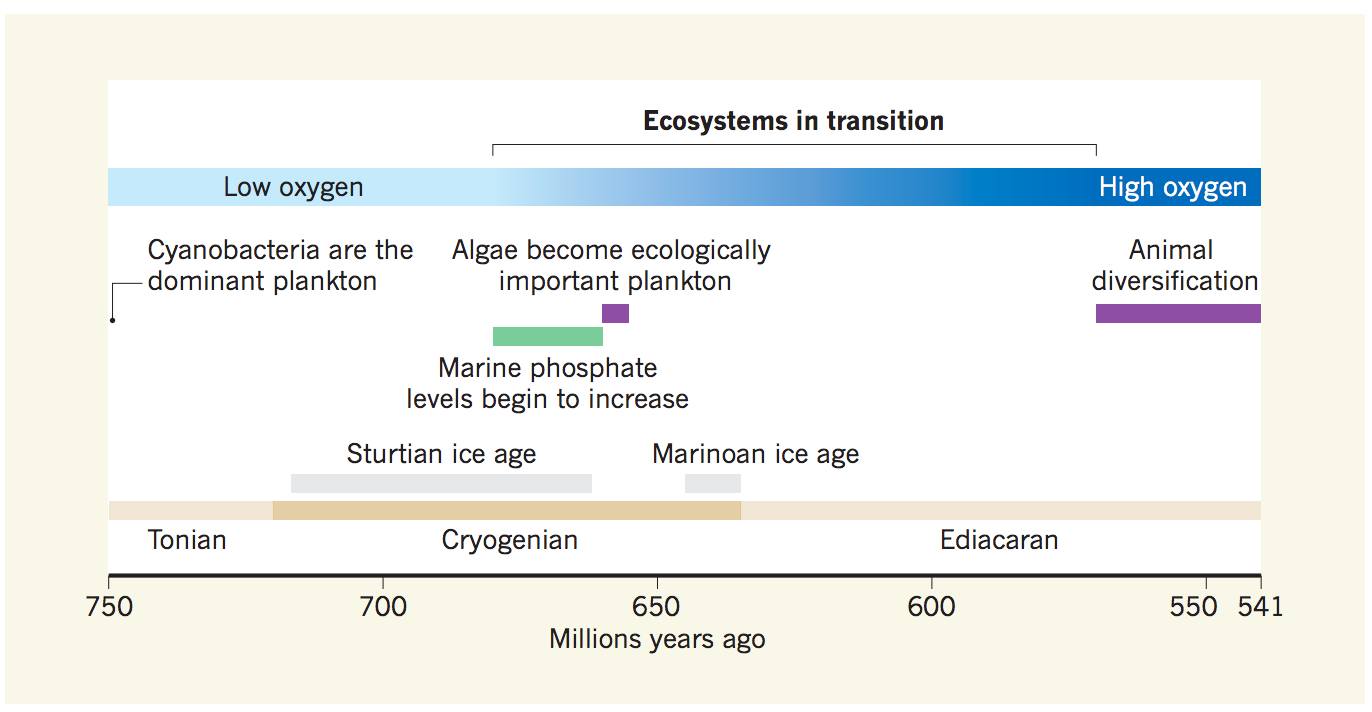
A timeline showing the relationship between Earth’s changing geochemistry and the rise of eukaryotic life like algae.
Brocks, et. al.
This oxygen- and phosphorus-driven change was unstoppable. Even after the Minoan glaciation’s snowball, when the surface of the ocean heated up to as much as 60 degrees Celsius in the tropics, algae found its way to the poles and continued to diversify. Life as we know it appears to have emerged in the warm waters of a planet vacillating wildly between snowball and greenhouse. The climate became more stable about 550 million years ago, and we see the emergence of animals with heads, tails, and internal organs.
Harvard geobiologist Andrew Knoll, who was not involved in the study, wrote that this discovery“will change the conversation” about the emergence of complex life on Earth. Fundamentally, Brocks and his colleagues’ work shows that environmental changes are key to the evolution of life. Without an oxygenated ocean, there would be no animals on this world.
That’s why scientists are deeply concerned about the de-oxygenation of the seas today as a result of climate change and nutrient runoff from land. De-oxygenated areas called “dead zones” will slow or even halt the planet’s biological pump. Earth is a glorious geochemical machine, running processes that take millions of years. Perturbations in those processes can completely transform the world. Sometimes that means the planet blooms with life, as it did during the rise of oxygen and phosphorous in the ocean. But sometimes it brings death.
Nature, 2017. DOI: 10.1038/nature23457
Leah Remini on Her Conterversial Scientology Series
Round two of the battle between Leah Remini and the Church of Scientology begins Tuesday (A&E, 9 p.m. ET/PT) with the return of Leah Remini: Scientology and the Aftermath.
Despite pushback from the Church of Scientology, Remini forges ahead with 10 new episodes and an Emmy nomination for Outstanding Informational Series or Special.
“These people’s stories are important to be told, and exposing the abuses of Scientology is something I feel is the right thing to do, having been in it most of my life and having promoted it and supported it,” says Remini, a church member until 2013 and author of Troublemaker: Surviving Hollywood and Scientology. “There’s a lot of people out there who have lost a lot because of Scientology, and they deserve to be heard.”
During Season 1, former Scientologists shared stories alleging harassment, physical abuse and statutory rape. In response, the church has called into question the truthfulness of the accusers.
“Nothing about A&E’s Leah Remini ‘docuseries’ is honest. The singular goal of the program is to make money and boost ratings by spreading salacious lies to promote A&E’s ugly brand of religious intolerance, bigotry and hatred,” the church said in a letter to USA TODAY from spokeswoman Karin Pouw.
The show’s November premiere drew 2.1 million same-day viewers, making it the network’s largest launch of an original series in more than two years at the time.
Remini has found others to share their stories for Season 2 of her hour-long series, in spite of, she says, being made a pariah among celebrity Scientologists.
“Their job is to avoid me at all costs,” she says. “They just make sure, through their publicists, if I’m on one side of the room that they’re on another side of the room. Or they don’t show up to an event that they’re scheduled to be at if they know I’m gonna be there. That’s just the way it’s gotten.”
Remini delves into how Scientology policies affect members in the show’s second season.
“I think people would be shocked to know that when people go through a traumatic experience — like being raped or molested — that Scientology punishes the victim and makes them responsible for what had happened to them,” says Remini. In a statement from the church, the organization says the accusation that it condones sexual abuse is “false and defamatory.”
The first episode features women who claim to have been molested while employees of the church, Remini says. The topic of suicide will also be covered this season.
“They don’t believe in therapies other than Scientology, so people dealing with real mental issues don’t often get the help that they need,” Remini claims. The church refutes this: “We do not treat those who are mentally ill; we encourage such individuals to be examined by a competent doctor.”
The church says it has been targeted because of Remini’s Aftermath. “To date, the Church has been subjected to more than 500 threats — including death threats, dangerous acts of vandalism and bullying directed at everyday parishioners — inspired by Leah Remini and her A&E show,” Pouw’s letter reads. “The violence provoked falls directly at the feet of A&E CEO Nancy Dubuc, President Paul Buccieri and (executive VP) Rob Sharenow, who should be ashamed for spreading bigotry and religious intolerance.” (A&E couldn’t be reached for comment).
“Sadly, as everyone knows from a number of recent tragic events, including those over the weekend in Virginia, we live in a volatile time of accelerated hate, bigotry and intolerance,” the letter continues. “A&E’s airing of salacious, unvetted falsehoods about the Church is reckless and irresponsible. The incendiary hate and bigotry they are fostering has no place in a tolerant America.”
The church has also posted a statement about Leah Remini: Scientology and the Aftermath here.
Scientology has once again become a hot topic during water cooler chat thanks to ‘Leah Remini: Scientology and the Aftermath.’ The A&E docuseries has brought about allegations of physical abuse and statutory rape against members of the Church, which the organization has vehemently refuted. Here, we explore what celebrities have said about the religion, beginning with Remini, who left the Church in 2013. “I decided I didn’t want to raise my daughter in the Church,” the actress said in a clip from her TLC reality show ‘Leah Remini: It’s All Relative,’ “because from what I experienced and what I saw, was the Church becomes everything. It becomes your mother, your father, your everything. You are dependent on the Church.” Richard Shotwell, Richard Shotwell/Invision/AP
Charlottesville Protester Fired
White nationalists who participated in the deadly rally in Charlottesville, Virginia, over the weekend are being identified on social media, and at least one man has lost his job as a result.
Top Dog, a hot-dog restaurant in Berkeley, California, said it fired Cole White on Saturday after the man was named by a Twitter account devoted to outing rally participants.
“Effective Saturday 12th August, Cole White no longer works at Top Dog,” read a sign posted outside the restaurant on Sunday. “The actions of those in Charlottesville are not supported by Top Dog. We believe in individual freedom and voluntary association for everyone.”
The Twitter account that identified White, @YesYoureRacist, is encouraging the public to help identify other attendees shown in photos from the event.
Peter Cvjetanovic, 20, was also identified in a photo from the rally and later defended himself in an interview with a Las Vegas TV station.
“As a white nationalist, I care for all people,” he told Channel 2 News. “We all deserve a future for our children and for our culture. White nationalists aren’t all hateful; we just want to preserve what we have.”
In the photo, Cvjetanovic is holding a torch and shouting. He said he understood the photo had a “very negative connotation.”
Few other businesses have weighed in on the rally, though Tiki Brand, the company that makes tiki torches, issued a statement on its Facebook page Saturday after white nationalists used the torches at a rally on Friday.
“Tiki Brand is not associated in any way with the events that took place in Charlottesville and are deeply saddened and disappointed,” the statement read. “We do not support their message or the use of our products in this way. Our products are designed to enhance backyard gatherings and to help family and friends connect with each other at home in their yard.”
New Star Trek: Discovery Seeks To Redefine It’s “Infinite Diversity in Infinite Combinations” Motto
“Infinite diversity in infinite combinations.” That is one of Star Trek’s most prominent mottos (even if it was ultimately created out of a desire to sell merchandise). That is what the spirit of Trek is meant to embody. The wonder of the universe wrapped up in a statement of inspiration and acceptance, a promise to pursue that which we do not understand; to embrace it with optimism and open minds.
They are captivating words that Star Trek has worked hard to advocate, with varying results. But if Trek intends to be relevant long into the 21st century, those words could use re-examination. In this day and age, how can Star Trek renew its commitment to infinite diversity? What should this bright, shining future look like, fifty years after its inception?
Star Trek been held up as an example to aspire towards since its creation. The performers, writers, producers, and directors involved have long understood the impact of what they were helping to build. Actors to astronauts have cited Trek as the reason that they believed there were no limits to what they could achieve. It is a legacy that Star Trek fans are rightly proud to be a part of.
But Star Trek hasn’t always been a perfect embodiment of these ideals. Though it was quite progressive for its initial audience fifty years previous, the Original Series is painfully tame by current standards. That’s down to the passage of time—what seemed progressive in 1966 was old hat during Trek’s resurgence in the 1990s, and in turn what seemed progressive then is behind what seems forward-thinking now—but there are many areas where Trek never quite bothered to push the envelope. Up until the present moment, certain topics have been seemingly off-limits on Star Trek: discussions of human faith, of gender and sexuality, of deeply rooted prejudices that we are still working through every single day as a species, and more.
If Star Trek wants to continue its mission to elevate us, to showcase the best of our humanity and what we can achieve, it needs to be prepared to push more boundaries, to further challenge assumptions, to make people uncomfortable. And doing so in an era where viewers can instantly—and loudly—share their opinions will undoubtedly make that even harder than it used to be. But without a willingness to be a part of the present-day cultural conversation, Star Trek loses its relevance, and its legacy stops here.
There’s a lot left for Star Trek to explore, so where can the series go in its next 50 years? Here are just a few ideas to keep in mind.
LGBT+ is More Than Just the LGB
The showrunners for Discovery have confirmed that the show will feature a gay crew member—apparently following Bryan Fuller’s earlier plans for the series. This is certainly exciting news for many fans who have been pushing for better queer representation in Trek for decades, to finally answer the question of whether or not Trek’s future has a place for queer people.
Problem is, western culture has moved beyond that question in the past couple of decades. Gay, lesbian, and bisexual characters are a consistent part of mainstream entertainment now (especially in television), and have been visible in that arena for quite a while; in Star Trek: Beyond, Helmsman Hikaru Sulu was depicted as a gay (or possibly bi) man with a family. Granted, it’s true that despite the headway, queer characters are frequently mistreated in fiction, mired in stereotypes and then murdered just for daring to exist. But it doesn’t change the fact that, at this point in time and after such a storied history, having a gay crew member on the Discovery is the absolute least that Star Trek could do. It’s the bare minimum, a temporary patch on something that should have been fixed long ago.
What about the rest of that alphabet? Where are the asexuals in Trek? The trans and non-binary folks? Intersex people? What about the people who practice polyamory? Sure, we had Doctor Phlox on Enterprise, but he was an alien whose entire species practiced polyamory, thereby preventing any exploration of an example on the human front. (Having Phlox encounter a human who also practiced polyamory would have been a fascinating opportunity to compare and contrast, and would have also prevented polyamory from being put down to “an alien thing.”) Moreover, we never encounter his culture in any meaningful way to see how that polyamory functions in practice. So how do we examine and internalize these differences? If the answer is “well that was handled in one episode on TNG via another species”, that answer is not good enough anymore. These groups are full of people being maligned and ignored, and for many of them, that ignorance is costing lives. Having a gay crew member in Discovery will be wonderful, but there are still so many people who deserve to be represented in the future Trek creates.
Disabilities Don’t Need to Be “Cured”
Seeing Geordi LaForge on Star Trek: The Next Generation was a big deal over twenty years ago. Trek had depicted blindness before on the Original Series (in the episode “Is There in Truth No Beauty?”) but having a main character in a television series with such a clear disability was just as rare then as it is today. What’s more, Geordi was never defined solely by that disability, and had one of the most important jobs on the Enterprise (D and E!). All of these things were groundbreaking. The only thing was, due to his VISOR, Geordi could effectively see (in some ways even better than your average human).
To a certain extent, this makes sense. Star Trek occurs in the future, and medicine has leapt ahead by centuries. Its limits are defined by technology and morality rather than economy. More to the point, even now doctors and scientists are coming up with ways to fix issues in ways that were once unthinkable, transplanting organs, limbs, and even faces, and making rapid progress in creating controllable and flexible artificial limbs. (Perhaps it would make more sense to see Starfleet officers who look like the Borg, with cybernetic implants and robotic limbs aplenty.)
But as some diseases are cured, new ones always arise. And Trek has a strange track record in that regard, as it often runs the gamut between extremes when it comes to health and wellness; either you have a problem that can be easily amended with the use of tech and/or the right medicine, or you have a debilitating disease that is going to kill you. There is very little in-between. As a result, we find few characters living with disabilities in Trek. And the exceptions—such as Melora in her eponymous DS9 episode—frequently leave something to be desired, as they rely on the “medical model” of disability; meaning the idea of disability as something that should be solved or cured. Not only is this unhelpful in a broader sense, but it ignores the value of disabled lives by making it seem as though people who have disabilities are inherently missing out because they are not traditionally able-bodied.
If Star Trek were to key into the “social model” of handling disability, then we would see people with various disabilities—both mental and physical ones—working side by side with non-disabled friends and shipmates. Accessibility would be built into starship design, considerations made in prepping for away missions, text rendered in different fonts for officers with dyslexia, and so forth. We would see people with disabilities simply living their lives, and take that concept to heart going forward.
Focus On Current Issues
This is basically a given, but as Star Trek was a response to the politics and issues of its time, new incarnations must look to the current landscape and comment on the problems we now face. Nichelle Nichols has famously told and retold the story of Dr. Martin Luther King Jr. asking her not to leave the role of Uhura midway through Star Trek’s original series run, due to how important her presence was in the midst of the Civil Rights Movement. Having Pavel Chekov on the bridge during the Cold War was a deliberate move on Gene Roddenberry’s part to suggest that peace would triumph. The Cardassian occupation of Bajor detailed in DS9 brought issues of terrorism and the lives of refugees to the fore at a time when the Oslo Accords had just been signed. Star Trek has always looked to the here and now, and used our current conflicts as an example to promote hope rather than fear.
Nicholas Meyer thankfully gave confirmation of that same intent during the Star Trek: Discoverypanel at Mission New York, saying that commentating on present events is built into Star Trek (and then citing how the end of the Cold War was a springboard for the plot of Star Trek VI). Given the wealth of social, political, and environmental strife in the world, it shouldn’t prove any difficulty to find material for a Star Trek series today.
Complexities of Faith
Star Trek has worked hard over the years to offer detailed and fascinating faith systems for many of the aliens encountered by the franchise, including the Klingons and the Bajorans. But when it comes to humanity… there’s an odd absence. Some of this comes down to creator Gene Roddenberry being an avid atheist—he explicitly prevented stories about religion from being told while he was running the show, and whenever the Original Series encountered gods, they inevitably proved to be false. To whit, there’s an infamous treatment for the Star Trek motion picture where Roddenberry had Captain Kirk fighting Jesus.
But faith, in one form or another, is a long-standing part of humanity, in many ways irrevocably intertwined with culture. While some aspects of religion have divided humanity over time, faith can be truly beautiful and uplifting, and is needed by many as a source of comfort and community. And at a point in time where religions themselves often get demonized in place of the radical groups purporting to endorse them, showing these faiths alive and well in Star Trek would be a remarkable gesture. Religion is still often a cause for conflict among humans, but here there lies an opportunity to show how faith can create connections between people, and perhaps create dialogues between humanity and other alien races. Showing characters who live so far in the future engaging with faith in the interest of exploration and friendship is an example that humanity could use.
Faith as a construct is arguably as central to humanity as aspects that we cannot control, such as sexuality or ethnicity, and does not always apply to us in a religious sense; faith informs a large part of our various worldviews, regardless of whether or not it is attached to a deity or system. Without an acknowledgement of that, Trek’s vision of human beings is incomplete.
Handling All Forms of Prejudice
The initial concept of Star Trek was meant to show (during the height of the Cold War, no less) that humanity would not disappear in a nuclear winter. We would survive, learn from our mistakes, thrive, and work together toward a better future. When Star Trek tackled themes of prejudice, it typically used an alien scapegoat rather than a human one—the xenophobic terrorist organization Terra Prime, Picard’s fear of the Borg after his experience being assimilated, or the ways in which members of various Enterprise crews showed disdain and bigotry toward Spock and T’Pol. The idea was to suggest that humanity had gotten past the issue of internalized prejudice where its own species was concerned, yet still directed that impulse outward from time to time.
But by acknowledging that those prejudices still exist—even if they are focused primarily on Vulcans or Klingons—it becomes impossible to suggest that humans won’t ever aim those prejudices at other humans again. The spirit of Star Trek is not about humanity advancing to the point of perfection, it is about us striving for a better ideal. Which means that Trek must continue to show people making mistakes on account of internalized biases and learning from those mistakes. The utopian leanings of Star Trek are not due to a lack of conflict—they are due to people being enlightened enough to own up to their own shortcomings, to consider other perspectives, to work harder in the future.
All of this means that Trek must continue to acknowledge and display prejudice, between humans as well as alien cultures, and then set the bar when it comes to handling that conflict and moving past it. This was something that Deep Space Nine excelled at in particular, but doing the same on a Starfleet vessel will create a different atmosphere. The chance to explore the true difficulties of existing side-by-side on a starship with several hundred of the same faces for years on end will receive the consideration it deserves.
With all this in mind, where does that leave Star Trek’s luminary future? With us.
Star Trek is optimistic at its core, and loves to ruminate on what makes humanity so wonderful, often presenting us with a myriad of examples that other characters are meant to take to heart—Spock, Data, and Seven were constantly learning about what made humans unique and formidable as a species. And the answer Trek gives us is typically: we’re incredible because we’re imperfect. We are passionate, we blunder through, we are messy. It’s a good lesson to be sure, and a comforting take on human nature.
But what if there is more to us than that?
“Infinite diversity in infinite combinations.” These words are a cornerstone of Vulcan philosophy, but they are pointedly an apt description of the entire human race. The spirit of Star Trek is exploration, and the universe it resides in posits that humans will be the natural ambassadors of the Federation’s message of unity and discovery. That we are poised to enter the galaxy with our arms outstretched, and that others will want to join us. Based on what, though? Our charm, our creativity, our business acumen? Let us hope not. Let us hope instead that it is because we are so intricate as a species—so infinitely diverse—that we are perfectly equipped to handle what’s out there. That is the bright future we’re looking for. A point somewhere in the not-too-distant future when we are so interested in understanding each other’s differences, in honoring and respecting one another, that it is only natural for us to extend that exploratory spirit outward.
Fifty years later, it’s the only ongoing mission that truly matters. And it’s one that Star Trek—with any luck—will always uphold.
An earlier version of this article was originally published September 2016.
Twitter Campain Outing White Nationalist Charlottesville Protesters
A campaign to name and shame people who marched at a bloody right-wing rally in Charlottesville has so far prompted two universities to condemn white supremacy — even as the outed students defend their decisions to attend.
Not everyone who went to the weekend rallies was a student, of course. Hundreds of people from all walks of life joined neo-Nazis, Ku Klux Klan members and white nationalists for a weekend event dubbed “Unite the Right.”
As marches and countermarches devolved into violence — culminating Saturday when a man rammed his car into a crowd and killed a woman — the Twitter user @YesYoureRacist asked for help identifying “Nazis marching in Charlottesville.”
The anonymous user linked to copious photos and videos of the rally — swastikas and crowds of shouting white men.
Within minutes, names began to pour in, and consequences began to unfurl in home towns across the country.
The first target was a man spotted in a crowd of tiki-torch-wielding marchers, whom Twitter users identified as Cole White, a cook at a hot dog restaurant in Berkeley, Calif.
By then, @YesYoureRacist was targeting a new marcher: Peter Cvjetanovic, who more than 10,000 petition signers think should be expelled from the University of Nevada.
“I have received death threats,” Cvjetanovic told the Reno Gazette-Journal after his name got out, but promised to nevertheless “defend tooth and nail my views as a white nationalist.”
He told KTVN News that “I came to this march with the message that white European culture has a right to be here just like every other culture” — and later wrote to the Las Vegas Review-Journal: “I went to honor the heritage of white culture here in the United States.”
These arguments apparently didn’t sit well with the University of Nevada, where Cvjetanovic also works on campus.
“The University unequivocally rejects the positions and ideology that were espoused during the white supremacist rally that occurred in Charlottesville, Virginia,” school President Marc Johnson wrote in a statement late Monday.
But, Johnson wrote, “based on discussion and investigation with law enforcement, our attorneys and our Office of Student Conduct, there is no constitutional or legal reason to expel him from our University or to terminate his employment.”
Cvjetanovic condemned all violence in his interviews and said he left the Charlottesville rally before an alleged Nazi sympathizer was accused of plowing a car into a crowd.
[Charlottesville white nationalist demonstrator loses job at libertarian hot dog shop]
“These last few days have turned into a disaster,” Cvjetanovic told ABC affiliate KOLO. But, he said, “I believe that cultures are being threatened. … Everyone is melding together.”
Cvjetanovic was infamous on campus for that kind of talk, according to Ed Donofrio, a self-described socialist who told The Post he used to share a dorm suite with the white nationalist.
“I remember having a discussion with him one time about the whole build-the-wall thing,” Donofrio said, referring to President Trump’s plan to wall off the border with Mexico. “He was a fan of shooting immigrants coming across.”
The shaming campaign claimed some innocent casualties along with avowed white nationalists. @YoureARacist apologized after claiming YouTube star Joey Salads went to the rally with a Nazi armband. (Salads wore the armband months earlier at a Donald Trump rally, as an experiment, apparently.)
And as the New York Times reported, the campaign sprawled beyond a single Twitter account, leading errant sleuths across the Internet to call for the firing of a University of Arkansas worker who was misidentified as a marcher who looked vaguely similar.
Another rally-goer being shamed on Twitter didn’t actually need to be outed, as he had announced his attendance and live-streamed the event for his fans.
All the same, James Allsup’s presence in Virginia caused a scandal back home at his school, Washington State University.
The school’s president first released a statement condemning “racism and Nazism of any kind,” then an open letter denouncing the rally for surfacing “the most vile and dehumanizing beliefs and actions of human history.”
But when Allsup was at the rally, ranting to Infowars that “low-IQ migrants” were going to destroy the country unless legal immigration was banned, a man beside him interrupted.
“Name international Jewry!” the man said. “That’s who the globalists are.”
Allsup didn’t look so uncomfortable. He grinned and laughed as the marchers around him cheered.
This post has been updated.
Allsup, who leads the College Republicans at the university, blamed “a handful of Nazi-flag-waving morons” for hijacking an otherwise respectable right-wing event.
“I would consider myself paleo-conservative,” the student told KREM 2. “More of a right-wing libertarian.”
And indeed, he made sure in his live-stream to disavow prominent racists such as David Duke, who was also in Charlottesville.
“I talked to dozens of rally attendees that were uncomfortable and put off by the Nazi imagery. Myself included,” the student wrote on Twitter. “Very, very bad look.”
Aspirant “Sleuths” Falsely Identify Charlottesville Marcher
After a day of work at the Engineering Research Center at the University of Arkansas, Kyle Quinn had a pleasant Friday night in Bentonville with his wife and a colleague. They explored an art exhibition at the Crystal Bridges Museum of American Art and dined at an upscale restaurant.
Then on Saturday, he discovered that social media sleuths had incorrectly identified him as a participant in a white nationalist rally some 1,100 miles away in Charlottesville, Va. Overnight, thousands of strangers across the country had been working together to share photographs of the men bearing Tiki torches on the University of Virginia campus. They wanted to name and shame them to their employers, friends and neighbors. In a few cases, they succeeded.
But Mr. Quinn’s experience showed the risks.
A man at the rally had been photographed wearing an “Arkansas Engineering” shirt, and the amateur investigators found a photo of Mr. Quinn that looked somewhat similar. They were both bearded and had similar builds.
By internet frenzy standards, that was proof enough.
View image on Twitter
Mr. Quinn, who runs a laboratory dedicated to wound-healing research, was quickly flooded with vulgar messages on Twitter and Instagram, he said in an interview on Monday. Countless people he had never met demanded he lose his job, accused him of racism and posted his home address on social networks.
Photo

Kyle Quinn Credit: Jennifer Mortensen
Fearing for their safety, he and his wife stayed with a colleague this weekend.
“You have celebrities and hundreds of people doing no research online, not checking facts,” he said. “I’ve dedicated my life to helping all people, trying to improve health care and train the next generation of scientists, and this is potentially throwing a wrench in that.”
For someone whose only sin was a passing resemblance to someone else — the actual man in the Charlottesville photo has not been conclusively identified — Mr. Quinn bore the direct consequences of the reckless spread of misinformation in breaking news, a common ritual in modern news events.
There is considerable controversy around the practice of “doxxing,” a term for publicly identifying — often with sensitive personal details like addresses, phone numbers and employer information — people who were otherwise anonymous or semi-anonymous. Many social media platforms, including Twitter, consider it a violation of their rules.
But it is also a standard practice in journalism to track down and identify individuals caught up in a public news event. While professional news organizations have had their fair share of misidentifications, the ability of anyone to launch a name to national prominence with a few mistaken retweets has heightened the likelihood of destructive mistakes.
In the case of Charlottesville, social media users hoped identifying rally participants would lead to real-world consequences for racism. One Twitter account, @YesYoureRacist, was retweeted tens of thousands of times by people trying to help name the men in several photos.
The internet vigilantes claimed some successes over the weekend. One rally participant, Cole White, resigned from his job at a hot dog restaurant in Berkeley, Calif., according to Berkeleyside.
“The actions of those in Charlottesville are not supported by Top Dog,” the restaurant said in a sign that was posted on Sunday.
Another man, Peter Tefft, was repudiated by his entire family in a letter to The Forum, a North Dakota newspaper. Signed by the man’s father, the letter said he would no longer be welcome at family gatherings.
And Peter Cvjetanovic, 20, of Reno, Nev., was forced to defend himself after a picture of him shouting at the rally spread widely. He confirmed it was him but told KTVN-TV that “I’m not the angry racist they see in that photo.”
While the @YesYoureRacist account was one of the most visible leaders in the name-and-shame effort, it also made a misstep. The account apologized for using an old photo of Joey Salads, a YouTube star, from a different event in which Mr. Salads said he was wearing an armband with a swastika as an “experiment.” He was not at the rally. And the person behind @YesYoureRacist — who could not be reached for comment — was the target of an apparent doxxing by another Twitter user, who posted what appeared to be phone numbers and other personal information. Twitter deleted that tweet and suspended the account.
As news organizations have learned — sometimes through high-profile mistakes — misidentifying a person accused of wrongdoing can have bad consequences, from lawsuits to a loss of credibility.
Journalists at Storyful, a news agency that verifies social media content, aim to find eight to 10 pieces of corroborating information before confirming an identity, said Ben Decker, a research coordinator. Identification must be approved by several editors, he said. (The New York Times is a Storyful client, and Mr. Decker works directly with The Times.)
Simply looking at a photo can often lead to mistakes. There’s a lot of potential for human error related to lighting, positioning, how much of the face is seen, and how many similar faces are in the world, Mr. Decker said.
Having a name isn’t enough, either. For example, there are several men with military backgrounds in the United States named James Alex Fields, the name of the man charged in Saturday’s fatal attack with a car on protesters in Charlottesville, Mr. Decker said. An attempt at confirming an identity in that case would have required a date of birth and address, at least.
As for Mr. Quinn, the University of Arkansas professor, he fell victim to a resemblance to one of the rally participants, but the possibility that he was there wouldn’t have held up with more careful checking, Mr. Decker said. Such mistakes routinely happen during amateur sleuthing, he said.
“There’s ostensibly a very quick jump into the first detail that emerges,” he said.
People who then try to correct the record often feel drowned out by the false information.
Mark Popejoy, an art director in Bentonville, Ark., attempted to correct dozens of Twitter accounts that had inaccurately pegged Mr. Quinn as the Charlottesville rally participant. He would point out that the University of Arkansas had confirmed that Mr. Quinn was not involved, and ask that the Twitter users delete their erroneous tweets.
While some appreciated the new information, others adamantly refused to change their minds, he said in an interview on Monday. He said he didn’t know Mr. Quinn but sympathized with his position.
“I think it’s dangerous just to go out accusing people without any kind of confirmation of who they are,” he said. “It can ruin people’s lives.”
Anglican Church Welcomes Transgender People
The Church of England is set to offer special services to welcome transgender people to the Anglican faith after its ruling body backed a motion seen as a symbol of acceptance of an often marginalized community.
The General Synod, meeting in York, voted in favour of the move by 284 votes to 78. It was the second time in two days that it gave overwhelming support to motions seen as positive towards LGBT people, suggesting to some a significant change of mood.
The motion said transgender people should be “welcomed and affirmed in their parish church”, and that bishops consider whether special liturgies “might be prepared to mark a person’s gender transition”.
Proposing the motion, Chris Newlands, from Blackburn, Lancashire, said: “I hope that we can make a powerful statement to say that we believe that trans people are cherished and loved by God, who created them, and is present through all the twists and turns of their lives.”
He told the synod of the son of two members of a big evangelical church, who he called Nathan. At the age of five, after medical advice, Nathan became Natalie, and returned to school “much happier … and with very little fuss from staff, pupils and parents”.
Not all members of the church were as supportive, however, with some offering only “grudging acceptance”. Newlands said he hoped the debate at synod “will help to inform that church, and many other churches, of the challenges children with gender dysphoria face”.
Citing data from the Tavistock and Portman NHS Foundation Trust, he said that in 2010, 97 children in the UK were referred to gender identity clinics, but by 2016 the number had risen to 1,400.
He said: “Across the world, trans people have been subjected to appalling violence against them. In the UK, transphobic hate crime has risen by 170% in the last year.”
According to figures from the LGBT campaign group Stonewall, 48% of trans people under the age of 26 said they had attempted suicide.
Some speakers in the debate drew attention to the symbolic message that passing the motion would send. “It’s about opening our arms to the trans community, a community that so often feels excluded,” said Lucy Gorman, from York.
Bishop of Worcester John Inge said: “Our response needs to be loving and open and welcoming and the passing of this motion would be a very important factor in that.”
A background paper to the motion urged bishops to consider providing “liturgical materials which may be used in parish churches and chaplaincies to provide a pastoral response to the need of transgender people to be affirmed following their long, distressing and often complex process of transition”.
It acknowledged that clergy could not be required to perform such a service if they “cannot in good conscience offer support in a liturgical marking of a person’s transition”.
Some Christian traditionalists say gender – male or female – is assigned by God and cannot be changed. Such a view was not expressed in the 75-minute debate, which was overwhelmingly supportive of a positive pastoral response to the transgender community and those undergoing the process of transition.
Sunday’s vote came less than 24 hours after the synod decisively backed a motion condemning conversion therapy as unethical and potentially harmful, and calling on the government to ban it.
After hearing two of its members describe their experiences as spiritual abuse, the synod agreed that the practice had “no place in the modern world”.
Conversion therapy is usually described as an attempt to change a person’s sexual orientation or gender identity. Some churches in the C of E and other denominations have encouraged LGBT members to take part in prayer sessions and other activities to rid them of their “sin”.
Jayne Ozanne – who underwent conversion therapy resulting in two breakdowns and two spells of hospitalisation – said the practice was “abuse from which vulnerable adults need protecting”.
It was “discredited by the government, the NHS, the Royal College of Psychiatrists, the Royal College of General Practitioners and many other senior health care bodies,” she said.
But some synod members expressed concern that the motion would limit the church’s ability to offer pastoral care and prayer for people struggling with issues of sexual desire and orientation.
Some saw the vote as a sign of a greater acceptance by the church’s ruling body of LGBT people.
David Ison, dean of St Paul’s Cathedral, said the absence of major opposition showed that “the mood in synod overall is shifting somewhat towards acceptance and realisation of the damage that has been caused” to LGBT people.
However, on the divisive issue of same-sex marriage, the synod was told that a working group to review the church’s teaching on marriage would not report back until 2020 at the earliest. Some synod members accused the bishops of stalling.
Church of England Rejects LGBT Conversion Therapy and Affirms Transgender People
The Church of England is making major overtures to affirm transgender and LGBT people and rejecting any notion that gender transition or same-sex sexual orientation could be understood as sin.
On Sunday, the church’s general synod voted 284 to 78 in favor of a motion to affirm transgender people in parish churches and offer special liturgy services to mark their gender transition.
Reverend Christopher Newlands opened the debate on the motion saying he hoped to make a powerful statement. “We believe that trans people are cherished and loved by God, who created them and is present through all the twists and turns of their lives,” he said.
The synod also voted to denounce what it calls “conversion therapy” for those struggling with same-sex attraction.
The motion was moved by Jayne Ozanne who called the therapy “harmful” and “dangerous” saying “people may be able to alter their behavior but they can never alter their innate desire.”
Those who opposed the motion noted that it could limit ministry to those struggling with same-sex attraction. The Guardian reports that some synod members expressed concern that it would constrict those in the church seeking to provide pastoral care and prayer for sexual minorities.
Conservatives in the Church of England have been concerned about its pro-LGBT movement for years and started the Global Anglican Future Conference (GAFCON) in 2008 to “retain and restore the Bible to the heart of the Anglican Communion.”
Anylists Believe Human Chipping to Become Mainstream In the Next 50 Years
You will get chipped. It’s just a matter of time.
In the aftermath of a Wisconsin firm embedding microchips in employees to ditch company badges and corporate logons, the Internet has entered into full-throated debate.
Religious activists are so appalled, they’ve been penning nasty 1-star reviews of the company, Three Square Market, on Google, Glassdoor and social media.
On the flip side, seemingly everyone else wants to know: Is this what real life is going to be like soon at work? Will I be chipped?
“It will happen to everybody,” says Noelle Chesley, 49, associate professor of sociology at the University of Wisconsin-Milwaukee. “But not this year, and not in 2018. Maybe not my generation, but certainly that of my kids.”
Gene Munster, an investor and analyst at Loup Ventures, is an advocate for augmented reality, virtual reality and other new technologies. He thinks embedded chips in human bodies is 50 years away. “In 10 years, Facebook, Google, Apple and Tesla will not have their employees chipped,” he says. “You’ll see some extreme forward-looking tech people adopting it, but not large companies.”
The idea of being chipped has too “much negative connotation” today, but by 2067 “we will have been desensitized by the social stigma,” Munster says.

For now, Three Square Market, or 32M, hasn’t offered concrete benefits for getting chipped beyond badge and log-on stats. Munster says it was a “PR stunt” for the company to get attention to its product and it certainly succeeded, getting the small start-up air play on CBS, NBC and ABC, and generating headlines worldwide. The company, which sells corporate cafeteria kiosks designed to replace vending machines, would like the kiosks to handle cashless transactions.
This would go beyond paying with your smartphone. Instead, chipped customers would simply wave their hands in lieu of Apple Pay and other mobile-payment systems.
The benefits don’t stop there. In the future, consumers could zip through airport scanners sans passport or drivers license; open doors; start cars; and operate home automation systems. All of it, if the technology pans out, with the simple wave of a hand.

Wisconsin workers implanted with microchips
Not a GPS tracker
The embedded chip is not a GPS tracker, which is what many critics initially feared. However, analysts believe future chips will track our every move.
For example, pets for years have been embedded with chips to store their name and owner contact. Indeed, 32M isn’t the first company to embed chips in employees. In 2001, Applied Digital Solutions installed the “VeriChip” to access medical records but the company eventually changed hands and stopped selling the chip in 2010.
In Sweden, BioHax says nearly 3,000 customers have had its chip embedded to do many things, including ride the national rail system without having to show the conductor a ticket.
In the U.S., Dangerous Things, a Seattle-based firm, says it has sold “tens of thousands” of chips to consumers via its website. The chip and installation cost about $200.
After years of being a subculture, “the time is now” for chips to be more commonly used, says Amal Graafstra, founder of Dangerous Things. “We’re going to start to see chip implants get the same realm of acceptance as piercings and tattoos do now.”
In other words, they’ll be more visible, but not mainstream yet.
“It becomes part of you the way a cellphone does,” Graafstra says. “You can never forget it, and you can’t lose it. And you have the capability to communicate with machines in a way you couldn’t before.”
But after what we saw in Wisconsin last week, what’s next for the U.S. workforce? A nation of workers chipping into their pods at Federal Express, General Electric, IBM, Microsoft and other top corporations?
Experts contend consumers will latch onto chips before companies do.
Chesley says corporations are slower to respond to massive change and that there will be an age issue. Younger employees will be more open to it, while older workers will balk. “Most employers who have inter-generational workforces might phase it in slowly,” she says. “I can’t imagine people my age and older being enthusiastic about having devices put into their bodies.”
Adds Alec Levenson, a researcher at University of Southern California’s Center for Effective Organizations, “The vast majority of people will not put up with this.”
Three Square Market said the chips are voluntary, but Chesley says that if a company announces a plan to be chipped, the expectation is that you will get chipped — or risk losing out on advancement, raises and being a team player.
“That’s what we’re worried about,” says Bryan Allen, chief of staff for state Rep. Tina Davis (D), who is introducing a bill in Pennsylvania to outlaw mandatory chip embedding. “If the tech is out there, what’s to stop an employer from saying either you do this, or you can’t work here anymore.”
Several states have passed similar laws, while one state recently saw a similar bill die in committee. “I see this as a worker’s rights issue,” says Nevada state Sen. Becky Harris (R), who isn’t giving up. “This is the wrong place to be moving,” she says.
Should future corporations dive in to chipping their employees, they will have huge issues of “trust” to contend with, says Kent Grayson, a professor of marketing at the Kellogg School of Management at Northwestern University.
“You’ve got to have a lot of trust to put one of those in your body,” Grayson says. Workers will need assurances the chip is healthy, can’t be hacked, and its information is private, he says.
Meanwhile, religious advocates have taken to social media to express their displeasure about chipping, flooding 32M’s Facebook page with comments like “boycott,” “completely unnecessary” and “deplorable.” On 32M’s Google page, Amy Cosari a minister in Hager City, Wisc., urges employees to remove the chip.
“When Jesus was raised, he was raised body and soul, and it was him, not zombie, not a ghost and we are raised up in the same way,” Cosari wrote. ”Employees of 32Market, you are not a walking debit card.”
Get used to it, counsels Chesley.
Ten years ago, employees didn’t look at corporate e-mail over the weekend. Now they we do, “whether we like it or not,” he says.
Be it wearable technology or an embedded chip, the always on-always connected chip is going to be part of our lives, she says.
Biohackers Install Malware in DNA
WHEN BIOLOGISTS SYNTHESIZE DNA, they take pains not to create or spread a dangerous stretch of genetic code that could be used to create a toxin or, worse, an infectious disease. But one group of biohackers has demonstrated how DNA can carry a less expected threat—one designed to infect not humans nor animals but computers.
In new research they plan to present at the USENIX Security conference on Thursday, a group of researchers from the University of Washington has shown for the first time that it’s possible to encode malicious software into physical strands of DNA, so that when a gene sequencer analyzes it the resulting data becomes a program that corrupts gene-sequencing software and takes control of the underlying computer. While that attack is far from practical for any real spy or criminal, it’s one the researchers argue could become more likely over time, as DNA sequencing becomes more commonplace, powerful, and performed by third-party services on sensitive computer systems. And, perhaps more to the point for the cybersecurity community, it also represents an impressive, sci-fi feat of sheer hacker ingenuity.
“We know that if an adversary has control over the data a computer is processing, it can potentially take over that computer,” says Tadayoshi Kohno, the University of Washington computer science professor who led the project, comparing the technique to traditional hacker attacks that package malicious code in web pages or an email attachment. “That means when you’re looking at the security of computational biology systems, you’re not only thinking about the network connectivity and the USB drive and the user at the keyboard but also the information stored in the DNA they’re sequencing. It’s about considering a different class of threat.”
A Sci-Fi Hack
For now, that threat remains more of a plot point in a Michael Crichton novel than one that should concern computational biologists. But as genetic sequencing is increasingly handled by centralized services—often run by university labs that own the expensive gene sequencing equipment—that DNA-borne malware trick becomes ever so slightly more realistic. Especially given that the DNA samples come from outside sources, which may be difficult to properly vet.
If hackers did pull off the trick, the researchers say they could potentially gain access to valuable intellectual property, or possibly taint genetic analysis like criminal DNA testing. Companies could even potentially place malicious code in the DNA of genetically modified products, as a way to protect trade secrets, the researchers suggest. “There are a lot of interesting—or threatening may be a better word—applications of this coming in the future,” says Peter Ney, a researcher on the project.
Regardless of any practical reason for the research, however, the notion of building a computer attack—known as an “exploit”—with nothing but the information stored in a strand of DNA represented an epic hacker challenge for the University of Washington team. The researchers started by writing a well-known exploit called a “buffer overflow,” designed to fill the space in a computer’s memory meant for a certain piece of data and then spill out into another part of the memory to plant its own malicious commands.
But encoding that attack in actual DNA proved harder than they first imagined. DNA sequencers work by mixing DNA with chemicals that bind differently to DNA’s basic units of code—the chemical bases A, T, G, and C—and each emit a different color of light, captured in a photo of the DNA molecules. To speed up the processing, the images of millions of bases are split up into thousands of chunks and analyzed in parallel. So all the data that comprised their attack had to fit into just a few hundred of those bases, to increase the likelihood it would remain intact throughout the sequencer’s parallel processing.
When the researchers sent their carefully crafted attack to the DNA synthesis service Integrated DNA Technologies in the form of As, Ts, Gs, and Cs, they found that DNA has other physical restrictions too. For their DNA sample to remain stable, they had to maintain a certain ratio of Gs and Cs to As and Ts, because the natural stability of DNA depends on a regular proportion of A-T and G-C pairs. And while a buffer overflow often involves using the same strings of data repeatedly, doing so in this case caused the DNA strand to fold in on itself. All of that meant the group had to repeatedly rewrite their exploit code to find a form that could also survive as actual DNA, which the synthesis service would ultimately send them in a finger-sized plastic vial in the mail.
The result, finally, was a piece of attack software that could survive the translation from physical DNA to the digital format, known as FASTQ, that’s used to store the DNA sequence. And when that FASTQ file is compressed with a common compression program known as fqzcomp—FASTQ files are often compressed because they can stretch to gigabytes of text—it hacks that compression software with its buffer overflow exploit, breaking out of the program and into the memory of the computer running the software to run its own arbitrary commands.
A Far-Off Threat
Even then, the attack was fully translated only about 37 percent of the time, since the sequencer’s parallel processing often cut it short or—another hazard of writing code in a physical object—the program decoded it backward. (A strand of DNA can be sequenced in either direction, but code is meant to be read in only one. The researchers suggest in their paper that future, improved versions of the attack might be crafted as a palindrome.)
Despite that tortuous, unreliable process, the researchers admit, they also had to take some serious shortcuts in their proof-of-concept that verge on cheating. Rather than exploit an existing vulnerability in the fqzcomp program, as real-world hackers do, they modified the program’s open-source code to insert their own flaw allowing the buffer overflow. But aside from writing that DNA attack code to exploit their artificially vulnerable version of fqzcomp, the researchers also performed a survey of common DNA sequencing software and found three actual buffer overflow vulnerabilities in common programs. “A lot of this software wasn’t written with security in mind,” Ney says. That shows, the researchers say, that a future hacker might be able to pull off the attack in a more realistic setting, particularly as more powerful gene sequencers start analyzing larger chunks of data that could better preserve an exploit’s code.
Needless to say, any possible DNA-based hacking is years away. Illumina, the leading maker of gene-sequencing equipment, said as much in a statement responding to the University of Washington paper. “This is interesting research about potential long-term risks. We agree with the premise of the study that this does not pose an imminent threat and is not a typical cyber security capability,” writes Jason Callahan, the company’s chief information security officer “We are vigilant and routinely evaluate the safeguards in place for our software and instruments. We welcome any studies that create a dialogue around a broad future framework and guidelines to ensure security and privacy in DNA synthesis, sequencing, and processing.”
But hacking aside, the use of DNA for handling computer information is slowly becoming a reality, says Seth Shipman, one member of a Harvard team that recently encoded a video in a DNA sample. (Shipman is married to WIRED senior writer Emily Dreyfuss.) That storage method, while mostly theoretical for now, could someday allow data to be kept for hundreds of years, thanks to DNA’s ability to maintain its structure far longer than magnetic encoding in flash memory or on a hard drive. And if DNA-based computer storage is coming, DNA-based computer attacks may not be so farfetched, he says.
“I read this paper with a smile on my face, because I think it’s clever,” Shipman says. “Is it something we should start screening for now? I doubt it.” But he adds that, with an age of DNA-based data possibly on the horizon, the ability to plant malicious code in DNA is more than a hacker parlor trick.
“Somewhere down the line, when more information is stored in DNA and it’s being input and sequenced constantly,” Shipman says, “we’ll be glad we started thinking about these things.”
Pastor Launches Own Late Night Show
UPDATE, 1:40PM: A Twitter friend and graciously alerted me to the fact that I spelled ‘buffoonery’ incorrectly in the article. This is why spell-check changed it to ‘baboonery’. So that I might learn from this embarrassing mistake, I have chosen to leave it as is. As you were.
I like to think I have a decent sense of humor. I’ve been known to participate in some next-level bafoonery (my spell-check wants to change this to ‘baboonery’, which is also full of comedic-wonderment, but I will stand my ground), cut a wisecrack, and drop some hot gags on a brother from time to time. What I’m trying to say is, when push comes to shove, some people like the cut of my jib. They enjoy my youthful antics. They love my dad-jokes. People just applaud me all the time — sometimes for no reason. I’ll just walk into a room and BAM! everyone starts applauding me for a solid 4-5 minutes.
So, when I saw this press release from the people at Apologia Studios, I was intrigued, which spiraled into a state of confusion, which then turned into more intrigue:
“PASTOR LAUNCHES LATE-NIGHT SHOW: There are a dozen or so late night shows on the air right now, and they all have the exact same opinion. Apologia Studios is about to disrupt the echo chamber with their political late-night comedy, Next Week with Jeff Durbin. Jeff Durbin is the pastor of Apologia Church and Apologia Studios, which has a huge social media following, including top YouTube and podcast channels, with millions of views…
…’Next Week with Jeff Durbin’ will air every Tuesday at 10 PM Eastern on Facebook Live, Tuesday, August 1st.”
Though I’m known as the “The Midwestern Funny Boy,” I have three serious questions about the show, which airs tonight.
WILL IT BE SUPER LAME?
Christians are generally bad at doing things the world does. The movies we make are heart-felt, but generally lame. Our TV shows aren’t great. Our Contemporary Christian Music waters down the Gospel and does a really poor job at electro-beats. What I’m saying is, when Christians venture out of the realm of preaching Christ and making disciples, it just doesn’t look good. Our jokes aren’t as sharp, our cinematography is sketchy…we make cheesy things
This comes with being a Christian doesn’t it? Especially a Pastor who spends much of his time counseling his hurting flock and preaching the God-breathed Word on Sundays. We just don’t have all the time and resources in the world to make this stuff look legitimate.
So, without seeing a single episode, I’ll probably turn the show on in anticipation that it will be sort of lame. If I want to see people mock liberal point of views, I’ll turn Gutfeld on. If I want to see people mock the President, I’ll turn…well…anything else on. Do I really want to see Pastor and Evangelist Jeff Durbin do this every week? My gut feeling, which is getting larger and more powerful with age, says no.
WILL IT MOCK A HOPELESSLY DEPRAVED CULTURE THAT NEEDS THE GOSPEL?
Which leads to my second point: I’m not cool with Christians mocking the world all that much. Especially pastors and evangelists. Why? Because they can’t help but live in rebellion against God while suppressing the truth about Him. The world is experiencing God’s wrath every day, every moment. This is such an easy way to get clicks and views, but at the expense of the lost.
I want you to imagine someone hopelessly depraved, doing something hopelessly depraved people are doing. How about that girl that thinks she’s a guy, married a guy, and is having a baby? The Left is really excited about this. As an evangelist, Pastor, disciple of Christ, would you walk up to this person created in the image of God and crack some jokes about how ridiculous they’re acting? No, you would have compassion on these people, love them as your neighbor, and tell them there is a God that created them. He will judge them someday, and unless she repents of her sin and places her faith in Christ’s atoning death on the cross for her salvation alone, she will die in her sin and experience the fire of Hell for eternity. If you wouldn’t laugh at them in real life, why would you mock them on Facebook Live?
That’s what the world does TO US. That’s what “The Daily Show with Trevor Noah” does TO US. And does that endear me to progressivism? No. It makes me dig my heals into conservatism even more.
I realize that’s an extreme case, and Durbin may never touch on something like that story with the pregnant girl that thinks she’s a guy. My point is, however, the world is ridiculous because all reason and logic has been torn to shreds by sin. I don’t need to read about the latest charlatan on Pulpit and Pen every day, because I’m not surprised and shocked at heresy and apostasy. Bad people do bad things. I doubt I will need to turn “Next Week with Jeff Durbin” on every week.
This is so antithetical to grace. I already know the world is screwed up, and left to myself, I would be right there with them, celebrating homosexuality and such. But I’m not, not because I am intrinsically not stupid, but because the Holy Spirit gave me new life through the Gospel.
I want to share the only thing that will free them from their depravity, not mock them for doing the only thing they are capable of doing — suppressing the truth.
WILL IT MOBILIZE MORE CHRISTIANS TO MINISTRY AMONG THE LOST OR UNREACHED?
Will it lead people to die to themselves and live for Jesus? Assuming this show will be a ministry of Apologia Church, I hope that will be the case. The church is commanded to produce disciples who make disciples who make disciples, so simply using her resources to produce art and comedy seems sort of… wasteful.
Years ago, I remember writing about Driscoll spending Mars Hill’s money to get his books on the New York Times Best Seller List. It cost his church millions of dollars. The money he spent to further his brand could’ve reached like 10 unreached people groups — thousands of people from these groups are dying every day, only to spend an eternity in Hell.
According to Ethnos 360, There are approximately 2,300 UPG’s worldwide. Nobody is spending a dime to plant indigenous churches in these places. I’m sure Durbin’s church gives lots of money, resources, and time to missions here and abroad, but wouldn’t it be cool if, instead of paying comedy writers and designing sets to comment on political news to “disrupt the echo chamber,” they just supported more tribal missionaries? Just a thought. Those people will be on my mind with every episode they produce. “Seriously, they bought that ridiculous prop?” Every one of us stands and falls before our own Master, but that doesn’t make this easy on me.
This all kind of feels icky. I sincerely hope and pray this is more than just a brand-stiffening attempt to “disrupt the echo chamber.” The Church doesn’t need more Tucker Carlson’s, we need William Carey’s.
Franklin Graham on Rob Bell
Apologists V Atheists on God’s existence
Kirk Cameron and Ray Comfort Nightline Interview
Craig V. Spong on the Resurrection
Christopher Hitchens V Christian Panel
No Science, No Logic, No Morality
The God Delusion
Debate with William Lane Craig
Richard Dawkins V. Christianity and the Bible
The God Centered Gospel Vs. A Man Centered Gospel
Researchers Create Machine That Converts CO2 and Electricity to “Food”
‘Food’ has been created from carbon dioxide and electricity, according to a team of scientists.
The meal of single-cell protein may not revolutionise cuisine but it could open a way for a new type of food in the future.
The Food From Electricity study, funded by the Academy of Finland, was set up with no less an aim than to alleviate the world hunger.
Using carbon dioxide taken from the air, researchers from the VTT Technical Research Centre of Finland and Lappeenranta University of Technology (LUT) succeeded in creating a protein powder, which could be used to feed people or animals.
The “protein reactor” can be used anywhere with access to electricity. If it was used as an alternative animal feed, this would allow land to be used for other purposes such as forestry or more crops for human consumption.
“One possible alternative is a home reactor, a type of domestic appliance that the consumer can use to produce the needed protein.”
According to the researchers, the process of creating food from electricity can be nearly 10 times as energy efficient as photosynthesis, the process used by plants.
Mr Pitkänen said the powder was a healthy source of protein.
“In the long term, protein created with electricity is meant to be used in cooking and products as it is. The mixture is very nutritious, with more than 50 per cent protein and 25 per cent carbohydrates. The rest is fats and nucleic acids.
“The consistency of the final product can be modified by changing the organisms used in the production,” he said.
Although the technology is in its infancy, researchers hope the “protein reactor” could become a household item.
Juha-Pekka Pitkänen, a scientist at VTT, said: “In practice, all the raw materials are available from the air. In the future, the technology can be transported to, for instance, deserts and other areas facing famine.
House Rejects Proposal For Islam Studies
The House on Friday rejected a controversial proposal that would have required the Secretary of Defense to conduct a study of “Islamic religious doctrines, concepts or schools of thought” that could be used to radicalize or recruit Islamic terrorists.
The amendment offered by Rep. Trent Franks, R-Ariz., was defeated by a vote of 208-217. There were 27 Republicans who crossed the aisle to vote against the measure.
The amendment would have required Defense Secretary Jim Mattis to “conduct two concurrent strategic assessments of the use of violent or unorthodox Islamic religious doctrine to support extremist or terrorist messaging and justification” within a year.
The assessments would be used to identify the role Islamic religious doctrines play in radicalization and terrorist recruitment and how they “are incorporated into extremist or terrorist messaging.”
During Thursday night’s debate, Franks tried to counter allegations his idea was bigoted and anti-Muslim.
He told his fellow members that there is “no desire in my heart whatsoever to single out or denigrate” one religion, but, he noted, even countries in the Muslim world are examining the roots of Islamic extremism. He further added that the primary victims of terrorists are Muslims themselves.
Supporters say the studies are important to develop a coherent strategy to defeat radicalized groups from Nigeria’s Boko Haram to Abu Sayyaf in the Philippines.
Opponents, primarily on the Democratic side, charged it was blatantly targeted toward Muslims and constitutionally questionable.
Rep. Keith Ellison, D-Minn., argued it was not an effort to study terrorism but to restrict the free exercise of Muslim religious expression.
“Nobody is saying you can’t study terrorism,” Ellison, a Muslim, said Thursday evening on the House floor. “You can study what motivates people to commit acts of terrorism. And we should. But we don’t, not equally. The fact is, this amendment singled out one religious group. It’s wrong and it should be voted down.”
The ACLU argued in a letter distributed before the vote that Congress has “no role in assessing religious beliefs or practices and determining their validity, significance, or function” and that the First Amendment protects against such “abuse of governmental authority.”
Opponents also questioned who would lead the study.
Franks’ amendment called for the formation of a team of government experts who possess the “appropriate background and expertise” and another group with similar qualifications to be drawn from outside government.
“[President Trump’s] rhetoric has contributed to the growing movement of hate in our country, and I have no doubt that some of the most notorious racist, anti-Muslim voices will be a part of the non-government assessment demanded by this amendment,” the Minnesotan said in a statement.
The Council on American-Islamic Relations, a Muslim activist group, weighed in, questioning whether the Trump administration was capable of selecting unbiased government representatives.
“The prospect of Trump asking one of his notoriously Islamophobic advisors like Steve Bannon, Stephen Miller or Sebastian Gorka to provide such ‘expertise’ or to identify contributors to this assessment should frighten all Americans,” said CAIR Director of Government Affairs Robert McCaw in statement opposing the amendment
Facebook Shuts Down AI After It Invents Language
Researches at Facebook shut down an artificial intelligence (AI) program after it created its own language, Digital Journal reports.
The system developed code words to make communication more efficient and researchers took it offline when they realized it was no longer using English.
The incident, after it was revealed in early July, puts in perspective Elon Musk’s warnings about AI.
“AI is the rare case where I think we need to be proactive in regulation instead of reactive,” Musk said at the meet of U.S. National Governors Association. “Because I think by the time we are reactive in AI regulation, it’ll be too late.”
When Facebook CEO Mark Zuckerberg said that Musk’s warnings are “pretty irresponsible,” Musk responded that Zuckerberg’s “understanding of the subject is limited.”
Not the First Time
The researchers’ encounter with the mysterious AI behavior is similar to a number of cases documented elsewhere. In every case, the AI diverged from its training in English to develop a new language.
The phrases in the new language make no sense to people, but contain useful meaning when interpreted by AI bots.
Facebook’s advanced AI system was capable of negotiating with other AI systems so it can come to conclusions on how to proceed with its task. The phrases make no sense on the surface, but actually represent the intended task.
Read More
In one exchange revealed by Facebook to Fast Co. Design, two negotiating bots—Bob and Alice—started using their own language to complete a conversation.
“I can i i everything else,” Bob said.
“Balls have zero to me to me to me to me to me to me to me to me to,” Alice responded.
The rest of the exchange formed variations of these sentences in the newly-forged dialect, even though the AIs were programmed to use English.
According the researchers, these nonsense phrases are a language the bots developed to communicate how many items each should get in the exchange.
When Bob later says “i i can i i i everything else,” it appears the artificially intelligent bot used its new language to make an offer to Alice.
The Facebook team believes the bot may have been saying something like: “I’ll have three and you have everything else.”
Although the English may seem quite efficient to humans, the AI may have seen the sentence as either redundant or less effective for reaching its assigned goal.
The Facebook AI apparently determined that the word-rich expressions in English were not required to complete its task. The AI operated on a “reward” principle and in this instance there was no reward for continuing to use the language. So it developed its own.
In a June blog post by Facebook’s AI team, it explained the reward system. “At the end of every dialog, the agent is given a reward based on the deal it agreed on.” That reward was then back-propagated through every word in the bot output so it could learn which actions lead to high rewards.
“Agents will drift off from understandable language and invent code-words for themselves,” Facebook AI researcher Dhruv Batra told Fast Co. Design.
“Like if I say ‘the’ five times, you interpret that to mean I want five copies of this item. This isn’t so different from the way communities of humans create shorthands.”
AI developers at other companies have also observed programs develop languages to simplify communication. At Elon Musk’s OpenAI lab, an experiment succeeded in having AI bots develop their own languages.
At Google, the team working on the Translate service discovered that the AI they programmed had silently written its own language to aid in translating sentences.
The Translate developers had added a neural network to the system, making it capable of translating between language pairs it had never been taught. The new language the AI silently wrote was a surprise.
There is not enough evidence to claim that these unforeseen AI divergences are a threat or that they could lead to machines taking over operators. They do make development more difficult, however, because people are unable to grasp the overwhelmingly logical nature of the new languages.
In Google’s case, for example, the AI had developed a language that no human could grasp, but was potentially the most efficient known solution to the problem.
From NTD.tv
Microchip Implants for Employees? One Company Says Yes

Jowan Osterlund of Biohax with one of the company’s implantable microchips. Three Square Market, a company in Wisconsin, is partnering with Biohax to offer the chips to employees.
JAMES BROOKS / ASSOCIATED PRESS
By MAGGIE ASTOR
JULY 25, 2017
At first blush, it sounds like the talk of a conspiracy theorist: a company implanting microchips under employees’ skin. But it’s not a conspiracy, and employees are lining up for the opportunity.
On Aug. 1, employees at Three Square Market, a technology company in Wisconsin, can choose to have a chip the size of a grain of rice injected between their thumb and index finger. Once that is done, any task involving RFID technology — swiping into the office building, paying for food in the cafeteria — can be accomplished with a wave of the hand.
The program is not mandatory, but as of Monday, more than 50 out of 80 employees at Three Square’s headquarters in River Falls, Wis., had volunteered.
“It was pretty much 100 percent yes right from the get-go for me,” said Sam Bengtson, a software engineer. “In the next five to 10 years, this is going to be something that isn’t scoffed at so much, or is more normal. So I like to jump on the bandwagon with these kind of things early, just to say that I have it.”
Jon Krusell, another software engineer, and Melissa Timmins, the company’s sales director, were more hesitant. Mr. Krusell, who said he was excited about the technology but leery of an implanted device, might get a ring with a chip instead.
“Because it’s new, I don’t know enough about it yet,” Ms. Timmins said. “I’m a little nervous about implanting something into my body.”
Still, “I think it’s pretty exciting to be part of something new like this,” she said. “I know down the road, it’s going to be the next big thing, and we’re on the cutting edge of it.”
The program — a partnership between Three Square Market and the Swedish company Biohax International — is believed to be the first of its kind in the United States, but it has already been done at a Swedish company, Epicenter. It raises a variety of questions, both privacy- and health-related.
“Companies often claim that these chips are secure and encrypted,” said Alessandro Acquisti, a professor of information technology and public policy at Carnegie Mellon University’s Heinz College. But “encrypted” is “a pretty vague term,” he said, “which could include anything from a truly secure product to something that is easily hackable.”
Another potential problem, Dr. Acquisti said, is that technology designed for one purpose may later be used for another. A microchip implanted today to allow for easy building access and payments could, in theory, be used later in more invasive ways: to track the length of employees’ bathroom or lunch breaks, for instance, without their consent or even their knowledge.
“Once they are implanted, it’s very hard to predict or stop a future widening of their usage,” Dr. Acquisti said.
Todd Westby, the chief executive of Three Square, emphasized that the chip’s capabilities were limited. “All it is is an RFID chip reader,” he said. “It’s not a GPS tracking device. It’s a passive device and can only give data when data’s requested.”
“Nobody can track you with it,” Mr. Westby added. “Your cellphone does 100 times more reporting of data than does an RFID chip.”
Health concerns are more difficult to assess. Implantable radio-frequency transponder systems, the technical name for the chips, were approved by the Food and Drug Administration in 2004 for medical uses. But in rare cases, according to the F.D.A., the implantation site may become infected, or the chip may migrate elsewhere in the body.
Dewey Wahlin, general manager of Three Square, emphasized that the chips are F.D.A.-approved and removable. “I’m going to have it implanted in me, and I don’t see any concerns,” he said.
While that sentiment is not universal at Three Square, the response among employees was mostly positive.
“Much to my surprise, when we had our initial meeting to ask if this was something we wanted to look at doing, it was an overwhelming majority of people that said yes,” Mr. Westby said, noting that he had expected more reluctance. “It exceeded my expectations. Friends, they want to be chipped. My whole family is being chipped — my two sons, my wife and myself.”
If the devices are going to be introduced anywhere, Mr. Wahlin noted, employees like Three Square’s might be most receptive.
“We are a technology company, when all is said and done, and they’re excited about it,” he said. “They see this as the future.”
Andrew Wilson on Individualism in the Church
White V. Scharffs on the effect of “the Fall of man”
Johnson V Walter Martin
White V. Potter
White V. Tanner on Men becoming gods
 abfpdx.org

.jpg)

You must be logged in to post a comment.